

What Sets French Bakeries Abroad Apart From Ones In The US?
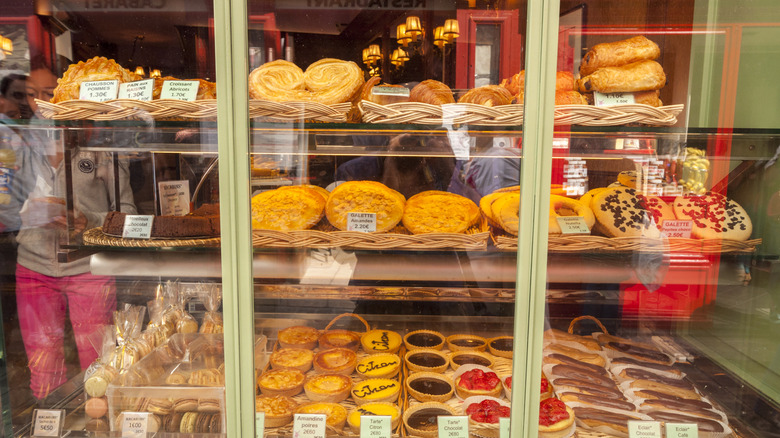
Visit France once and chances are extremely high you'll set foot in a bakery (and likely more than one) — and if you hail from the States, you'll probably notice some immediate differences. Of course, the selection will be different: While Americans are hardly unfamiliar with croissants, you'll find things that are rare in the U.S., like a praline brioche. But there are also key differences that aren't immediately apparent, like the laws to keep bakery quality high, and the general culture around bakeries.
Let's start with the regulations. If you run a bakery (a boulangerie) in France, you'll have to follow certain laws. First, the bread must be made on-site, so French bakeries will never be selling mass-produced industrial bread or sweets, something that seems to be happening more in the U.S. In France, most breads can legally only be made with flour, yeast, water, and salt, and no preservatives or additives. This means that French bread doesn't last long (hence the French practice of buying it daily), and what's on sale in a bakery is generally baked fresh everyday. The laws go into far more detail, too: Even the length of French baguettes is regulated.
In the U.S., there aren't really comparable rules regulating bakeries, so bread can be made with all sorts of additives, as long as they're legal for human consumption. This means preservatives can be used, so bread may last for a few days, but it'll also be less fresh.
The different offerings
It's often argued that French bakeries are better than American ones, and these rules are probably a key reason why. But the two countries' bakeries also serve different types of baked goods. (Bear in mind that this requires some generalizations, and many baked goods do exist on both sides of the Atlantic. After all, most Americans are familiar with croissants, and most French know what a muffin is.)
The differences are particularly noticeable when it comes to sweets and pastries. In France, expect baked goods with lighter textures and less sugar in such items, although the items may be richer because of the higher fat content in French butter. On the menu, this manifests in items like pain au raisin (a sort of raisin roll), variations on croissants like chocolate or almond croissants, brioche (a slightly sweet bread, sometimes with added extras like chocolate), or a chausson aux pommes (a pastry pocket filled with apple).
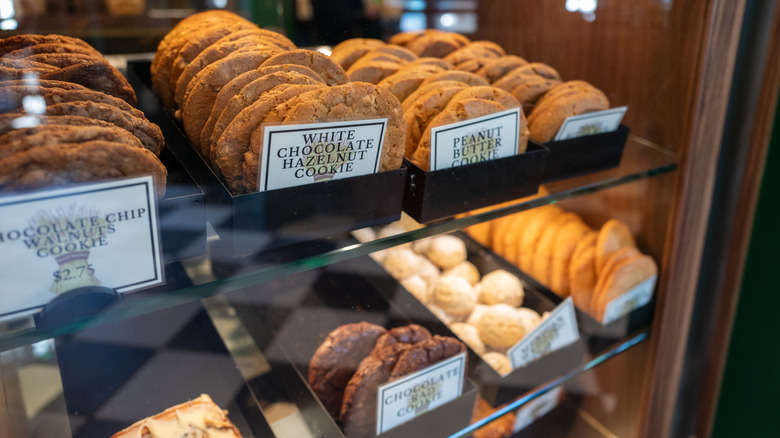
Meanwhile, in the U.S., you'll get items that are bigger and often far sweeter, with typical items including doughnuts, cupcakes, muffins, pies, and brownies. Chewy textures are also more common. Think of soft American cookies, compared to the harder, shortbread-style sablés common in France. On the bread side, differences aren't so blunt (many French and American bakeries sell similar items like baguettes, grain breads, and sourdough, although names may vary), so the differences arguably come down to ingredients and freshness.
How bakeries fit into French lifestyle
In France, bread is a way of life. If you couldn't already tell by the various laws applied to bread and bakeries, the French take it very seriously. Bakeries are ubiquitous, even in tiny villages, although there are some fears that traditional bakeries are fading in popularity as French people do more shopping in one place (malls or supermarkets) for convenience. However, the U.S. is much further along that path, with store-bought white bread being a regular part of American life. There are far fewer bakeries relative to population in the U.S. Numbers are hazy, but there's somewhere around 60,000 to 80,000 bakeries in the States, compared to around 35,000 in France, half the number despite France having a fifth of the population.
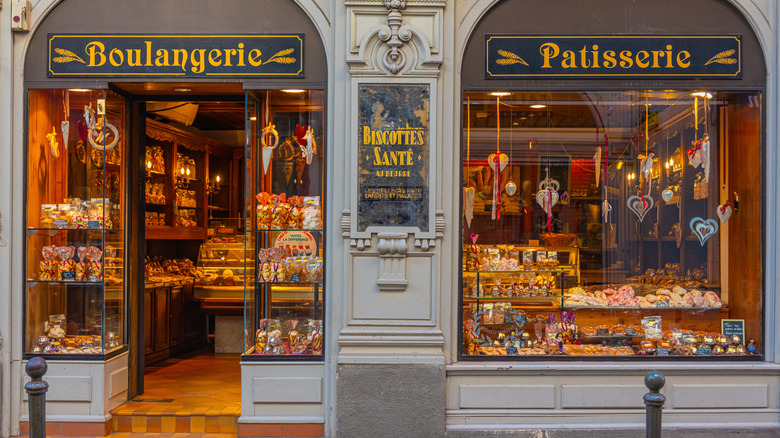
It's worth noting that France also differentiates between bakeries and pastry shops (pâtisseries). Bakeries focus heavily on bread but also usually sell viennoiseries, a category of pastries that are made with yeast, like croissants and brioche. Pâtisseries focus on fancier goods like cakes, and items centered around choux or puff pastries. Such pastries often include creams or custards — think a Paris-Brest or an eclair. To legally use the "pâtisserie" label, they also need a qualified pastry chef. The U.S. doesn't have such a distinction, so if you need a cake, you'd probably just visit a bakery.
Finally, bear in mind that the differences aren't absolute. American baked goods exist in France and vice-versa, and despite the laws, French bakeries aren't all good, while American bakeries are certainly not all bad. That said, they're undoubtedly different beasts, generally speaking.