

Turn Off Your Oven: For Juicier Prime Rib, Reach For This Kitchen Appliance Instead
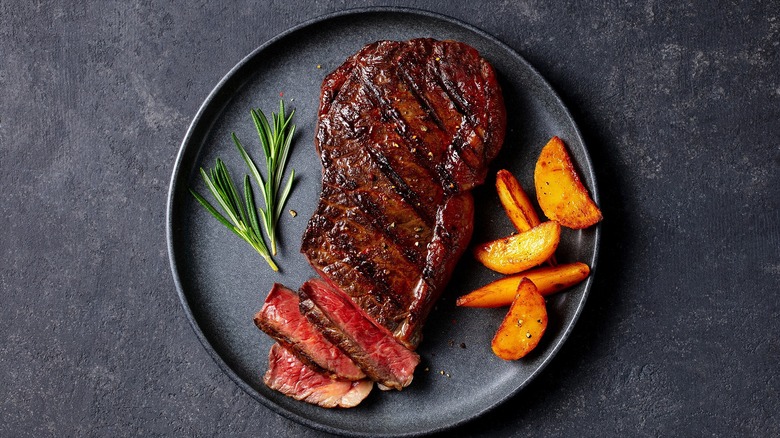
All home chefs know that there is an art to making mouth-watering prime rib. You can follow the steps that restaurants use for perfect prime rib every time, which usually involve an oven. And since prime rib has a reputation for being pricey and tricky to prepare, it's tempting to stick to the classic oven preparation method, but thinking outside the box can pay off. If you're searching for the method that offers the juiciest prime rib ever to grace your kitchen with its presence, turn to your slow cooker.
Of all the unusual foods you wouldn't think to toss into your slow cooker, prime rib makes a lot of sense when you think about it. Slow cookers trap heat and support the breakdown of collagen, which gives this prized cut of meat an exceptionally juicy texture. This method also gives the meat an opportunity to absorb the flavors and seasonings in the pot. It also frees up oven space for any side dishes you plan to prepare.
Tips for making juicy prime rib in the slow cooker
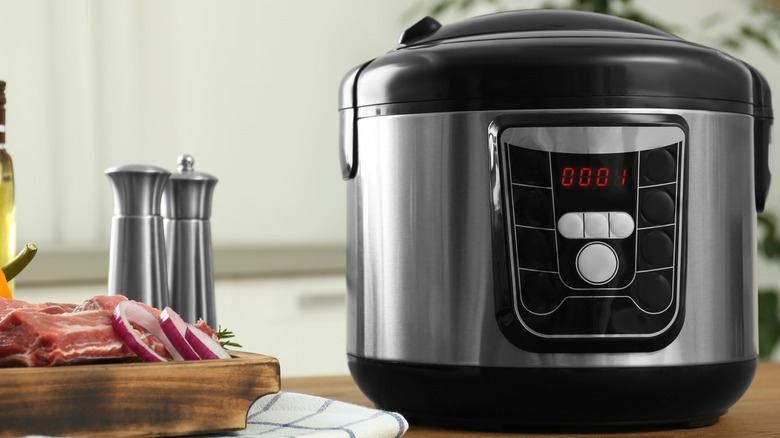
There are certain mistakes to avoid when you're cooking prime rib that apply just as much to the slow cooker as an oven. Using a meat thermometer, for instance, is crucial. To ensure that you get the right finish, you'll want to monitor the internal temperature of your meat and adjust accordingly. For rare, heat the meat to an internal temperature of 120 degrees Fahrenheit; for medium-rare, go for 130 degrees; and for medium, set it at 140 degrees. Additionally, it's a good idea to follow the science of the low and slow method. In essence, that means gradually increasing the temperature over a long period of cooking time while allowing the collagen in the meat to degrade. This leaves you with meat that is tender and soaks up all the right ingredients.
Another worthwhile step to consider is searing your prime rib before putting it in the slow cooker. The searing process helps to retain the moisture as well as providing a caramelized surface. Sear just until the outer skin is golden brown. For optimal juiciness, don't forget to allow the meat to rest for about 30 minutes. This way, the flavors can properly distribute throughout the pot, ensuring that you get a fork-tender bite.