

Do You Need To Cook Canned Beans Before Eating Them?
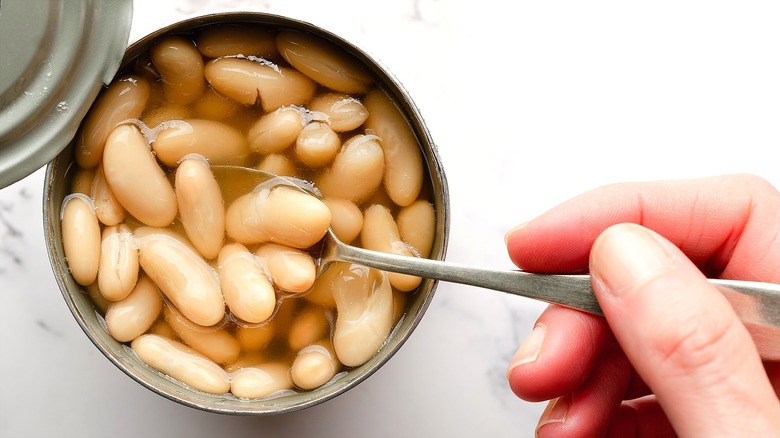
In terms of convenience foods that require very little prep work, canned beans are easily one of the healthiest and most affordable options. While most of us tend to heat or cook canned beans before consuming them, are these steps truly necessary? You may be surprised to discover that since they're already pre-cooked, canned beans are perfectly safe to eat straight from the can.
Canned beans such as kidney, black, and white varieties like cannellini are typically pressure-cooked at 250 degrees Fahrenheit (which is well above boiling). This prevents bacteria and harmful microorganisms from forming or growing during long-term storage so long as the can remains closed. This goes for almost every kind of canned bean available. Therefore, plain varieties like canned chickpeas do not need to be cooked, nor do flavorful types with added ingredients such as baked beans or ranch-style beans.
The one exception to this rule is if a can's seal becomes compromised. Never consume beans from cans that contain deep dents in or around the rim or side seam (a small dent is generally fine). Deep dents could impact the can's integrity, allowing bacteria inside. All that is to say, even though canned beans are safe to consume without cooking, there may be certain preparation steps you want to take for a more satisfying eating experience.
Canned beans may be more enjoyable with a bit of thoughtful preparation
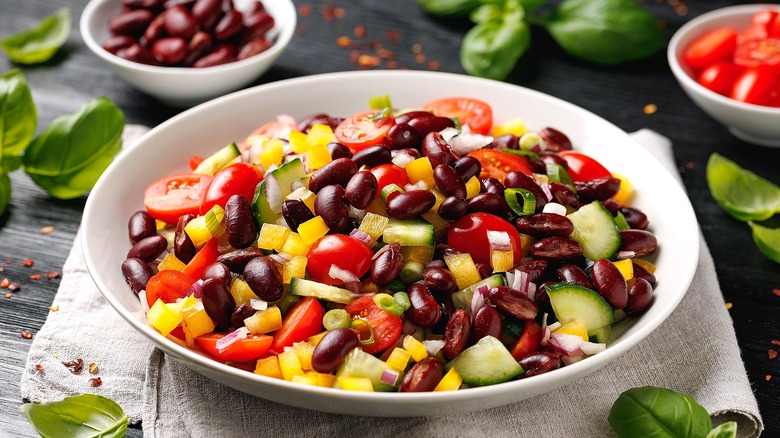
Whether or not you cook your next can of beans, you may want to drain their liquid and rinse them before consuming. The case for rinsing canned beans has to do with the amount of salt in the canning liquid. Without rinsing, ½ cup of canned beans contains roughly 500 milligrams of sodium. Considering the American Heart Association recommends consuming no more than 1,500 milligrams per day, 500 milligrams for one serving of beans is considerable. Fortunately, by rinsing your beans a few times directly in the can or in a colander over your sink, you can reduce their amount of sodium by 40%.
Salt aside, another reason for draining the liquid in canned beans is due to its thick, viscous consistency which can be off-putting on the tongue. By draining and rinsing your beans, you're essentially starting with a cleaner, more neutral base that can be dressed up or down. While you can certainly eat canned beans plain, feel free to mix them with fresh veggies like corn, cucumber, tomato, and herbs.
On a similar note, while canned beans don't necessarily need to be cooked, they may be more enjoyable heated with some aromatic ingredients like onions and garlic, along with a few of your favorite spices. If time allows, other ingredients that can take canned beans up a notch with a bit of heat include tomato paste, broth, and pork fat.