

Planting This Next To Your Cucumbers Will Give You A Way Healthier Harvest
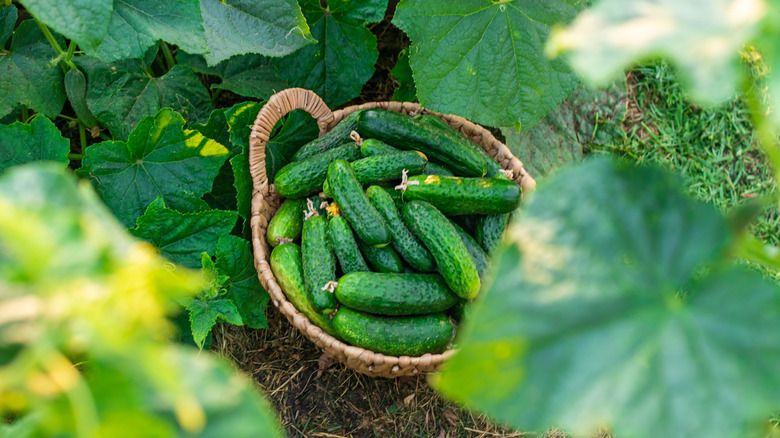
If your favorite part of summer is creating a fresh cucumber salad full of flair and flavor, then you may enjoy the process of growing your own. Not only are cucumbers fairly easy to grow, cultivating them at home pretty much guarantees a fresh, high-quality product. Of course, the second you plant anything outdoors, pests immediately try to commandeer your hard work for their own benefit. That's where using companion planting to your advantage comes into play. Companion planting involves cultivating plants that benefit each other side by side so both can thrive — though sometimes one plant benefits more than the other, as is the case with cucumbers and nasturtiums.
Nasturtiums have bright yellow or orange trumpet-shaped flowers that look a little like cucumber blossoms, meaning pollinators that like one will also pollinate the other. Additionally, nasturtiums are often a greater temptation to pests like squash bugs and cucumber beetles than your cucumber plants, meaning the pests will leave your cukes alone in favor of attacking the nasturtium vines. However, that doesn't mean your nasturtiums are out of luck — they're also well-loved by ladybugs, hoverflies, and other beneficial insects that feast on pests intent on destroying your garden. Vining nasturtiums growing across the ground also lightly shade the soil from the sun, reducing the chance of weeds taking root that could choke out your cucumber crop.
Nasturtiums are more than just a pretty face
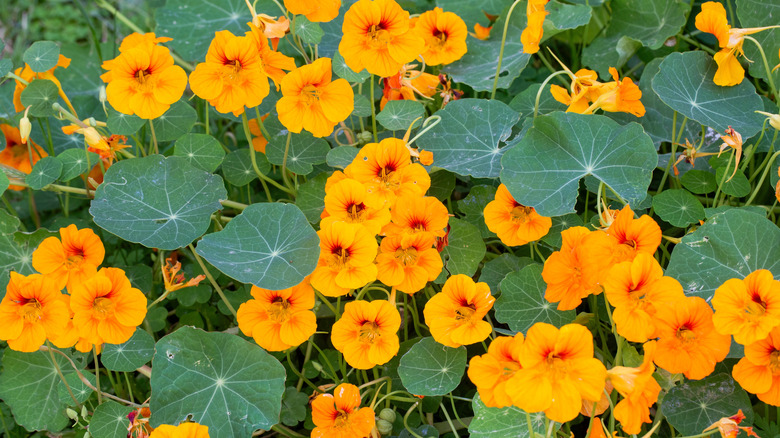
While you're daydreaming about making a crisp, delicious Caesar salad with shredded cucumbers fresh from your garden, you may also want to think about how you'll use your nasturtium crop. Both the leaves and blossoms are edible, with the leaves' broad, round shape and scalloped edge making them an attractive addition to salads as well as an interesting alternative to the lettuce in lettuce wraps. The leaves are described as both sweet and spicy, with a flavor closer to black pepper than hot chili peppers, so they're also sometimes added to soups and stews for a zing of bright flavor.
The flowers have a much milder flavor, tasting like they smell with just a touch of heat. They're mostly used to add beauty to dishes rather than flavor, bringing a gorgeous splash of color to salads and desserts. Think mint and cucumber sorbet or a cucumber and nasturtium leaf margarita garnished with pretty orange flowers. Though they're often planted alongside cucumbers as a sacrificial plant intended to deter pests from damaging your cuke vines, if you want to harvest from your nasturtiums, as well, it's best to keep them healthy as pests are less likely to attack healthy plants.
You can do this by making sure your nasturtiums get plenty of direct sunlight in warm, well-drained soil. If you decide to trellis your cucumbers, make sure to give your nasturtiums something to climb, too, so both plants have full and equal access to the sun.