

This Simple Pork Rib Test Tells You When They're Done Every Time
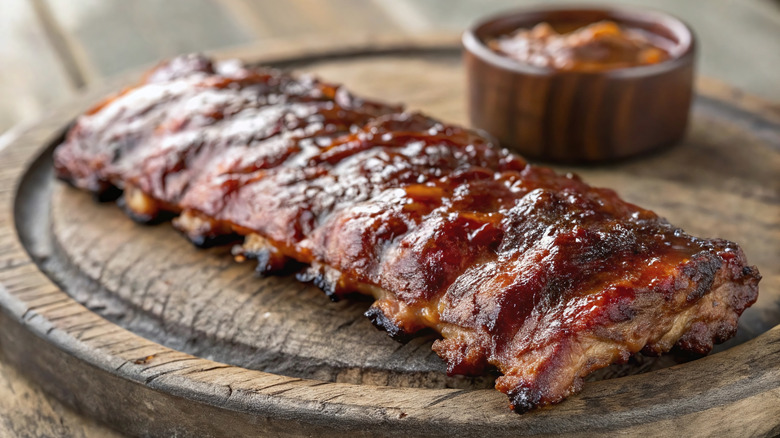
There are few things better for barbecue lovers to eat than juicy, tender ribs. Whether you slather them in thick sauce or season them with a simple rub of salt and pepper, the most important thing is to make sure they're cooked well. There's an easy test that will reveal if they've reached the perfect level of tenderness: the bend test.
Whether you're smoking, grilling, baking, or using a slow cooker to make tender ribs, all you need to do to make sure they're done is to use the bend test. To perform the test, slide a set of cooking tongs lengthwise from the end of the ribs to the center and lift the meat about six inches upward. If the rack bends into a U-shape and the meat forms cracks that are close to falling off, the ribs are done. If they're still rubbery, or the cracks are very small, you probably need to cook the ribs a little longer or slightly increase the temperature of your heat source.
There can be some debate about whether ribs should be fall-off-the-bone tender, or tender enough to pull the meat off the bone easily; generally, well-cooked ribs will not fall from the bone, but will still be tender and juicy. So, if the rack's rib meat is too mushy or falls apart, they're probably overcooked.
More ways to check if pork ribs are finished
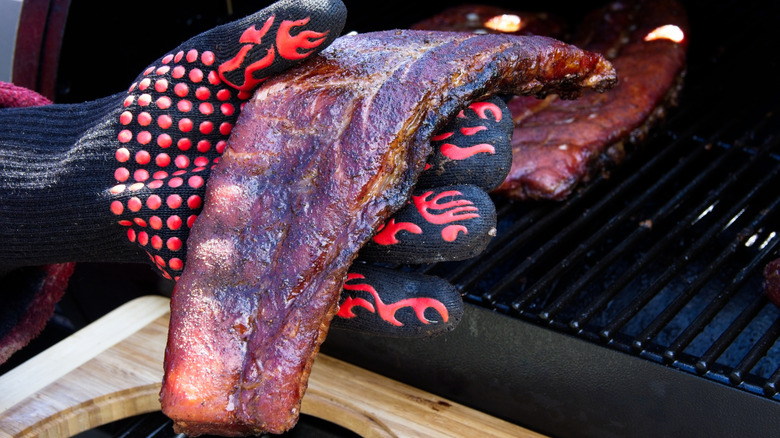
You can check to see if you've cooked your pork ribs to the right temperature, which is about 190 to 205 degrees Fahrenheit, by using a food thermometer, instant-read thermometer, or other device to measure the heat level. The optimal internal temperature for ribs is higher than the safe temperature of 145 degrees for eating pork and beef, as higher heat turns the collagen into gelatin, which creates the rib's tender juiciness. It's also the reason why the bend test works. In addition, removing the membrane on the back of the ribs will ensure the bend test works, as the membrane will limit cracking and cause the rack to remain stiff. You should note that there will be a difference between spare ribs and baby back ribs. Spare ribs have larger, tougher muscles, which will cause the meat to bow more before cracking, while baby back ribs will bend less and show smaller cracks.
There are additional methods you can try to determine if pork ribs are done. One is the toothpick test. Insert a toothpick into the meat between two ribs, and if there's no resistance, the ribs are done. In addition, you can do the twist test by grabbing the tip of a bone near the middle of the rack; when the rack is done, the bone should begin to break free of the meat. After using one of these methods to ensure your ribs are done, let them rest to gather their juices before enjoying a delicious rack!