

The Evolution Of Gatorade Bottles Over The Years
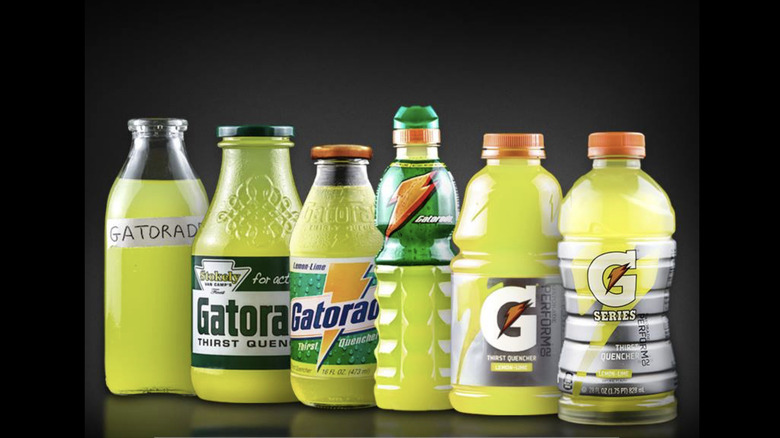
Gatorade was created in 1965 by Dr. James Robert Cade and his team of researchers as a means of remedying dehydrated football players at the University of Florida. The drink was actually scientifically formulated to help athletes perform better despite, at first, tasting horrible (this changed when lemon juice was added shortly after its invention). Ever since, it's been a great (non-water) drink for re-hydrating your body when it's in need of electrolytes. However, it's also gone through plenty of changes: New Gatorade flavors were added, as well as new variations, like Gatorade Zero. Some versions of the drink have also faced restrictions or bans in certain European Union countries due to artificial additives.
Its physical appearance has also gone through quite the evolution. The Gatorade bottle has changed form many times in its over 60 years of existence, since its simple, unbranded beginnings inside a lab beaker. It's been a can, a glass bottle, a plastic bottle, and seen numerous rebrands. It's been large and bulbous, only to become thin and squeezeable, then back again. The Gatorade bottle continues to evolve, and if history is any indication, the drink will continue to morph as the years go by. Here is a look at the evolution of the Gatorade bottle over the years.
Stokely Van Camp's Finest Gatorade (1968)
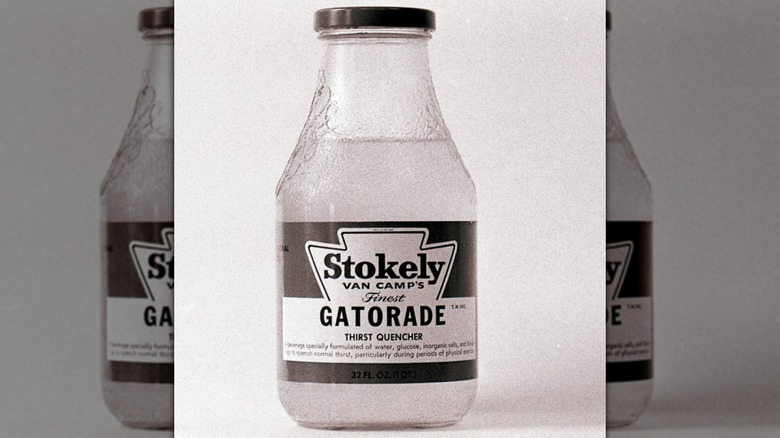
Gatorade became commercially available in 1967, when one of Dr. Cade's researchers informed the vice president of Stokely-Van Camp Co, a major food packer, about the drink. It was marketed across the nation, and this was the first bottle of Gatorade, all the way back in 1968.
A more colorful glass bottle (1969)
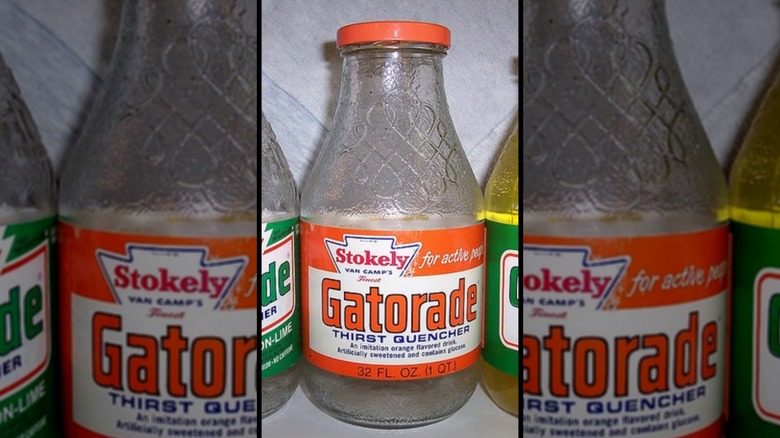
In 1969, Gatorade was still served in a glass bottle, but the packaging was updated a bit. It was given a more colorful label, with less focus on the parent company's name.
Gatorade in a can (1970s)
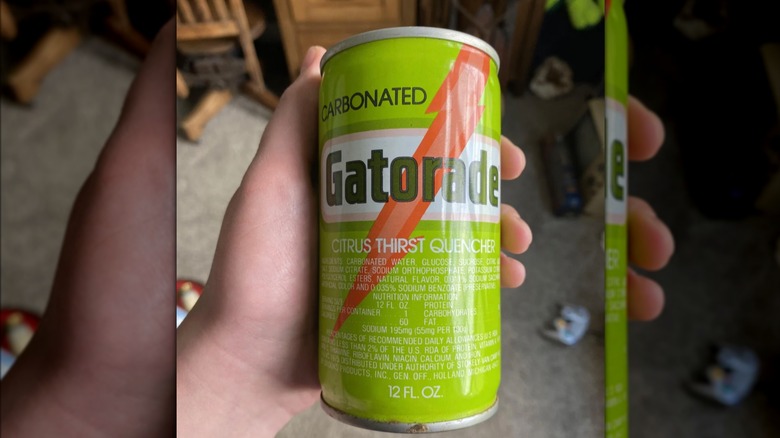
In the 1970s, Gatorade was sold in a can, and it was even carbonated. The Stokely brand was still featured on the label, but not as prominently. In 1973, the iconic Gatorade lightning bolt was placed upon the label.
The glass bottle transforms again (1983)
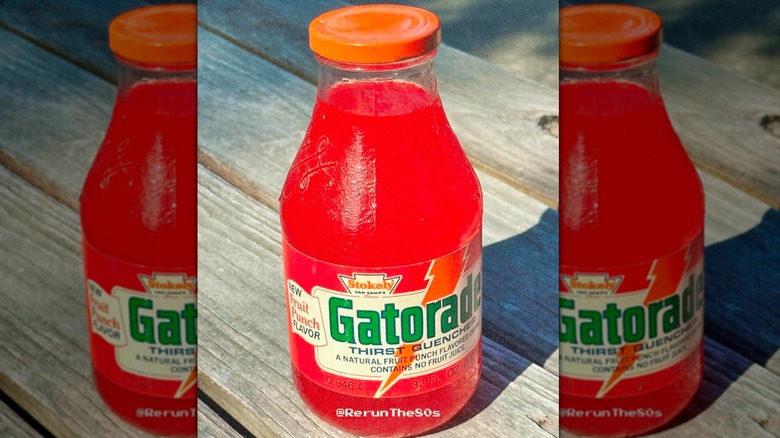
In 1983, Gatorade (and Stokely-Van Camp) was sold to the Quaker Oats Company. This was also the year that the flavor Fruit Punch was first released.
The Gator Box (1988)
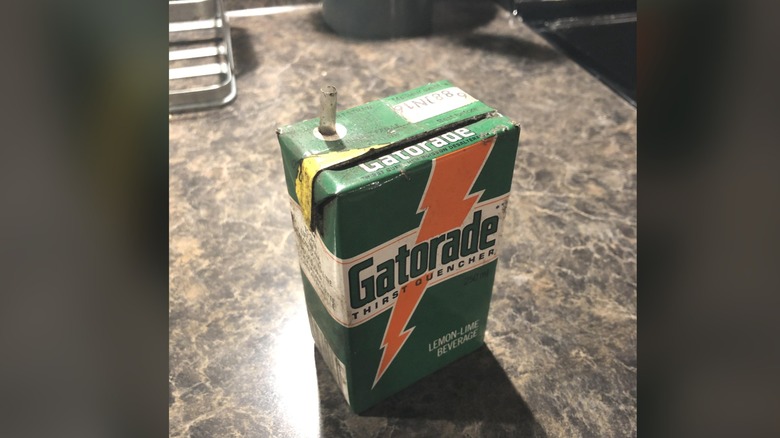
In 1988, Gatorade introduced the Gator Box, a tinier version of Gatorade in juicebox form. It was marketed specifically to kids playing sports.
Plastic bottles and glass bottles, plus Michael Jordan (1991)
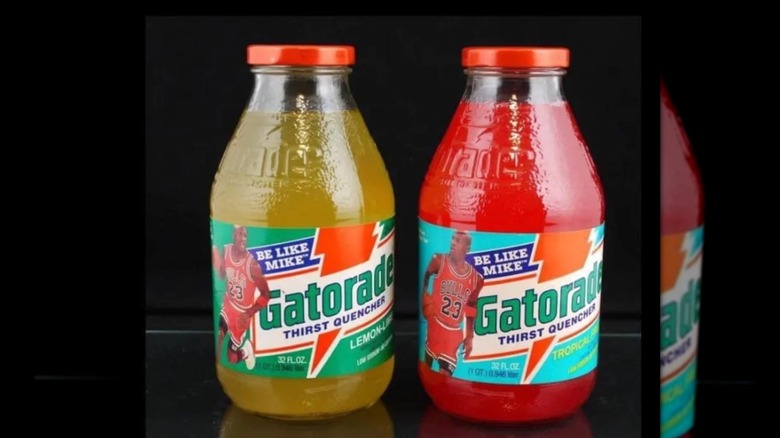
In 1991, Gatorade started putting Michael Jordan on the label, as he was Gatorade's first spokesperson. The basketball star was featured on both plastic and glass bottles.
Sport bottles (1995/1996)
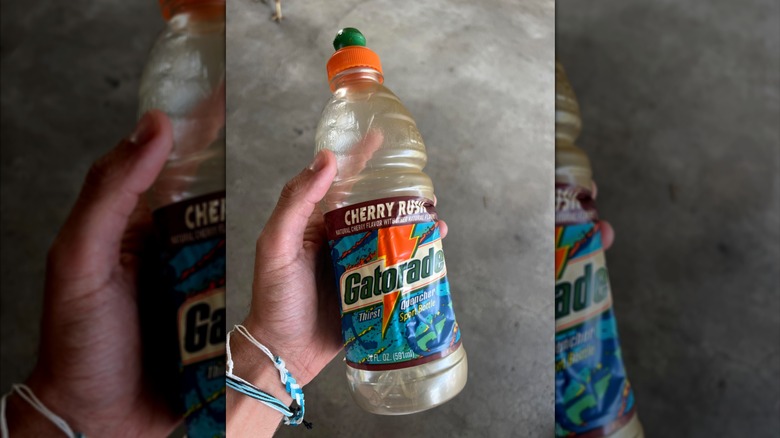
1995 brought the debut of the Gatorade bottles with little spouts on top, called the Gatorade sport bottles. Many fans believe this bottle to be the best version of the Gatorade bottle. To this day, it is affectionately known as the "nipple top" by many Gatorade drinkers. It got an upgrade in 1996 when it was made to be a little taller and a little thinner.
Gatorade E.D.G.E. bottles (1998)
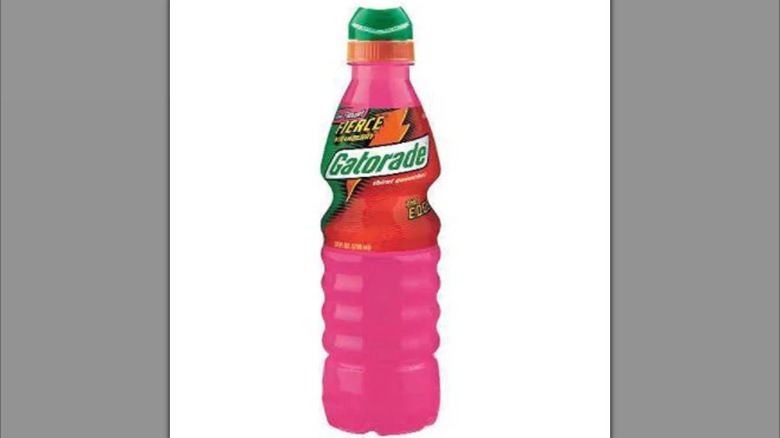
In 1998, Gatorade E.D.G.E. bottles were released. This variation of Gatorade was the first ergonomically designed sports bottle — and many loved it. It was designed by the same firm that developed the first ergonomically designed mouse for computers.
Gatorade All Stars (2002)
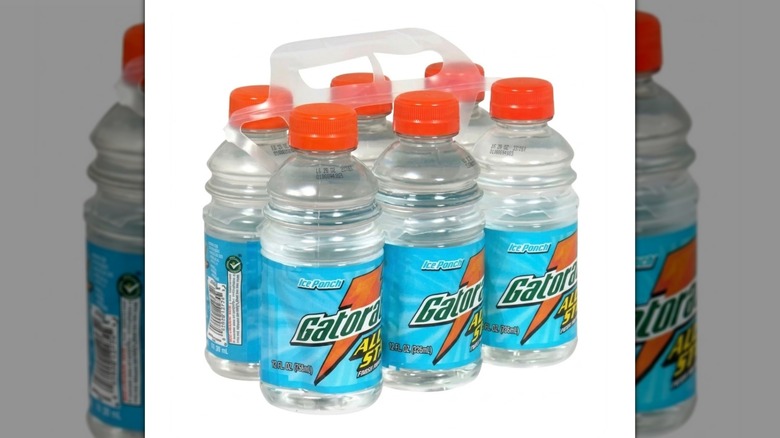
The Gatorade All Stars 12-ounce bottle came about in 2002. It was a smaller version, sold in packs (and perfect to hand out at little league games everywhere).
Gatorade G Series (2011)
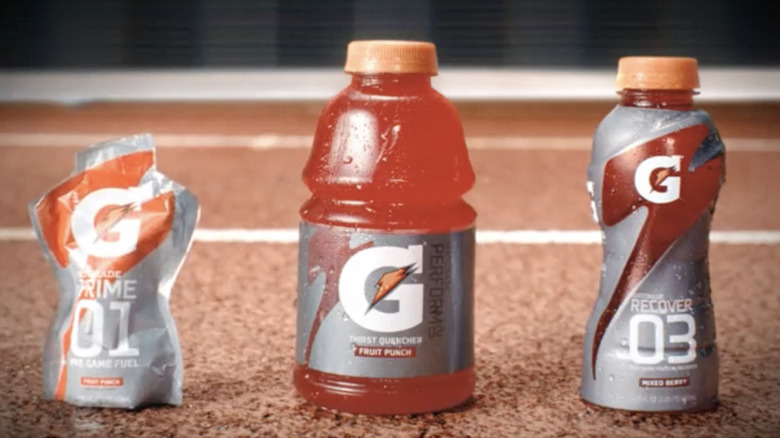
In 2011, Gatorade came out with its G-Series line, which was advertised as a "complete hydration system" that would provide its consumers with nutrients before, during, and after exercise.
Gatorade Thirst Quencher design (2013)
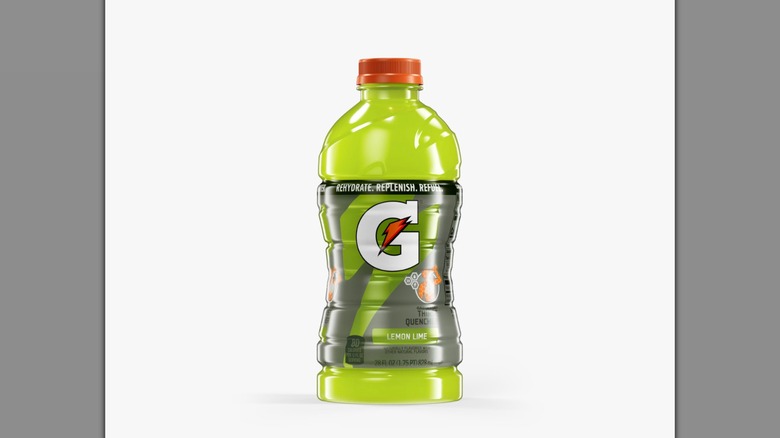
In 2013, Gatorade released a sleeker "Thirst Quencher" bottle, which, much to the dismay of some of the drink's fans, holds 4 ounces less than the bottle that came before it. Gatorade still uses this design for its bottles today.