

Here's What Kroger Does With Leftover Bakery Items
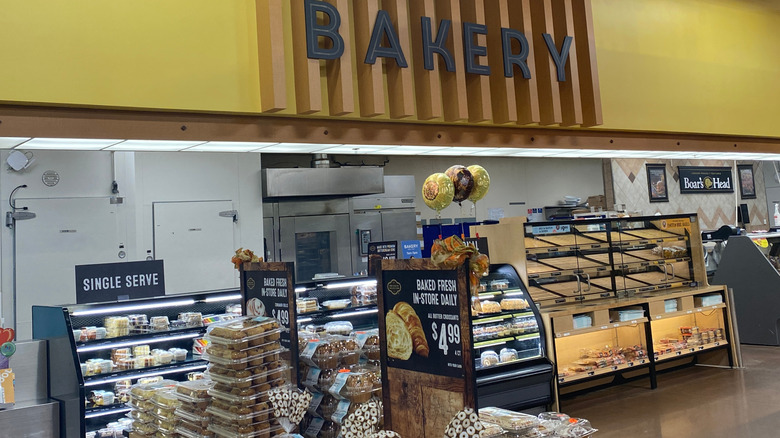
If you've ever walked through a Kroger bakery section at the end of the day and wondered what happens to all those glazed donuts left in the tray or loaves of bread that didn't sell, you're not alone. Bakery items make up about 15.8% of the retail value of unsold food in grocery stores (via the Pacific Coast Food Waste Commitment). That's a lot of baked goods with nowhere to go.
But not for Kroger (the oldest grocery store chain in the country), which launched a program called Zero Hunger Zero Waste in 2017. This program routes surplus food (including bakery items) to people who need it. So those donuts you see sitting on the shelf near closing time? They'll likely be pulled by store associates and sent to local food banks and community partners. It's important to note that everything Kroger distributes in this way is food that can no longer be sold, but that is still safe to eat. Through this plan, the company hit its goal of donating 3 billion meals by 2025 two years early, and it plans to go even further by donating 10 billion meals by 2030.
A partnership with Feeding America, a network of food banks, helps make these efforts possible. In 2023 alone, Kroger donated 114 million pounds of surplus food across Feeding America's system. And for stuff that can't be donated at all, whether due to spoilage or food safety regulations, Kroger shared in its 2025 sustainability report that 97% of its stores were involved programs that aim to keep this food waste out of landfills. This food is usually diverted to animal feed, composting, or anaerobic digestion (a process that turns waste into energy).
But where do those baked items actually go?
The specific mechanics of how bakery donations work store by store through the Zero Hunger Zero Waste program aren't totally spelled out in Kroger's public materials, which is worth noting. But there are some examples from Kroger-owned stores that we can hopefully assume use a process similar to others in the franchise. Fry's Food Stores, a Kroger-owned chain in Arizona, sets aside unsold edible food, including baked goods, to be picked up by local groups such as the Phoenix Rescue Mission. Similar programs probably exist at other Kroger stores, even though the logistics may not be exactly the same at each location.
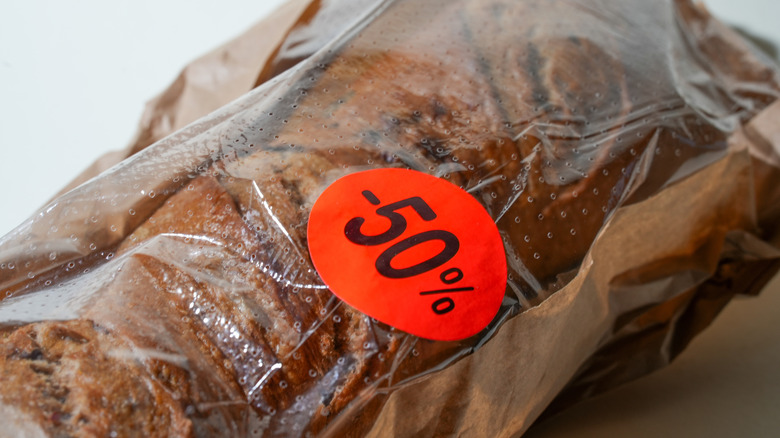
Some stores might still throw out baked goods at the end of the day. But according to Kroger's sustainability report, the company diverts 58% of its retail food waste away from landfills. Distribution and diversion is just one step of the process, as many locations mark down Kroger baked desserts before they hit the sell-by date. Those markdowns are good deals that prompt shoppers to buy them — but if they still don't sell at the discounted price, that's when the donation or diversion pipeline kicks in.
If you want to support Kroger's mission without simply forgoing those marked-down muffins in the hope that they'll be donated, you can still do so at checkout. At the register, you can round your total up to the nearest dollar or add a small donation. That money goes to the Zero Hunger Zero Waste Foundation to support food banks and hunger programs.