

Your Chicken Breast Isn't Overcooked (It Might Be Suffering This Instead)
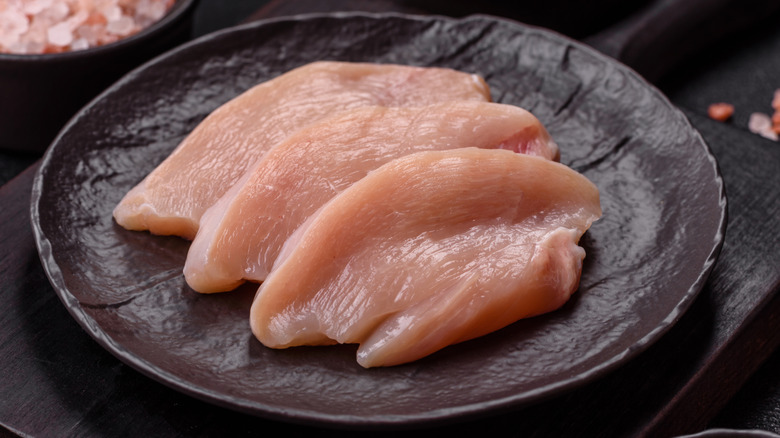
It's a familiar story: You followed all the tips for cooking chicken breast without drying it out. You even swapped boneless for bone-in to keep it from overcooking. And yet, despite everything, the chicken is dry and tough. The good news is it might not be you — you could be dealing with a case of woody chicken. "Woody" chicken is pale when raw with an off-putting, super-tough texture. But unlike dried-out chicken, the consistency isn't just stiff. It's coarse and fibrous, almost stringy. When you take a bite, it's unusually dense and chewy — like you're chewing on wood, thus the name.
That very specific texture is caused by a condition known as woody breast syndrome, a muscle disorder that occurs in chickens, affecting the breast specifically. The disorder leads to rigid breast meat, which isn't harmful to humans but is certainly unpleasant to consume. It's not specific to one region, brand of chicken, or store — woody chicken has been found all over the U.S. And science points to a few different reasons this has been happening to chickens in recent years.
Causes of woody chicken
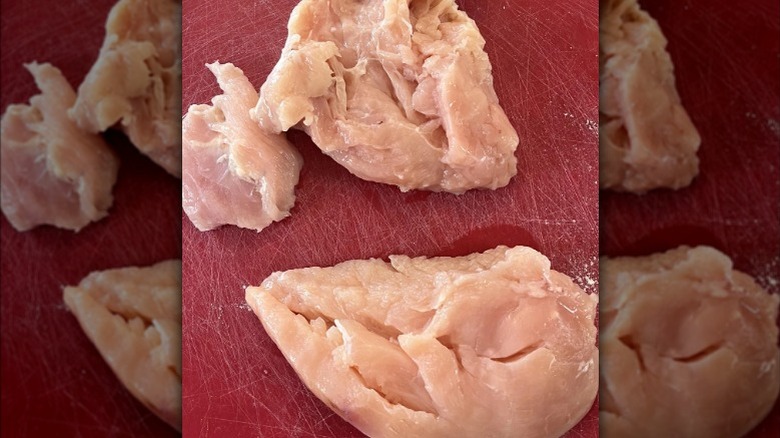
Woody breast syndrome is more likely to occur in "broilers" (chickens raised for consumption) that grow very large very quickly. These chickens are purposely bred by producers to have breasts that are especially large compared to the rest of their bodies. The current hypothesis is that the breast muscle grows so fast that their bodies can't keep up — blood, oxygen, and other nutrients may not be adequately reaching parts of the breast tissue. This can cause the muscle to deteriorate, resulting in that rigid texture.
Essentially, chicken consumption in the country went way up in recent years, and many farmers responded by breeding bigger chickens in less time. They do this in part by utilizing more intensive feeding practices. The chickens are fed more, and in a more rapid manner, which helps them reach market size faster. And while feeding them more slowly and less would probably help the woody chicken situation, many growers would rather take the increased revenue. That's why it's important to look for chicken farmers who grow their chickens responsibly.
The general existence of woody chicken is one of many good reasons to buy meat from a butcher — they can help you choose the best breasts. That said, there are also ways to avoid woody chicken at the grocery store. Choose chicken breasts that appear naturally pink and feel firm and springy. If you find anything pale, rubbery, lumpy, mushy, or unusually hard, skip it. Be suspicious if the breast looks way too bulbous and the price is unusually low. That could be an indicator the chicken is woody (speaking from experience). However, if you really want to avoid woody chicken at all costs, it might be time to develop a taste for dark meat.