

This Fish Packs More Protein Per Serving Than Steak
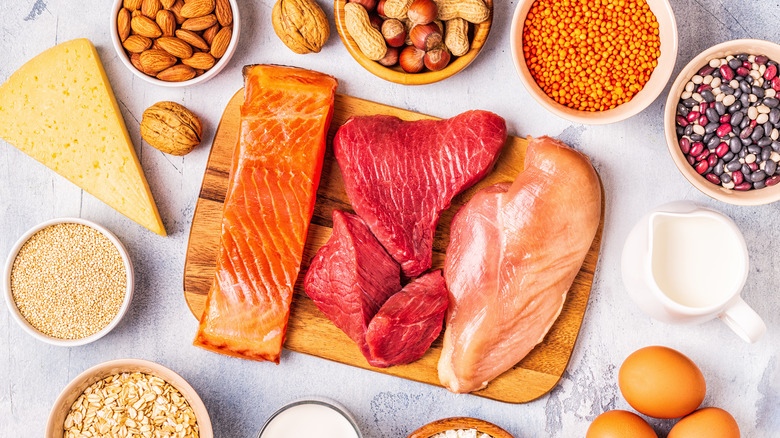
While there is such a thing as getting too much protein, it's still an essential part of any balanced diet. You might think of chicken or steak when you think of protein-packed foods, but for a big hit of protein alongside other nutrients like omega-3 fatty acids, reach for wild-caught Alaskan sockeye salmon instead. One 6-ounce portion of this Pacific fish can have as many as 46 grams of protein — that's more than you'll find in some steak cuts.
It's important to note that the protein amounts in Alaskan salmon and different steak cuts can vary. Some fish companies report that their wild-caught sockeye salmon has 25 grams of protein per 3.5-ounce serving (43 grams per 6 ounces). Others report that it's closer to 7.7 grams per ounce (or 27 grams per 3.5 ounces; 46 grams per 6 ounces).
A ribeye, which is a popular steak cut known for its marbling and melt-in-your-mouth texture, has roughly 24 grams of protein per 3.5 ounces, meaning that ounce-for-ounce, sockeye salmon has more protein. A few different steak cuts come in at 25 grams, such as strip steak, T-bone, and flatiron steak. Exact protein numbers could vary depending on the source, but Alaska sockeye could be higher in protein per ounce than all of these cuts.
Not all salmon has the same amount of protein
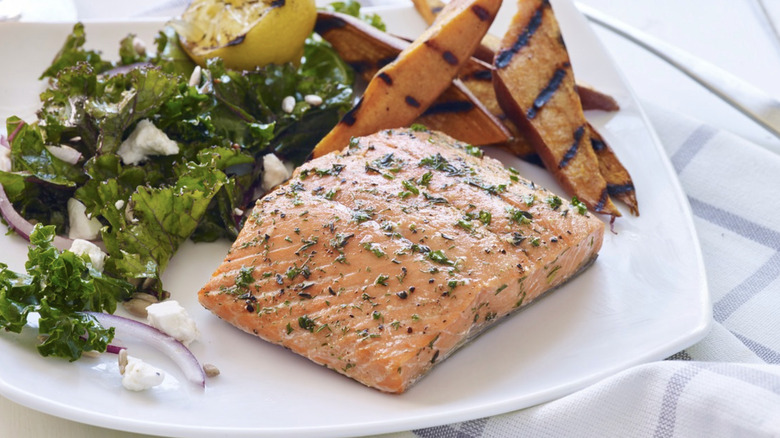
There are many types of salmon and plenty to know about this fish, but when making this comparison, you want to look at sockeye salmon rather than other versions of the fish. Some sources suggest sockeye has the highest protein content among other types of Alaska salmon, including king, coho, keta, and pink salmon types, while other sources suggest that coho actually has the most protein. When purchasing salmon, it's best to get it from a fishmonger who has in-depth knowledge of the fish, as they can likely answer more specific nutritional questions.
When searching for the most protein per ounce, stick with wild-caught salmon instead of farmed. Exact nutrition facts among farmed salmon do vary, but as a general guideline, wild-caught salmon usually has more protein than farm-raised salmon due to these fish having more diversity in their diets. Wild-caught salmon is also leaner and has more natural omega-3 fatty acids compared to farmed, so there are other ways its nutritional profile is more beneficial.