

5 Effective Ways To Remove Fishy Smells From Your Kitchen

Enjoying a home-cooked seafood dinner can feel absolutely luxurious. Whether you're making perfectly seasoned salmon in the oven, whipping up a batch of fried fish tacos, or making another one of your signature fish dishes, there's nothing quite like kicking back and enjoying fresh seafood at home. One thing that's not great about cooking fish in your kitchen, however, is the lingering smell that can stick around well into the next day.
Thankfully, you've got options if your kitchen is smelling less like a lemon-scented culinary haven and more like a fish market. From getting fishy leftovers out to the trash as soon as possible to letting baking soda sit out overnight to do the dirty work while you sleep, there are plenty of ways to remove fishy odors from your kitchen. Next time you make your favorite seafood recipe, be sure to keep some of these ideas in your back pocket so you can get your home back to smelling fresh and clean in no time.
Stop odor at the source by taking out the trash
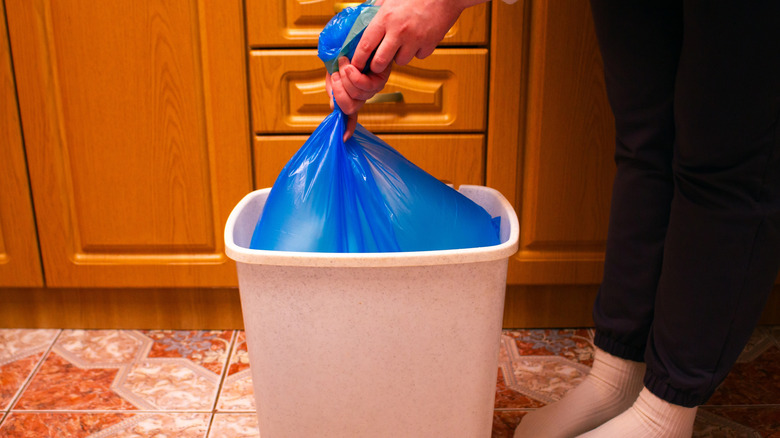
When you're cooking seafood, you'll inevitably end up with some garbage. Even if it's just the package your fish came in, the trash that comes with cooking seafood can get super stinky, and it's impossible to get the fishy smell out of your kitchen if it's still coming out of your garbage can. Fishy smells increase as fish is exposed to oxygen, so the longer it sits in your trash can, the worse the smell is going to get. We know that it sounds simple, but it's easy to get so focused on the more complicated methods to getting the fishy smell out of your kitchen that you forget to attack one of the main sources of the problem: your trash can.
After you have finished cooking fish, take out the garbage immediately. If the fish bones or skin you're tossing are particularly stinky, you might want to seal them in another bag before putting them in the trash can so they don't stink up your outdoor trash. Be sure to fully close the lid to your trash can so that the smell doesn't permeate your outdoor space.
Wipe down surfaces immediately and prevent splatter
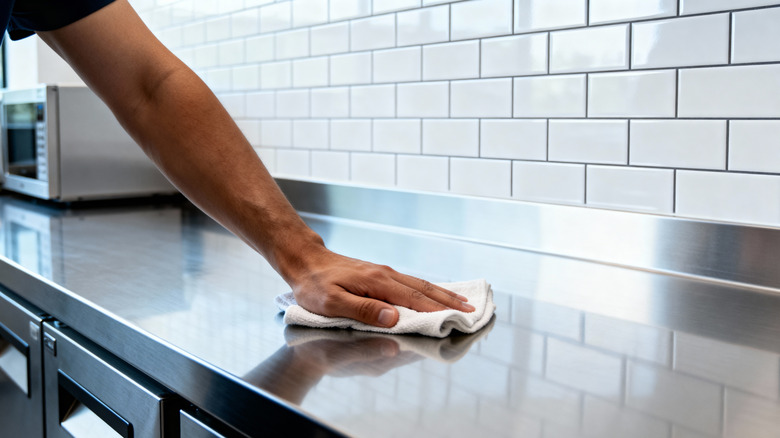
Wipe down all of your kitchen surfaces right away — the longer you wait, the harder it becomes to remove grease and the odor that comes with it. Cleaning as you go can help. While your fish is cooking, you can get to work wiping down surfaces so that you have less to do after you're done eating. If you're frying fish on the stovetop, placing a lid over the pan can help contain grease splatters and minimize the amount of cleanup you'll have to deal with later.
If you fried fish on the stovetop, you'll want to be sure to wipe down any areas where grease could have splattered, including the backsplash and the floor around your oven. Your standard kitchen cleaner should work fine, but adding a bit of citrus or vinegar to the mix can help cut through tough fishy odors.
Keep the air flowing

Once you've removed fish-containing trash from your kitchen and wiped down any splattered surfaces, getting rid of the remaining fishy smell may be as simple as opening the windows.Reminding yourself to keep a window open while you're cooking can also help make the getting-rid-of-stink process easier once you're done. In addition to opening a window, turning on a fan can help air circulate. If you have a box fan, placing it in a nearby window can work well. Be sure to face the fan outward so it's continually pulling air out of your kitchen.
Using your hood fan can also be a big help in stopping odors at the source; keep it running during and after cooking, especially when using the stovetop. If you haven't replaced your fan filters recently (or ever), now is the time — you don't want to go longer than six months or so without cleaning or replacing your filters. Keeping your filters clean and replacing them regularly not only gets stinky odors out of your kitchen, but it boosts air quality and prevents kitchen fires.
Simmer an odor-busting concoction
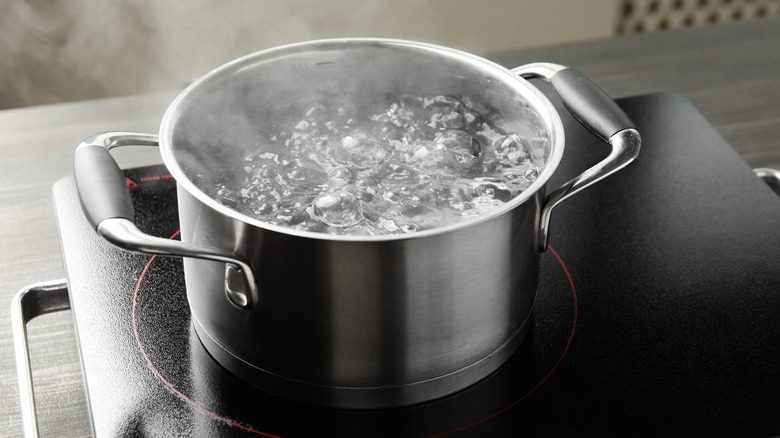
It may seem counterintuitive to create one strong scent to get rid of another, but using a combination of water and vinegar to eliminate fishy odors really works. Boil equal parts vinegar and water in a pot on your stove, and sit back as the fishy odor begins to dissipate. As the liquid turns to vapor, it'll work to bond with stink-causing molecules left behind by the fish in the air. Yes, your house will smell like vinegar for a bit, but the scent will go away quickly.
If you'd rather not deal with the smell of vinegar in your kitchen, a citrusy simmer pot offers a zesty alternative. Creating one is a smart way to repurpose lemon, orange, or lime peels from your seafood recipe. Simply add the peels to a pot of water, put it over low heat, and enjoy the scent of citrusy goodness as the vapor makes its way through your home, masking fishy aromas.
If you'd like to add a bit of pizzazz to your simmer pot, you don't have to stop at citrus peels. Adding a splash of vanilla extract or a few cinnamon sticks to the mix can elevate the scent in your home. Look through your spice cabinet, and if something smells great, toss it in.
Set a bowl of baking soda on the counter overnight
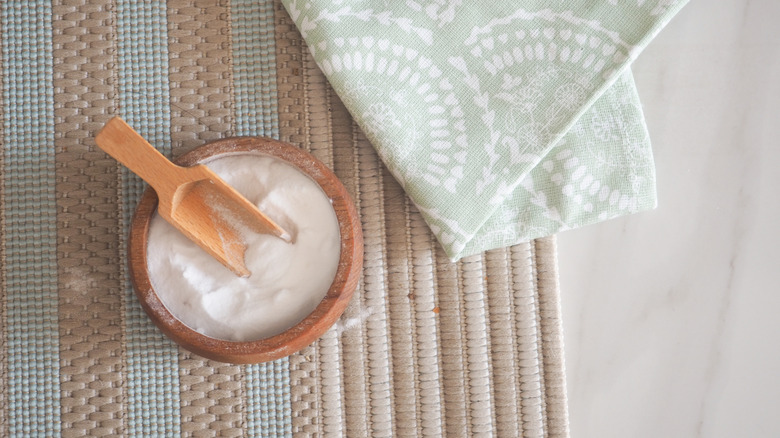
If you're ready to go to bed and you notice that you still have a fishy smell lingering in your kitchen, fear not. Setting a bowl of baking soda out on the counter can help absorb smells over time. Keeping baking soda in your fridge to make it smell fresh is always a great idea — it neutralizes odors by reacting with smelly compounds, and the same principle applies to fish smells in your kitchen. If you don't have baking soda on hand, try using activated charcoal.
These odor-absorbing agents aren't limited to the kitchen; placing a bowl of baking soda or activated charcoal in your pantry and adjacent rooms will help neutralize lingering fishy aromas throughout your home. While this isn't a quick fix, it's simple, requires very little effort, and can make your kitchen smell fresh and inviting by the time you start your morning coffee.