

Is There Any Way To Protect Your Vegetable Garden From A Sudden Overnight Freeze?
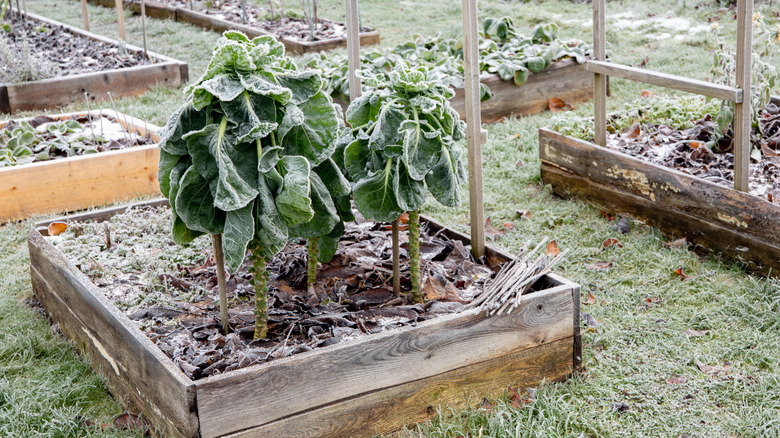
Planting a vegetable garden is a great way to have a sense of accomplishment and build anticipation, and maybe even save some money. Whether you press seeds into the ground in neat rows one by one or gently place young plants into raised beds (which are different from sunken gardens), putting in work at the beginning of growing season hopefully pays off in warmer months. Still, all that effort comes with some uncertainty. While pests and disease can wreak havoc here and there, nothing is as scary as a sudden hard freeze, which can wipe out weeks of growth overnight.
Most freezing disasters can be averted by waiting to plant tender, annual vegetables, like tomatoes and peppers, until the threat of frost is over. But every now and then, Mother Nature can throw you a curve ball. It's not unusual to get a hard frost or freeze in late spring, even after a stretch of mild temperatures or in early fall. For those nights, the best insurance is some type of simple covering that shields plants from direct exposure to frost. Many garden supply stores carry special frost fabric made with woven polypropylene fibers, but if you're on a budget (or just thrifty), all you really need is some old sheets, towels, or tarps to get the job done.
The difference between a frost and hard freeze
For practical purposes, you don't want to expose delicate seedlings and tender annual plants to either frost or a hard freeze, but technically these are two different events. Frost happens when the dew point dips below freezing, but not necessarily when air temperature is below freezing. The dew point is the temperature at which air becomes saturated with moisture, so when air temperature drops below the dew point, water vapor in the air condenses into liquid. In warmer months, this liquid becomes fog or dew, but when it's chilly, that water can turn into frost. So while the air around your plants can still be a few degrees above freezing, frost can form and damage your plants.
A hard freeze, on the other hand, is when the air drops below freezing (32 degrees Fahrenheit). Under these conditions, water inside plant cells freezes, causing it to expand and burst the cell walls. While many plants can survive some amount of frost damage, a hard freeze is a very different story.
Covering plants with a layer of fabric keeps frost off your plants but can also trap warmth from the ground under the protective layer, which is often just enough to keep your plants from getting frozen overnight during a hard freeze. However, if air temperature drops below 28 degrees Fahrenheit, your plants may still be at risk.
Cover your plants completely to protect from sudden freeze
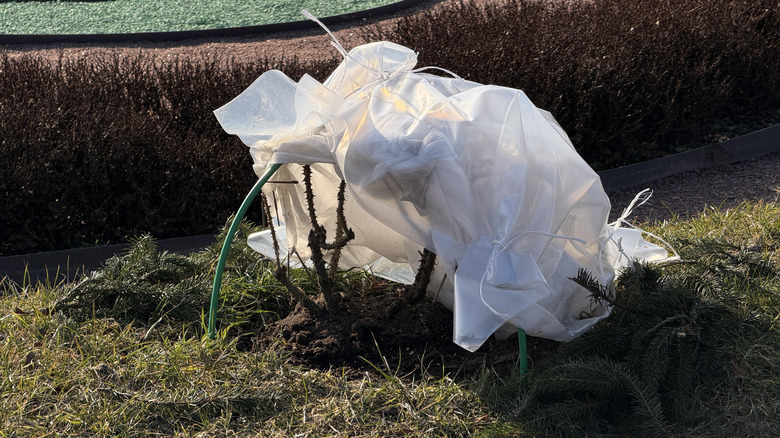
Covering vulnerable plants from freeze and frost is a pretty simple step to protect your garden from disaster. All you have to do is make sure your plants are completely covered all the way down to the ground, regardless of what material you decide to use. This keeps frost out and warm air from the ground inside. Position the coverings with tall stakes, wire, sawhorses, or tomato cages so the coverings don't come into direct contact with the plants, as much as possible. This prevents plants from getting crushed by the weight of the covering or burnt if you use plastic.
Play it safe and keep an eye on the weather and thermometer when you've got plants in the ground. While there are no guarantees against a hard freeze or frost in June, for example, your local university extension service is a great resource for choosing the best planting dates and noting frost warnings. Check online calculators like The National Gardening Association, which can estimate when to plant by zip code. While it's tempting to get your garden planted on the first warm weekend, stick to early spring friendly plants until it's all clear, and always check with the pros before investing time and money into any garden.