

Why Does My Dishwasher Smell?: 4 Issues Contributing To Unpleasant Odors
Everyone wants a kitchen that is free from off-putting smells — and often, you need to do extra work to keep that goal intact. When your dishwasher is at the heart of the bad odors in your space, it might be difficult to get to the root of the problem. The three-month dishwasher habit is one way to keep things spick and span, as well as keeping in mind the 13 mistakes that you want to avoid when loading the dishwasher – but sometimes, the answer to the odor isn't always obvious.
We hate to say it, but simply airing out the machine isn't always going to solve the issue. Whether the smell comes from food stuck in the pipes, neglect from an old dishwasher, or something slightly more complicated like poor drainage, you want to pay close attention to get your kitchen smelling fresh again. Here are four issues that may be adding to the poor smell and how to deal with them.
It may be time to clean your dishwasher's filter
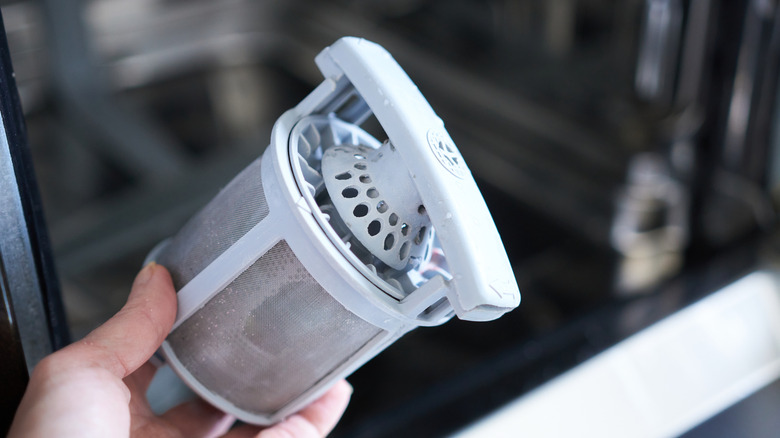
One of the first places to check if your dishwasher seems smelly is the filter. When the filter system isn't able to function properly, you end up with decomposing food stuck inside the dishwasher, unfiltered food making a reappearance in the dish-cleaning water, and even flooding. When your filter is clogged up, you may even start to notice your dishes coming out dirty, because the compromised filtration leads to unclean, recirculated water washing your dishes. As you can guess, all of this leads to a bad smell.
While self-cleaning filters don't require input to keep the dishwasher free from build-up, manual filters in dishwashers do need to be cleaned. Giving your manual filter a regular cleaning should help eliminate the risk of foul odors. You can also replace the filter with a brand new one if cleaning it is proving too difficult. Every time you clean your filter, be sure to also give the dishwasher a thorough cleaning to eliminate limescale and bacteria build-up. This will help you avoid major breakdowns affecting the overall functioning of your dishwasher.
Mold, mildew, or biofilm buildup might be causing chaos with your dishwasher
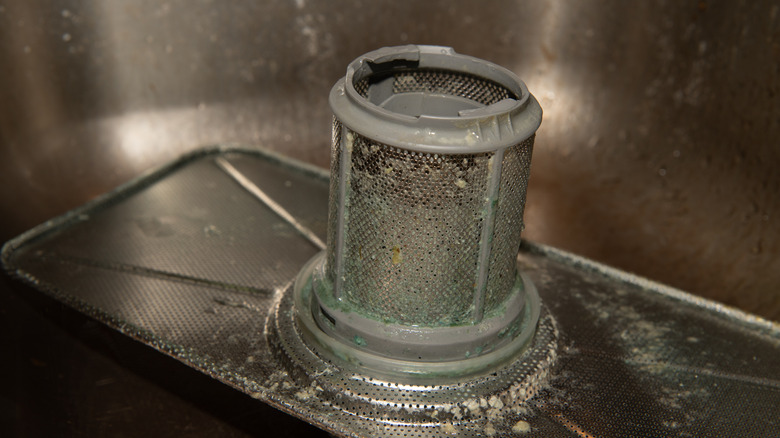
No one wants to believe that one of the reasons why their dishwasher smells bad is due to mold. Mold can be one of the more headache-inducing household issues if not dealt with speedily. When moisture gets trapped around your dishwasher's rubber gaskets, door seals, and other hidden cracks, it can lead to mold and mildew growth. Biofilm is another component worth cleaning up to avoid any nasty smells.
The other reasons why there may be mold, biofilm, or mildew could be due to trapped humidity or a blocked vent. Leaving the door ajar after cycles ensures that moisture can escape, but regular cleaning should accompany this for effective treatment. The best way to correct a mold problem is to sanitize the dishwasher with white vinegar and deodorize it monthly. It's important to stay on top of this cleaning routine so that it doesn't become an overwhelming issue, since there are major health risks associated with mold exposure.
Get ahead of awful smells by tackling poor drainage or stagnant water

Stagnant dishwashing water may be at the center of the dodgy smell in your kitchen. There are several reasons why you may suddenly experience a blocked drain in your dishwasher, but thankfully, they are easy to detect and just as simple to clean up. The main culprits are usually a partially obstructed drain hose or air gap, overflow issues with the garbage disposal connection, or other structural issues.
Sometimes it's possible to fix a leaky dishwasher without calling out a plumber, though other times it's best to get a professional on board. If you notice pooling or excessive slow drainage, you should stop using the dishwasher until it has been checked. Continuing to use it could cause the drainage and smell to worsen. Nobody wants to deal with an awful-smelling dishwasher — especially one that could even lead to further complications in your kitchen.
Watch out for residues from detergent, food, or hard water buildup
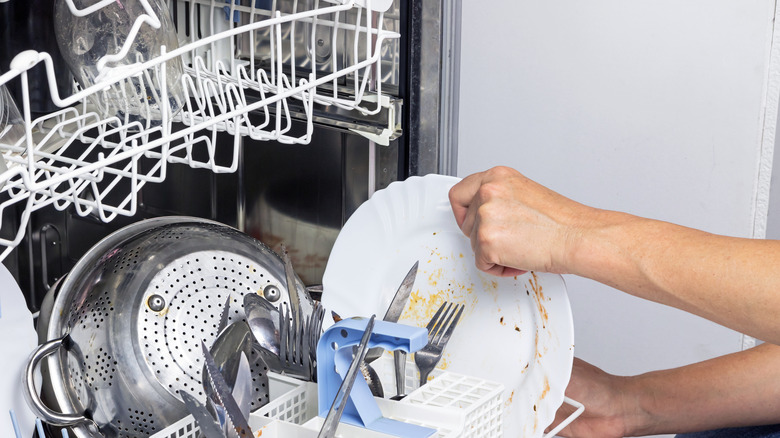
Maintaining your dishwasher also means cleaning up the food and residue that may get stuck in the pipes of your machine. This residue may also include grease, oil, larger food chunks, plastic food labels, or even the coating from non-stick items. Things to look out for include white film inside of the washer, a lingering chemical smell, or a dishwasher that seems to be lagging. Running an empty load to clean out the machine with a dishwasher-safe soap is one of the best ways to keep the dishwasher clog-free.
To rid your dishwasher of odd smells, you should also pay close attention to the temperature of the water. Super hot temperatures may cause a weird smell when the water interacts with the detergent soap. For proper sanitization, a temperature of 160 degrees Fahrenheit is great, but reaching about 194 degrees Fahrenheit is likely too hot and may cause issues.