

Why Some Kirkland Products Are Cobranded With Big-Name Companies
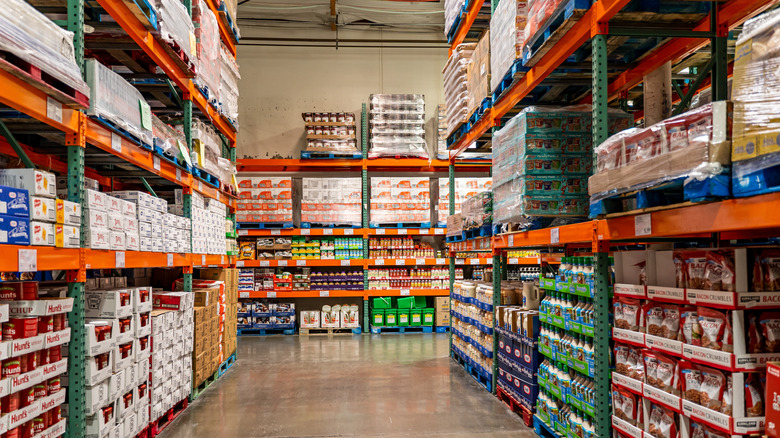
There are so many reasons to look forward to a trip to Costco, but it's arguable that the biggest draw is its in-house brand, Kirkland Signature. From chocolate-covered nuts to mega packs of toilet paper, people can't seem to get enough of the private label, which brings in a staggering $56 billion per year.
Most Kirkland products are made by other companies and packaged without the brand name through a system known as white labeling. There are other products, however, that are cobranded with both the original manufacturer as well as Kirkland Signature's logo. It might seem a little random that some products are labeled this way and others not, but there's a method to the madness. We spoke to two industry experts for some insight into Costco's white labeling decisions: Jason Vaught, director of content and marketing at SmashBrand, and Clay Cary, senior trends analyst and finance expert at CouponFollow. Spoiler alert: It has a lot to do with persuading customers that they're getting a premium product without the premium cost.
"Costco's entire model is based on the trust and confidence that members have in making purchases before placing an entire 48-count box of product into their shopping cart," explained Vaught. His brand strategy and testing firm focuses on consumer packaged goods, and at one point represented a supplement brand that partnered with Costco, which gave him an inside look at the pros and cons of cobranding. "A trusted name on the packaging builds member confidence faster and drives repeat bulk purchases," he said.
Cobranding helps lure brand-loyal customers
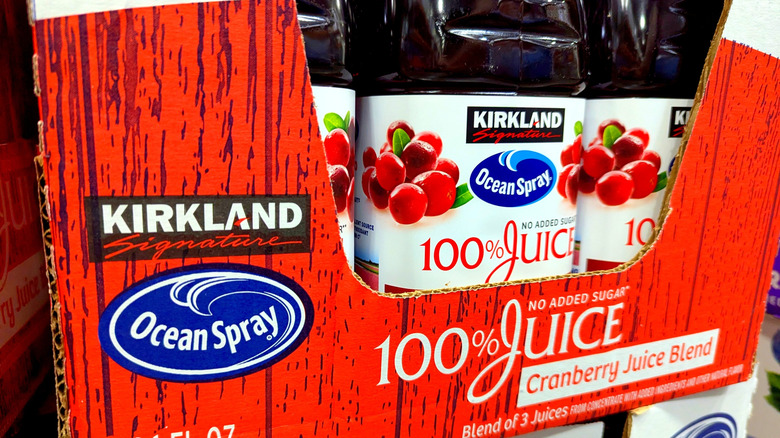
At Costco, cobranding with a household brand name persuades customers in more than one way. As Clay Cary explained, not only does it lend credibility to the Kirkland Signature label, it can also help sway customers to try store-brand versions of products that they'd normally buy from a particular brand. For example, it might not be a big deal if your canola oil is made by Kirkland Signature, but Coca-Cola is non-negotiable. Costco executives do extensive product research to find out exactly which items hold the most brand loyalty, and will often cobrand their private-label versions with the original brand for products in these categories. "It provides Costco with the opportunity to enter segments where consumers' loyalty is high, like coffee or household products," said Cary.
Cobranding really only works when both sides have something to gain without undermining the big brand's core business. "Costco sells things at a scale that cannot be achieved by other stores, so despite the low price, the product may bring substantial profits," Cary explained. He added, "Cobranded products in most cases differ from the original one only by slight formulation modifications. Thus, there is no cannibalization here, but segmentation instead." Costco also has a reputation for its strict quality control, he said, so if you're an Ocean Spray loyalist on the fence about Kirkland Signature cranberry juice, the cobranded bottle makes it a little easier to justify switching, or at least experimenting.