

The 1950s Food Trend That Changed The Way We Cook
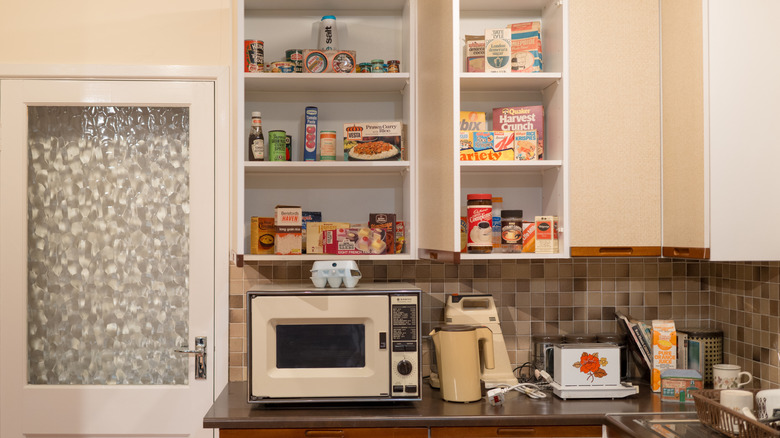
Before the late 1940s, frozen foods were considered a luxury item. This began to change later in the decade, however, when the industry started mass-marketing budget-friendly frozen meals to Americans. It was the early 1950s when the trend of dinnertime convenience exploded in the U.S. and more and more people started to cook their meals in mere minutes. Heat-and-serve meals and TV dinners started to rapidly gain popularity in the U.S. during the mid '50s — and they were here to stay.
After a few years of marketing to mostly rich, white people (especially women), however, the industry realized it could have a wider consumer base. Brands started tailoring its sales talk to many demographics — including working-class families of different ethnicities, as well as working women. And in the early 1970s, companies started coming out with frozen dinners meant for kids. The old-school TV dinner Libbyland Adventure Dinners, for example, was a 1970s version of Kid Cuisine and featured cartoons on the packaging (and kid-friendly entrees like hot dogs).
How one terrible Thanksgiving became an integral part of TV dinner history

Before Americans were cooking meals in the microwave, one company's leftover turkey problem was credited as one of the little-known reasons TV dinners became such a hit in the first place. It's also the reason television became incorporated into the picture at all. Low sales during the 1953 Thanksgiving season left Swanson with 260 tons of turkey and nothing to do with it. So, instead of taking the hit, the company packaged the turkey in aluminum trays, along with a few Thanksgiving-like sides of stuffing, peas, and sweet potatoes, and marketed it to the masses.
Television had just begun to get popular and so Swanson put all of its eggs in that basket, letting the marketing rely on eating this meal in front of the TV, becoming one of the first companies to advertise through commercials. Ready-made meals didn't take long to make, so consumers could cook it up quickly and still have time to plop themselves in front of their television sets before enjoying their convenient dinner. It worked — sales were incredible, with 35 million sold in a couple of years since first launch. Not coincidentally, 1954 was also the year color TVs became available, after first being sold on December 30, 1953. All of this paved the way for the masses to get on the heat-and-serve meal trend as TVs became more popular. When the '60s hit and microwaves became available to everyone, TV dinner sales skyrocketed.