

How Long To Boil Cabbage For The Best Results
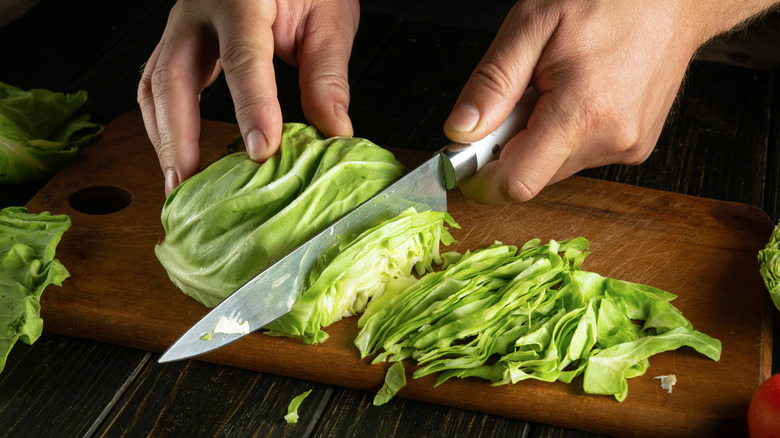
Whether you're making cabbage rolls or just a healthy side for a meaty entree, boiling is one go-to method for preparing cabbage. However, it's also a method that requires some attentiveness to the clock, as over- or under-cooked cabbage can be fairly unappealing.
Unfortunately for those who crave simple answers, there's no one magic number to tell you how long to boil cabbage, as a few factors will influence the cook time. Generally, though, it's in the range of five to 12 minutes. How big your cabbage pieces are is a determining factor here: finely chopped or shredded cabbage has more surface area exposed to the hot water, so it'll boil faster — around five minutes should be good. Be sure to chop the cabbage evenly so you don't end up with a mix of under- and overcooked pieces. Correspondingly, larger pieces like wedges will need longer: The exact timing will depend on just how big they are, but 10 to 12 minutes would be a decent general guide.
The type of cabbage you're using can also impact the boiling time. Green cabbage is the most common, and cooking times likely refer to this cabbage if a specific type isn't mentioned. Red cabbage is denser and may need a little longer, while savoy cabbage (Jacques Pépin's favorite) has softer leaves and may need a bit less time. There's also a question of preference: For softer cabbage, a longer boil will work, although bear in mind you may sacrifice flavor and nutrients with the extra cooking time.
How to tell when cabbage is cooked right
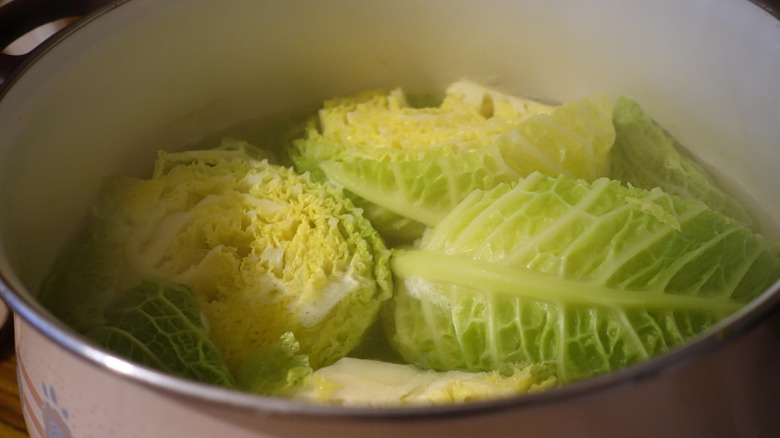
Given that there's not one magic boiling time for cabbage, you need to know how to tell when your cabbage is properly cooked. Ideally, it should be soft enough that a fork can pierce it easily, but still firm enough to hold its shape. You could also taste-test it to check that it's soft, but with a hint of firmness.
If you over-boil cabbage, you should be able to tell just by looking at it. It'll fall apart or lose its structure, becoming mushy. It may also lose its color, with green cabbage turning into a less-appealing gray tone. You can likely also clock over-boiled cabbage without even looking at it: That sulfuric or rotten egg smell that some people associate with boiled cabbage is actually a sign of over-cooking.
Under-cooking is less of a worry since you can always cook the cabbage for a bit longer (whereas it's obviously impossible to "un-cook" overdone cabbage). But in any case, undercooked cabbage may have stiff leaves, and more of that sharp or bitter taste that's characteristic of raw cabbage.