

Cast Iron Or Stainless Steel: Which Is Best For Cooking Steak?
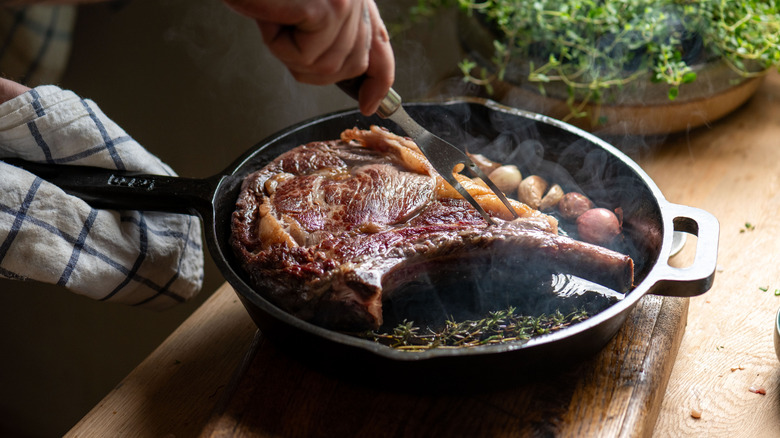
Few culinary topics can incite as much passion among amateur chefs as the perks and pitfalls of various cookware materials. Most folks are already familiar with the generations-long debate about how to clean a cast iron without ruining it, for example. "Ruining" a steak can be a little more subjective, but there are still more philosophies about whether one should sear, reverse-sear, grill, or sous vide a steak than our fire-starting ancestors could have ever imagined. Debating whether cast iron or stainless steel is superior for your precious chateaubriand or filet mignon is a surefire way to stir up controversy. Yet, both materials are capable of delivering excellent results: While cast iron is great for getting that perfect sear, stainless steel is ideal if you plan on finishing your steak with a pan sauce.
Plenty of beef devotees will swear that a cast-iron pan is compulsory for an optimal steak. It's able to reach the scorching heat required of a restaurant-quality cut, and it's already nonstick, when properly seasoned. And cast iron is typically tops when you want to create the simple finish with little more than salt, pepper, and the requisite fat that many of your fancier cuts demand to let their natural merits shine. But the gleam of stainless steel also appeals, depending on the kind of plate you aim to create.
The steak stakes: mastering pan choice and internal temperature
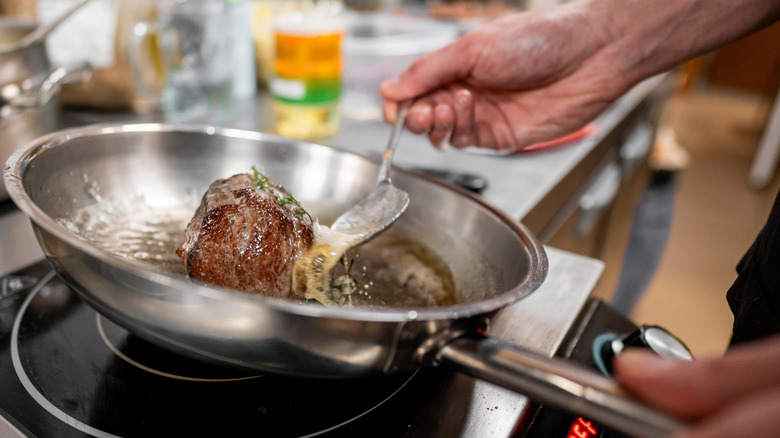
If you plan on making a pan sauce, stainless steel is generally the superior choice. The mighty heat retention of your cast iron can cause some fairly standard pan sauce ingredients like butter to burn up too quickly, even when you think you've reduced your flame enough. So, stainless steel's inability to reach the soaring temperatures of cast iron is actually a boon for your sauces. Stainless steel is also physically lighter, and thus easier to maneuver when instructions call for you to tip the pan and baste a steak for what can feel like an inordinate amount of time. While both pan sauces and basting can be executed in a cast-iron pan, they're simply easier to manage with stainless steel. And unless you're chasing a Michelin star, that's probably a good enough reason to choose it.
As with many things, it's also what's inside that counts. A hard sear that you can actually hear with the scrape of the fork is certainly coveted in carnivore circles. But it loses a lot of appeal if you've ignored your steak's internal temperature. Even a cheap meat thermometer is as valuable as your cookware for achieving the ideal rare, acceptable medium, and inadvisable well done steak. It'll also only add mere seconds to your overall cook time, including any lengthy metal negotiations.