

Here's Why Your Tomato Plant's Leaves Turned Yellow (And How To Fix It)
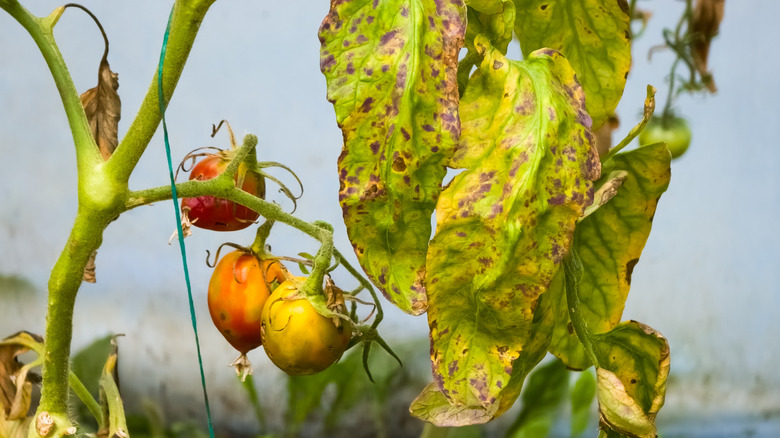
First-time gardeners might find it challenging to learn the ropes. But it doesn't take rocket science to look at your tomato plant, see its leaves changing color, and realize there's something wrong with it. Despite being beginner-friendly, tomato plants need lots of water and are vulnerable to weed killers, so you'll need to give them plenty of TLC to make sure they thrive.
Addressing your plant's yellowing leaves may be difficult, because there can be many different reasons why the leaves have changed color. You might have to do some digging (literally and figuratively) to find out why. For instance, they might not be getting enough sunlight. Six hours is the sweet spot of sunbathing, so it might be worth moving them to another area if they're not getting enough light. Your watering routine, pest control methods, and even your plants' soil can also affect the color of their leaves.
Fortunately, it's possible for your tomato plants to revert back to their cheerful green hue. Yellowing leaves aren't a death sentence just yet. By knowing the common reasons for this tomato plant problem, you can save your plant and bring it back to full health in no time.
You're not watering your tomato plants correctly
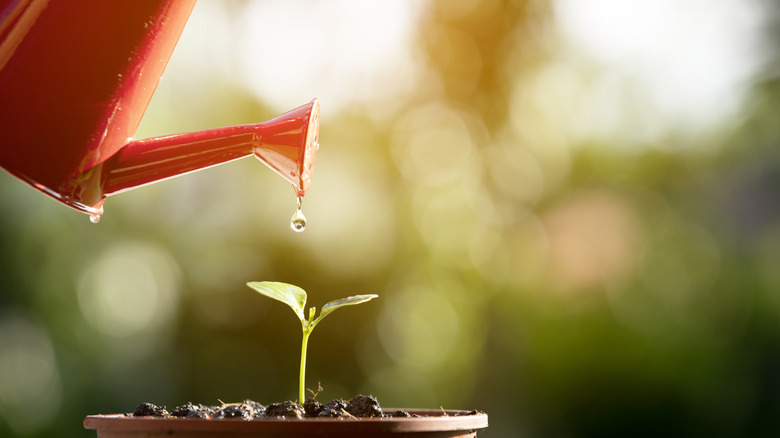
If you're new to gardening, you might find yourself in a tug-of-war between watering too much and watering too little. Even when you're working with the easiest tomato variety for beginners to grow, water-loving tomato plants can still drown if you pour in more than what's recommended. Watering too much can cause the plant to stop absorbing enough oxygen, and it can even kill your plant's roots. Soggy soil means you need to leave it alone for a bit (aka no watering), whereas damaged roots are a sign that you need to repot your tomato plant. Other signs to look out for are a funky smell coming from the soil and dark-colored roots.
Meanwhile, not giving tomato plants enough water can delay their growth and potentially kill them if you don't do something about it. Note that depending on the stage of growth, tomato plants might need more water than usual. For instance, a seedling only needs damp soil, while a fruiting plant will require at least 2 inches of water every week. Aside from turning yellow, you might notice that your tomato plant's leaves start to roll up or fall off. A soil moisture meter will help you get rid of watering lapses for good, so it's a good idea to invest in one if you're constantly experiencing this issue.
Your tomato plants might be sick
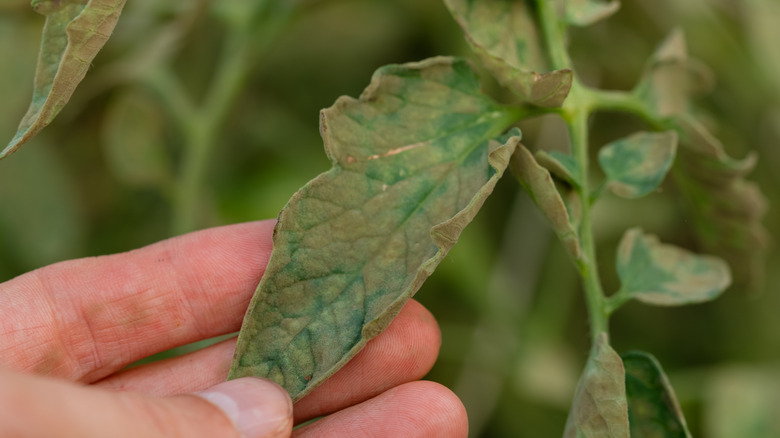
Plants are living things — which means that they can get sick, too. If you see your tomato plant's leaves turning yellow, it could be due to a number of diseases. Leaf mold and yellow leaf curl virus are common diseases that tomato plants suffer from. Look for yellow spots and brownish spores to identify leaf mold; slow growth and curling yellow leaves indicate leaf curl virus.
If the yellowing leaves are at the bottom of the plant, it could either be fusarium wilt or verticillium wilt, both of which target the roots and affect the plant's ability to absorb enough water. Both kinds of wilt are similar, but there are also obvious differences worth noting. For instance, it can be considered fusarium wilt if the yellowing of leaves is only occurring in a specific spot. Verticillium wilt can be tougher to deal with because once it infects your plant, it can spread widely and may cause significant damage. The tomato plant can still bear fruit, but it won't be as big as it should be. A sign of yellowing in more mature leaves means the problem has just started, while a trail of wilted leaves can be a sign that it's progressing.
Unfortunately, if you suspect any of these diseases, it's best to get rid of the plant before it spreads the infection to its neighbors. On the flip side, you can avoid this by regularly disinfecting your gardening and potting supplies. Always avoid planting the same crops in the same area repeatedly, to keep the soil from contracting wilt fungi.
There are unwanted visitors on your tomato plants
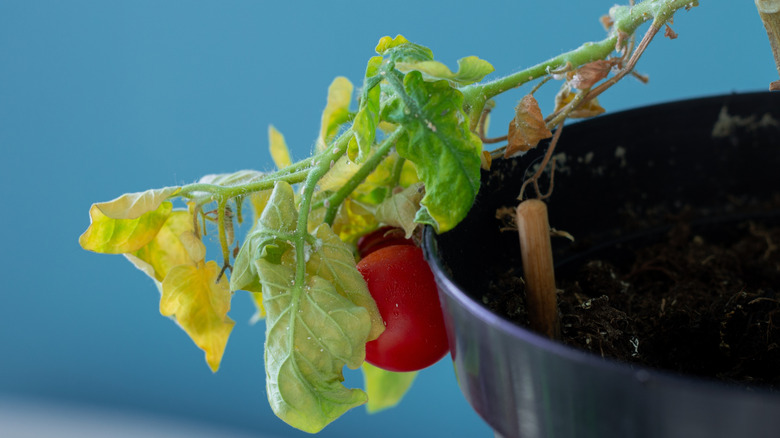
There's a reason why the best hacks for getting rid of pests in your vegetable garden are some of the basic things to learn before picking up your rake and shovel — a pest infestation is practically inevitable. For tomato plants, spider mites and aphids are the usual suspects that can harm them and turn their leaves yellow. An obvious curling at the leaves' tips is also a good indicator.
Getting rid of spider mites is manageable, but spotting them is the hard part. White dots on the leaves are a telltale sign. Once you find mites on your plant, spray them off with a garden hose; you'll need to do this regularly, until the infestation is gone. Using insecticidal soap can also do wonders. Prevent spider mite infestations by making sure your plants are well-watered, as this avoids creating a hot environment where mites will thrive.
Aphids are quite easy to spot because you'll see them huddled up together, especially on newer leaves. They're easy to get rid of, too. You can use pyrethrin, an insecticidal soap, and high-pressure water. However, you'll have to be wary of how fast aphids can multiply, so keep your eyes peeled even when you think you've completely eliminated them. At times, when harmful insects are ruining your vegetable garden, attracting more bugs might be the solution. You can create an army with a throng of ladybugs and green lacewings and let them do the job for you.
Your plants are hungry for nutrients
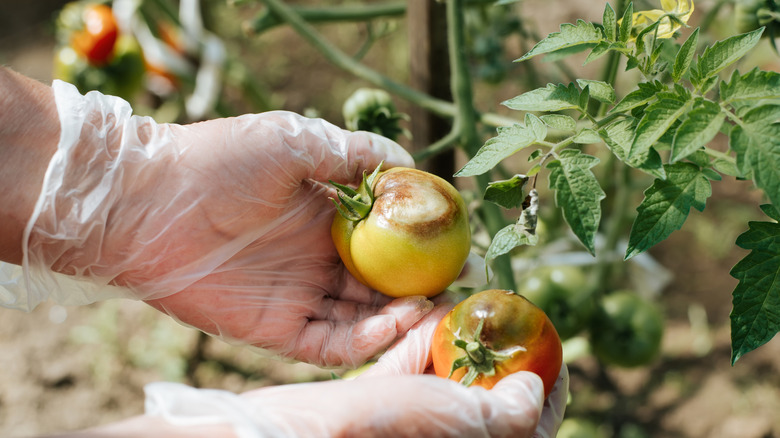
When the leaves of tomato plants turn yellow, it could also mean that they lack nutrients. Older leaves are usually the ones that go first, which can point to nitrogen deficiency; this can be solved by adding fertilizer. Meanwhile, if the newer leaves start turning yellow first, specifically the outer corners, they might be telling you that the plant lacks potassium. This can hinder the plant from bearing ripe fruits.
Adding soil amendments like wood ash and granite dust can do the trick. However, it's best to do a soil test to rule out other possible deficiencies or issues. A lab or professional in your area can do the test for you.
Iron deficiency can be another sneaky culprit, which happens when the alkaline levels of the soil are too high. Tomato plants thrive between pH 6.2 and 6.8. This issue can be tough to deal with for beginners — if your soil has a pH higher than 8.5, it can take years to lower it. Getting a soil acidifier from gardening stores is a great first move. This is also where a soil test comes in handy again, as you'll need the results to figure out the amount of soil acidifier needed to revive your plant.