

Got A Little Extra Kitchen Foil? Make Your Vegetable Garden A Safe Haven For Hummingbirds
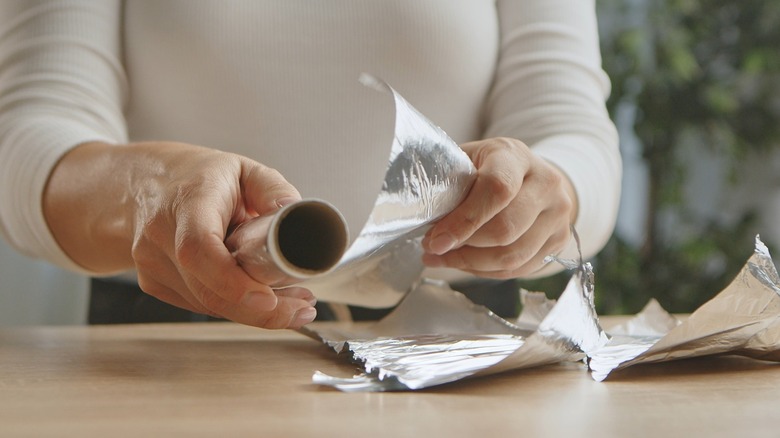
With the arrival of spring, many of us are busy planting our vegetable gardens and prepping our yards for migrating visitors, especially adorable ones like hummingbirds, which can help with pest control and pollination. While you can certainly attract hummingbirds to your garden with common herbs like rosemary, hanging a hummingbird feeder in your yard is sure to bring around more of these backyard guests. Yet as outside temperatures increase, you should take some extra precautions to ensure your yard is a safe place for these fast-moving birds to feed — and all you need is one kitchen staple. Especially in warm weather, consider wrapping your hummingbird feeder in aluminum foil to keep the stored nectar from overheating.
While the perfect ratio of sugar to water for homemade hummingbird nectar is ¼ cup of refined white sugar for every cup of water, keeping this nectar safe for hummingbirds to consume is a whole different matter. As temperatures rise, your homemade nectar has a propensity to ferment at a quick pace. Therefore, to safeguard this sugary mixture from mold and bacteria, use foil to minimize heat exposure. All you need to do is wrap the clear, central reservoir of your feeder in an even layer of aluminum foil for proper insulation.
Since aluminum foil is reflective, it blocks radiant heat and light, keeping the nectar cool and making it safer for hummingbirds to consume in warm weather. As an added bonus, foil's shiny appearance can ward off unwanted guests like bees and squirrels. Just don't place any foil near the feeding ports which can discourage hummingbirds from eating.
More ways to keep backyard feeders safe for hummingbirds
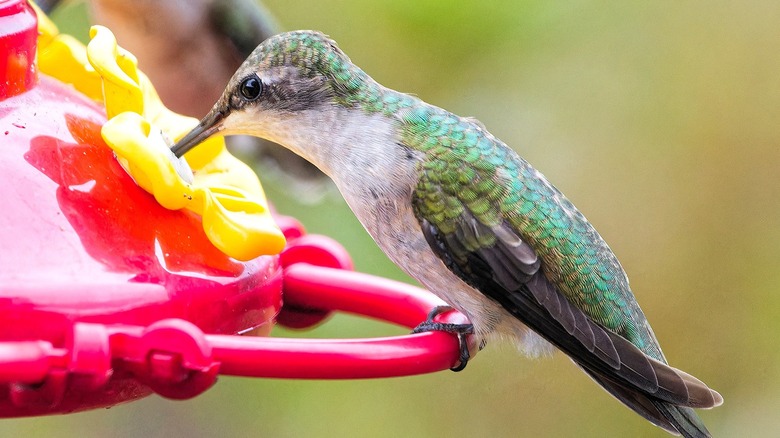
In addition to wrapping your feeder's primary holder in foil, there are more precautions you can take to ensure you're providing hummingbirds the safest food. For starters, clean your feeder regularly to ward off the development of yeast, bacteria, and mold. Use a gentle solution of warm water mixed with hydrogen peroxide or vinegar. Avoid commercial soaps that contain ingredients (including fragrances) that can dissuade hummingbirds from visiting your feeder. Some dish soaps can also be harmful to hummingbirds if ingested.
During cooler months, clean and replenish your feeder every three to four days. Once outside temps become warmer (around 80 degrees Fahrenheit or above), clean your feeder and add fresh nectar every day or two to prevent spoilage. Even though wrapping your feeder's reservoir in foil may keep the nectar from overheating, its always best to follow a regimented cleaning schedule to keep these birds safe and protected from exposure to mold and bacteria.
You should also avoid placing your hummingbird feeder in a location with peak afternoon sunlight. Instead, hang your feeder under trees or nectar-producing plants along the edges of your garden for a better balance of morning sun and afternoon shade. Since these fast-flying birds eat every 10 to 15 minutes, also consider providing hummingbirds with even more sustenance with the help of overripe bananas, which attract the fruit flies that provide essential protein for hummingbirds' daily diet.