

15 Ethiopian Foods Everyone Should Try At Least Once
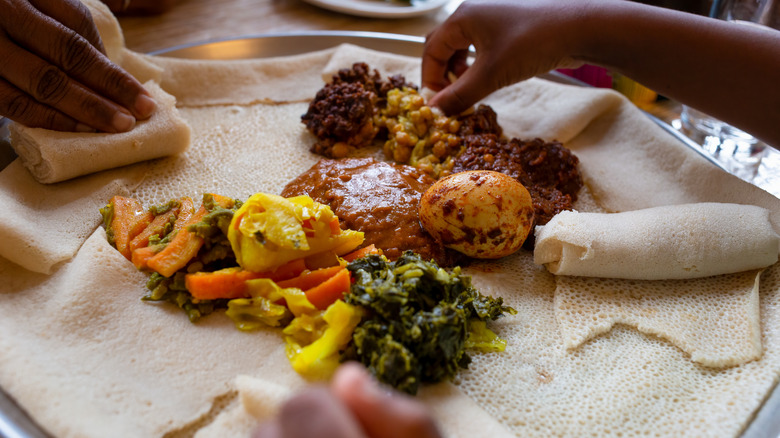
As one of the oldest surviving cuisines on the planet, Ethiopian cuisine is a way of life, a form of community-building that centers around ancient grains, slow-cooked stews, and a rich layering of spices. And the best part is, it all tastes incredible.
I have researched Ethiopian food for a specialty cookbook, leading to a love affair with injera, holy basil, and berbere spice — some of the essentials for Ethiopian food. Presented with the opportunity to assemble the definitive guide of the 15 Ethiopian foods everyone should try at least once, I turned to a few experts to share their knowledge. Delish Lemma and his wife are the owners of Delish Ethiopian Cuisine in Seattle. Meymuna Hussein-Cattan is the owner of Los Angeles-based Flavors from Afar. Berekti Mengistu, is the owner of Mesob Ethiopian Restaurant in Montclair, New Jersey. And finally, Shruthi Baskaran-Makanju, who is the food systems expert and vegetarian food blogger behind Urban Farmie, and has spent nearly a decade working on Ethiopian food systems and cooking in home kitchens across Addis Ababa. To all of them, Ethiopian food is about coming together.
"A typical Ethiopian dinner usually is a moment of communion of coming together and enjoying each other's presence just as much as it is about the food," says Lemma. In fact, it is not unusual to see people feeding each other during the meal, an act called "gursha" that is considered a sign of affection. "Always take your time with the meal," adds Hussein-Cattan. "Ethiopian food is meant to be shared, talked over, and remembered."
1. Injera
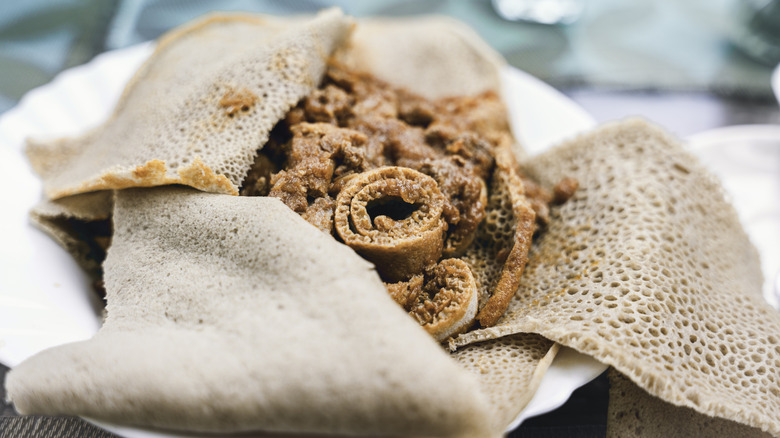
It is impossible to talk about Ethiopian food without first discussing injera. A typical Ethiopian meal involves a single shared platter, around which all the diners gather. And at the base of that platter lies the injera.
This spongy sourdough flatbread is not like bread, nor is it a wrap. It serves as the bed for the beyaynetu, an Ethiopian combination platter containing all manner of cooked and raw vegetables, long-simmered meats, and a few unique condiments. People eat with their hands, tearing up pieces of injera and using it to dip into the dishes with gusto. In a traditional Ethiopian meal, the injera serves as the bread, the plate, and the utensil.
"Injera is unique because of the rich history behind it. It starts by the grain itself due to the fact that it's an ancient grain it is untampered with and in its original form," says Lemma. "Injera is the soul of the meal," says Hussein-Cattan. "It's made from fermented teff, a tiny grain native to Ethiopia, which gives it that tangy flavor and airy, spongy texture ... The fermentation also makes it deeply aromatic and nourishing." Mengistu sums it up simply, saying, "Without injera, there is no Ethiopian meal."
2. Genfo
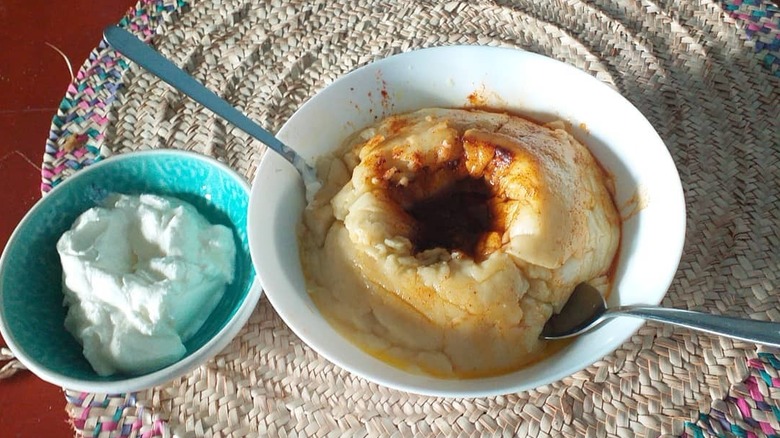
Before dinner, there is the Ethiopian breakfast. And that can be a ritual in itself, starting with genfo, a thick porridge that is made out of barley or wheat. It can be seasoned lightly or heavily, depending on the cook and the family's preference.
"Breakfast can be simple or hearty," Hussein-Cattan says. "Genfo, a thick porridge made from grains and served with spiced butter and berbere, is very traditional."
According to Baskaran-Makanju, genfo is especially typical in cooler climates along Ethiopia's highlands, where Arabica coffee beans come from. It's meant to warm up and fortify the diners, preparing them for a day outside in the cold. And unsurprisingly, genfo is often accompanied by a warm serving of the most well-known Ethiopian food. "Alongside any of these, you'll almost always find coffee ... the most divine coffee, if I might add, but I'm biased."
3. Firfir
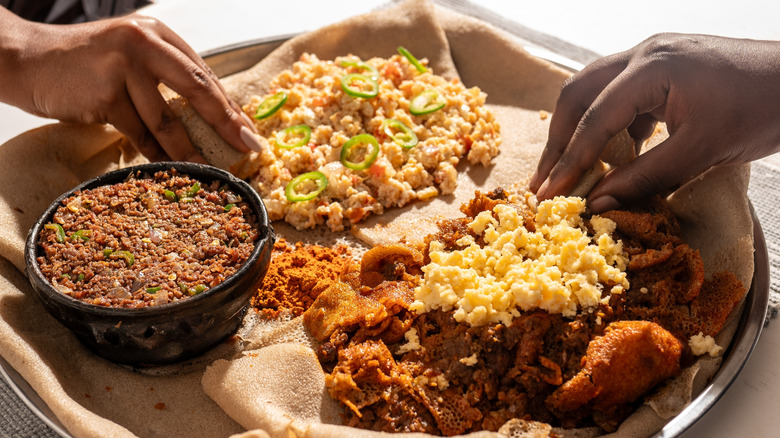
Another typical breakfast dish is firfir, a porridge made out of — you may have guessed it — torn pieces of injera. This injera is tossed with niter kibbeh, a clarified fat tempering, and berbere spice, a fiery and aromatic mix typically made up of fenugreek, coriander, cardamom, nutmeg, and cinnamon.
According to Hussein-Cattan, the rendered fat is the essence of the dish and what gives it its flavor. "Niter kibbeh, a spiced clarified butter infused with herbs and aromatics, adds incredible depth," she says. Lemma confirms, saying that "firfir is one of the most widely eaten breakfasts and consists of marinated cut-up pieces of injera, tossed and cooked a little."
Baskaran-Makanju describes it as "essentially Ethiopia's version of migas or strata — a brilliant way to use day-old injera." And to those looking for a soft introduction to Ethiopian food, she confirms that "breakfast is less spicy than dinner!"
4. Kitfo
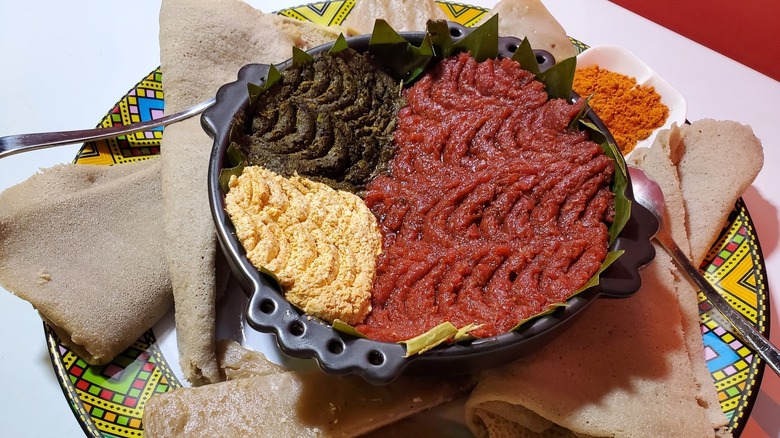
Moving away from breakfast and into dinner, one of Ethiopia's most celebrated dishes is the beef kitfo. If you're a fan of beef tartare, then this spiced Ethiopian version is one you simply must try.
"Kitfo is one of Ethiopia's bold dishes," says Hussein-Cattan. Traditionally, kitfo is either finely minced or chopped beef that is seasoned with spiced clarified butter and a gentle chili blend. It can be served raw, lightly warmed, or even fully cooked. "I prefer medium rare, so I tell the server 'leb leb' in Amharic, which means not overcooked," Hussein-Cattan advises.
Kitfo is one of celebrated Ethiopian chef Marcus Samuelsson's favorites. He served it at his wedding and has several variations of it at his Harlem-based restaurant, Red Rooster. To him, the key to the dish is the spiced clarified butter. Hussein-Cattan also recommends serving it with "fresh cheese, which cools and softens the richness, along with collard greens or other vegetables."
5. Doro Wot
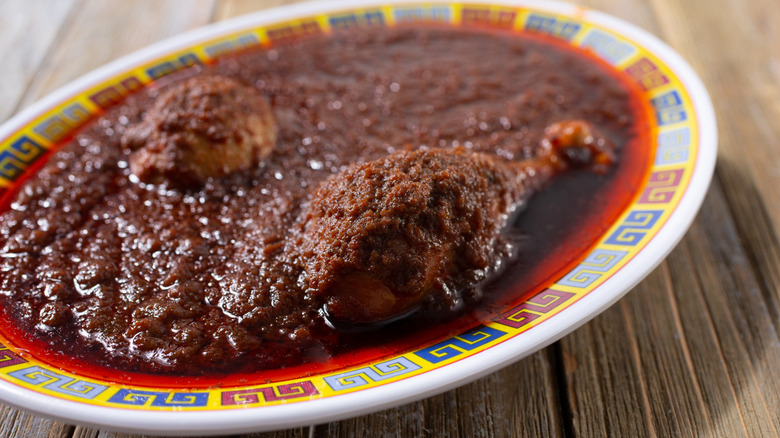
Another beloved Ethiopian food is doro wot, a slow-cooked spiced chicken stew that has become the country's most iconic national dish. It is slowly cooked with onions, berbere, niter kibbeh, Ethiopia's clarified butter, ginger, and garlic. Hard-boiled eggs are added towards the end.
According to Baskaran-Makanju, the onions are the secret to the dish. "The onions are cooked down for an almost unbelievable amount of time, often over an hour, before any liquid goes in," she says. The results are a deeply caramelized onion base that gives the dish a glossy appearance and an almost nutty flavor.
It also happens to be one of Mengistu's favorite foods. "Doro wot is especially meaningful, it's traditionally served on holidays and special occasions," she says. It's a dish that's typically found on any Ethiopian restaurant menu, and one that everyone should try at least once.
6. Shiro Wot
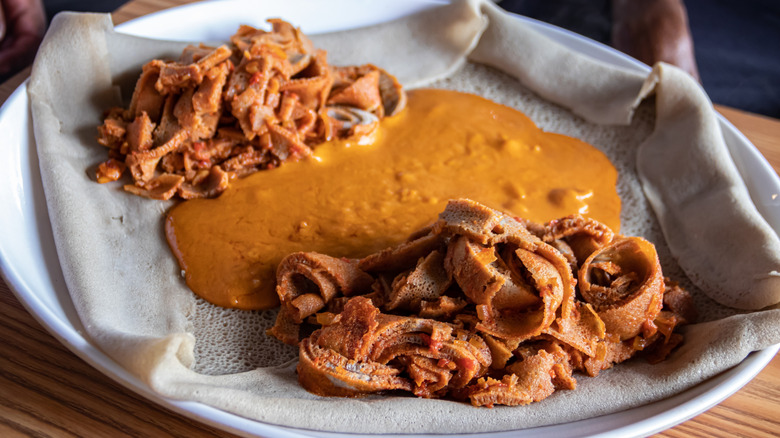
Continuing Ethiopia's love for complex stews is the shiro wot, which is another food even newcomers to Ethiopian food will love. But first, we need to understand, at the risk of alliteration, what a wot is, which can also be spelled as wat.
A wot is a slow-cooked stew that has a gravy-like sauce. It can have any protein or be vegetarian. The secret here is in the cooking process, and the soft texture of the resulting dish.
Ethiopia's other favorite wot is the shiro wot. "I could live on this if I could; it's so good," says Baskaran-Makanju. "It's often the dish that surprises first-timers with how much flavor comes from something so simple!"
The base of the dish is shiro, a finely ground, pre-spiced flour made from chickpeas or broad beans. It is quick to make, and the dish is a typical weeknight staple in many Ethiopian homes. Baskaran-Makanju describes its flavor as "nutty, savory, and deeply comforting."
7. Misir Wat
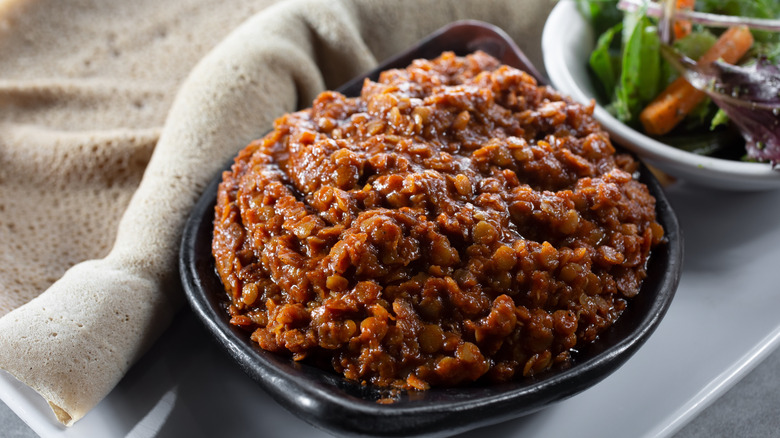
Misir wat is another stew that is very popular with vegans all over the world. In this dish, red lentils benefit from a long and slow cooking that makes them fall apart in a silky consistency. Berbere spice gives the dish its unique flavor, though caramelized onions, garlic, and ginger are other essential components.
"Misir wat, the spiced red lentil stew, is something I could eat every week," says Hussein-Cattan. "[It is] deeply flavorful and shows how plant-based Ethiopian food can be just as rich as meat dishes." Berekti Mengistu agrees. To her, misir wat demonstrates why Ethiopian food has become one of the most beloved cuisines among vegetarians. "Ethiopian vegetarian food is deeply satisfying, not an afterthought." Baskaran-Makanju shares a similar sentiment as well. "It is so deeply built into the culture through centuries of Orthodox fasting practice. If you're vegetarian, vegan, or just curious, a beyaynetu is one of the most satisfying meals you can order anywhere."
She recommends misir wat to anyone looking to make Ethiopian food at home. "It's forgiving, vegan, uses accessible ingredients, and delivers maximum flavor for minimum technique," she says.
8. Tibs
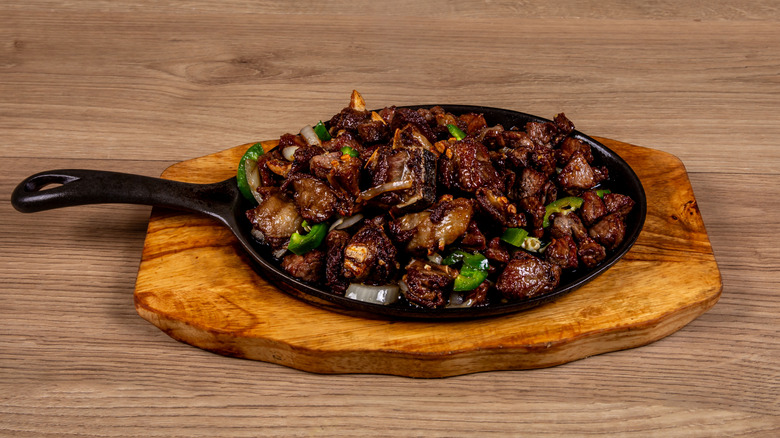
Alongside wats, the other common category of Ethiopian food is tibs. This dish, unlike the stews, is cooked by briefly sautéing a main ingredient on high heat. It often contains onions, garlic, and spicy green peppers, but the rest of the seasonings can vary.
The most common version of tibs is undoubtedly beef. "Tibs is always at the top for me, tender pieces of beef sautéed with onions, peppers, garlic, and warm Ethiopian spices, often finished with rosemary and served sizzling," says Hussein-Cattan.
Tibs with lamb is one of Mengistu's favorite dishes. At her restaurant, you can get beef, chicken, or lamb tibs. All are cooked in a spicy red pepper paste that gives the dish a fiery flavor and color. For many, tibs is the Ethiopian version of a stir fry, and the familiar flavors are often a hit with those who like their food with a touch of heat. To cool down the experience, Lemma recommends serving tibs with shiro wat. To him, blending the meat and the bean stew is "always a good combination."
9. Tikil Gomen
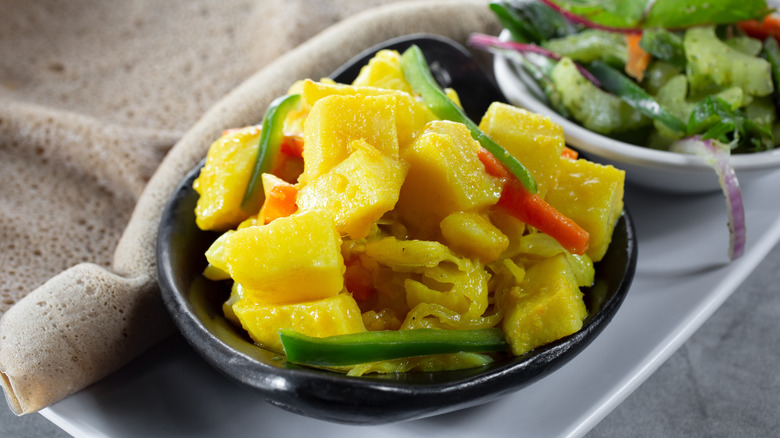
Tikil gomen is a mild, turmeric-scented dish of braised cabbage, potatoes, and carrots. It has a yellow color that can vary in intensity, depending on how much turmeric is used in the dish.
"Tikil gomen is a comforting vegetable dish," says Mengistu. Her restaurant takes a unique approach to making the dish in order to give it the best flavor and texture possible. "When preparing tikil gomen, we lightly fry the potatoes beforehand so they maintain their structure and do not break apart during cooking. This step also gives the edges a delicate crispness, adding another layer of texture," she says. "The key is patience."
Tikil gomen is commonly one of the only "alicha," or non-spicy Ethiopian dishes that provide balance on an Ethiopian restaurant menu. "Unlike many Ethiopian dishes, tikil gomen is mild and relies on the natural sweetness of the vegetables rather than heat, creating a beautiful balance on the platter," Mengistu explains.
10. Awaze
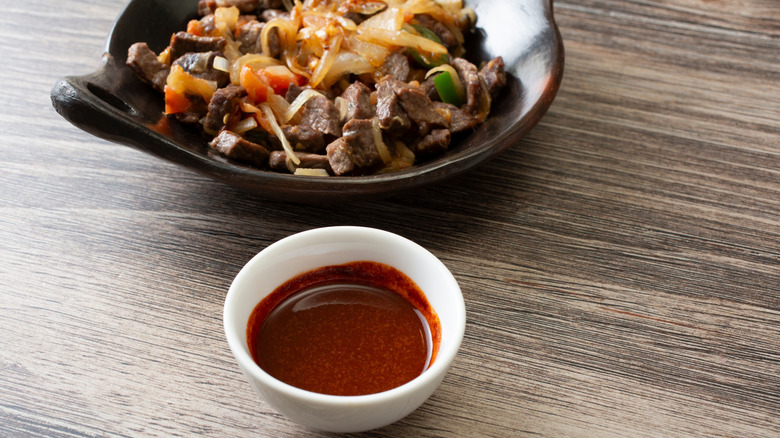
If you enjoy chili oil or chili crisp, then you're going to fall head over heels for awaze sauce, the Ethiopian version of the fiery spread. Awaze takes the berbere spice blend and turns it into a chili dip.
This condiment, which chef Samuelsson serves with his version of Ethiopian tacos, is a way of taking the beloved Ethiopian berbere spice from a seasoning to a food in its own right. This thick chili condiment has a bold, complex, and tangy flavor. But at its base, awaze has a surprising sweetness. Traditional awaze is made with tej, Ethiopian honey wine, which gives it a unique and funky layer absent from most chili oil.
"For me, awaze brings warmth and that unmistakable Ethiopian flavor to the whole platter," says Mengistu. "Ethiopian food is built on layers of flavor," she explains, and berbere spice, as well as awaze sauce, is central to that flavor.
11. Ayib
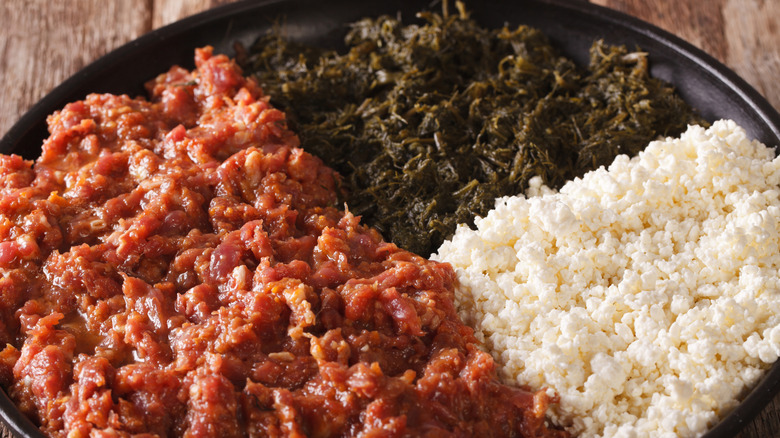
Ayib is Ethiopia's cottage cheese. This soft, mild curd is the local version of fresh farmer's cheese, and it has a slightly crumbly texture and a cooling effect on the food.
It is most often served alongside spicier dishes to soften their flavor. To Mengistu, it's an integral part of a good spread. "I love having gomen (slow-cooked collard greens), Tikil gomen (cabbage and potatoes), and ayib, our fresh Ethiopian farmer's cheese. These sides balance the richness of the stews and add freshness to the platter."
"You'll often see it served as a small white mound next to gomen, or as part of a combo platter," says Baskaran-Makanju. However, she cautions that ayib, like many good cheeses, is a bit funkier than it sounds. "This is definitely an acquired taste, similar to a blue cheese or gorgonzola," she says. According to Hussein-Cattan, it's also a common accompaniment to kitfo, the Ethiopian tartare. In that case, it also gets accompanied by sauteed collard greens, called gomen.
12. Ethiopian coffee
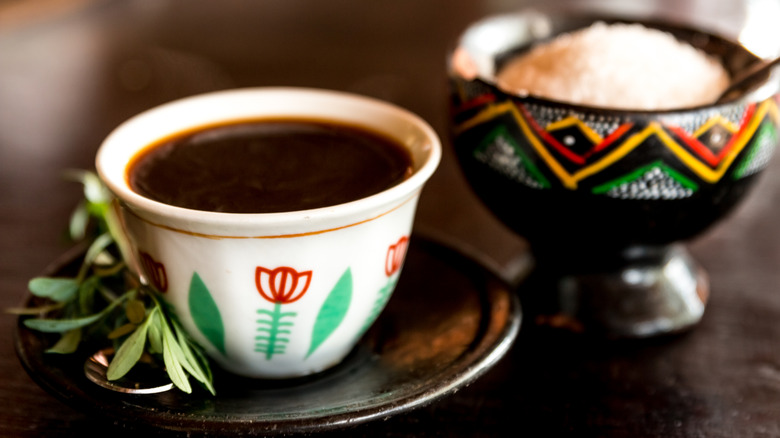
Ethiopia is widely considered the birthplace of coffee and is the source of some of the highest-quality coffee beans in the world. As a direct result of this, coffee is an integral part of any Ethiopian meal, be it breakfast, lunch, or dinner. But Ethiopian coffee is so much more than just a food. It's an entire ritual that everyone should experience at least once in their life.
"It's a beautiful cultural experience where people come around the coffee pot and spend time together as the coffee is made and poured," says Lemma. "It's more than the coffee, but about the experience shared there amongst loved ones." Ethiopian coffee is served in a specialty pot heated over a charcoal fire, often with frankincense burning on the side. If it feels like a church, it's no accident. True Ethiopian coffee beans are often green, which are unroasted.
"Coffee is sacred in Ethiopian culture," says Hussein-Cattan. "The ceremony is about slowing down, roasting green beans in front of guests, grinding them by hand, and brewing the coffee in a clay pot called a jebena. It's served in multiple rounds and meant to bring people together for conversation and reflection. For me, it represents hospitality, respect, and community." "It's a cuisine that teaches you to slow down, which is maybe why the coffee ceremony feels like such a natural ending to every meal," adds Baskaran-Makanju.
13. Tej

Another contribution Ethiopia has made to the list of the oldest dishes in the world is tej, a fermented honey wine that remains popular to this day. Drinking tej is an art form. It's typically served in a rounded glass flask called a berele, and in Addis Ababa, Ethiopia's capital city, tej bet are entire bars where people gather to drink this honey wine.
But to Lemma, the uniqueness of tej is in its flavor, which blends floral notes with a tannic, fermented undertone. "Yes, the honey wine is a special formula that is pretty traditional to Ethiopia and has such delicious floral and refreshing taste, perfect to drink during or after eating Ethiopian food," he says.
The tannic taste comes from the gesho leaf, a hops-like bitter plant that is inserted into the wine during the brewing process. "It ranges from dry to quite sweet and has a slightly funky, fermented honey character that's unlike any other drink I can think of," says Baskaran-Makanju. It's also Hussein-Cattan's favorite drink to close a meal. "It's lightly fermented, floral, and gently sweet, often infused with leaves or herbs that give it a subtle bitterness and complexity."
14. Spris
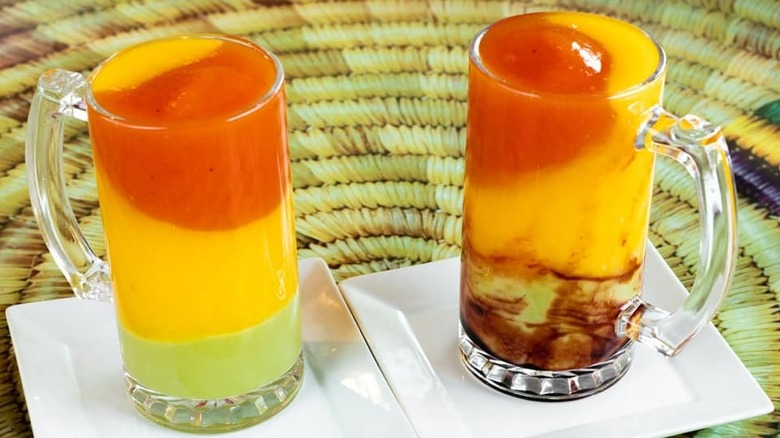
If you thought Ethiopian food always comes down to spice, then spris may surprise. Spris is a name that can refer to one of two dishes: one of layered coffee with tea, and another that combines layers of papaya, mango, and pineapple juice, which may have been the Ethiopian predecessor of the smoothie. The answer, as well as the drink you'll get, depends on who and where you order it. But in all cases, one thing remains constant: the drinks are layered and presented in a tall glass, often with a spoon or straw.
In Mengistu's restaurant, spris is always fruity. "In Ethiopia, spris is a colorful layered drink typically made with fresh avocado, mango, papaya, and sometimes banana, either blended or juiced," she says. "Beyond its beautiful presentation, it reflects Ethiopia's abundance of fresh fruit and the simple, nourishing way ingredients are enjoyed. It's especially popular as a refreshing treat and is loved across generations."
But to Lemma, it's the other version that triumphs. "Spris the coffee tea mixture is definitely unique and if the restaurant serves it, do try it!" he says. "It's a unique blend of tea and coffee that usually comes layered for a beautiful-looking drink."
15. Ethiopian beer
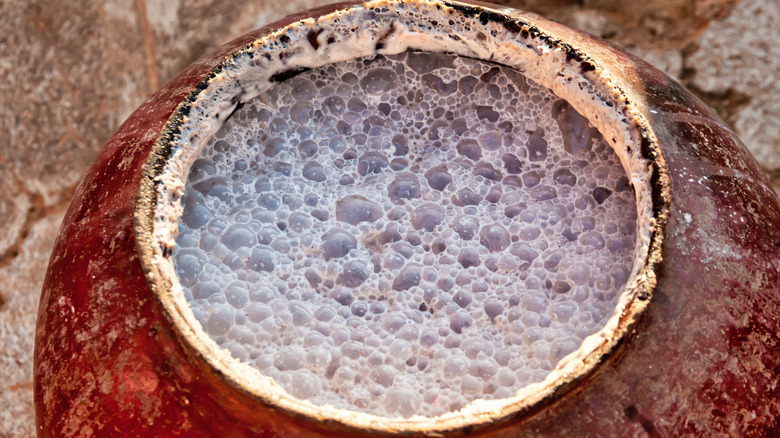
Everyone knows Ethiopian coffee, and many have heard of Ethiopian wine. But have you ever tried an Ethiopian beer? For fans of spicy food, this beer is a naturally cooling godsend that remains popular with expats throughout the world.
St. George is Ethiopia's oldest beer brand, and its most common iteration is a light, pale lager. Other common brands, such as Habesha and Walia, are also widely available Ethiopian lagers worth trying. "I'm in love with St. George and Habesha beers from Ethiopia," says Lemma. "They both are lagers, but St. George has been brewing beer for over 100 years, if I had to choose one, I'd still go with St. George."
Even non-beer drinkers recognize how well Ethiopian beer tastes after a big spread of hearty, flavorful, and diverse Ethiopian food. "Although I am not personally a beer drinker, St. George is a classic and widely recognized Ethiopian beer with a smooth, balanced flavor that pairs nicely with richly spiced dishes," says Mengistu. "It is very approachable and food-friendly."