

The Bakery Secret That Keeps Powdered Sugar From Melting On Pastries
We may receive a commission on purchases made from links.
The type of sugar you use in your baked goods matters, but if you've ever tried to sprinkle some powdered sugar on a freshly baked croissant, you know the pain of watching it disappear as it melts onto the pastry. Once it makes contact with your pastry, it may seem like the only way to get it to not melt is to wait until it cools, but what about foods that are just moist? You baked a beautiful lemon tart or pumpkin pie, and they are cooled and ready for a dusting of the superfine, fluffy sugar. The moisture in both baked goods ensures the sprinkle will melt. But why?
Powdered sugar may even start to disappear as it sits, and that's because it's hygroscopic, meaning it binds to water — whether that water is in the air or a delicious chocolate cake. So, even if your baked good has cooled down and is not that moist, the sugar may still pull moisture from the air and start to disappear. The good news is that bakeries have a secret. They use a different type of sugar: non-melting powdered sugar.
If you've ever made your own powdered sugar, you know that it just takes some finely blended white sugar and cornstarch to make. While you can buy non-melting sugar or sugar pearls to use on your baked goods, you may want to learn how to make it yourself so you can always have some when needed. That way, you don't have to grab your keys to run to the store while you have something in the oven.
How to make your own non-melting powdered sugar
Non-melting powdered sugar, also called snow sugar, is surprisingly easy to make. Commercial versions of non-melting sugar often include dextrose (a type of sugar), corn starch, palm oil, magnesium stearate (a type of salt), and added flavoring. Fortunately, to DIY this recipe, you only need two ingredients: powdered sugar and cornstarch.
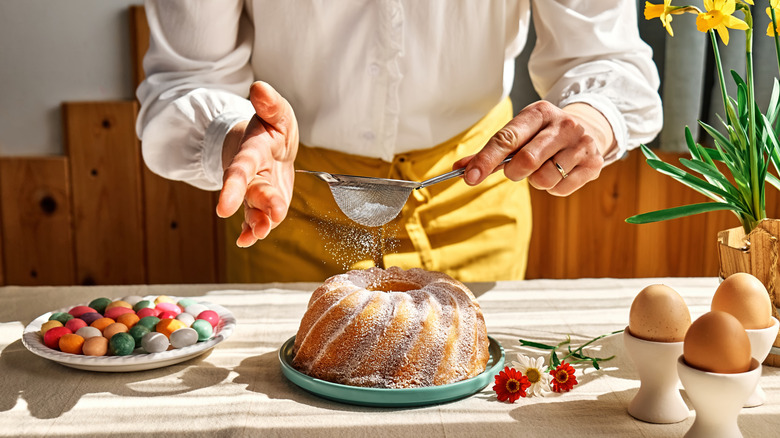
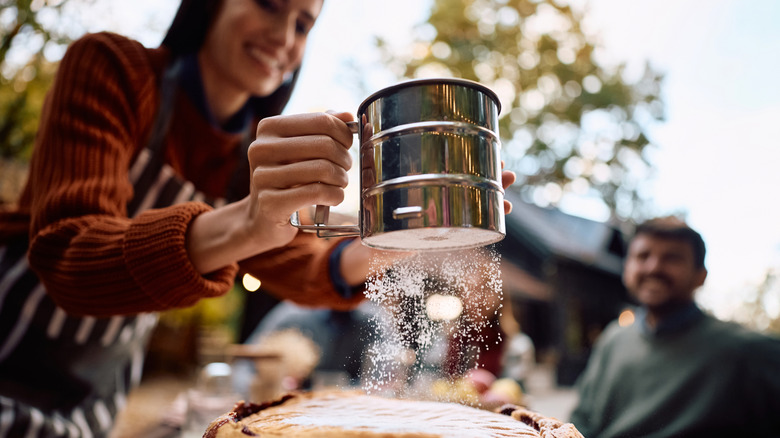
It's similar to regular powdered sugar, but this recipe calls for more cornstarch, and that's what keeps it from melting. Powdered sugar already has cornstarch mixed with sugar, so we're just adding more cornstarch. The ratio is about 1 teaspoon of cornstarch to ¼ cup of powdered sugar. Make sure to use a wire whisk, blender, or food processor when combining the ingredients so there are no lumps. When you're ready to add some to your freshly baked dessert, use a fine mesh strainer. Scoop a spoonful of your non-melting powdered sugar into the strainer, hold it over your dessert, and lightly tap the side with your hand.
If you find this type of non-melting powdered sugar too bland for your baked goods, you can step it up with two additional ingredients. You'll only need white chocolate and vanilla powder, such as Cook's Vanilla Powder. The white chocolate will add another level of flavor to your baked goods that just powdered sugar and cornstarch can't give you.