

What You Should Know Before Eating Soft Or Wrinkly Potatoes
Whether you slice them into fries and deep-fry them to perfection, roast them until they're beautifully crispy and golden brown, or even boil and turn them into a deliciously refreshing summer salad, potatoes are incredibly addictive. No matter which type of potato you choose, they're the ultimate side dish. That is, of course, unless they've become wrinkly.
When potatoes start looking shriveled, it's typically one of the tell-tale signs they have gone bad. This means cooking them is completely off the table. Wrinkling points to decay — a spoilage process usually caused by moisture loss, mostly due to storage mistakes that are ruining your food. And not only does it mean that your favorite starchy tubers are past their prime, but it also signals increased levels of glycoalkaloids such as solanine and chaconine. These toxic substances are naturally present in small amounts (below 200 milligrams per kilogram) in potato peels, leaves, sprouts, and stems. But they can spike rapidly due to physical damage, improper storage, and exposure to light.
Dr. Tetyana Cheairs, MD, MSPH, associate dean for PhD programs and assistant professor of pathology, microbiology, and immunology at New York Medical College, revealed in a Chowhound exclusive that soft or wrinkly potatoes should be avoided. "While a slightly softened potato does not necessarily indicate spoilage and may still be safe to eat, more pronounced softening, especially when accompanied by green areas, brown‑black discoloration, mold, or long sprouts, is usually a sign of rot and decay," Dr. Cheairs said.
Why wrinkly potatoes aren't worth the risk
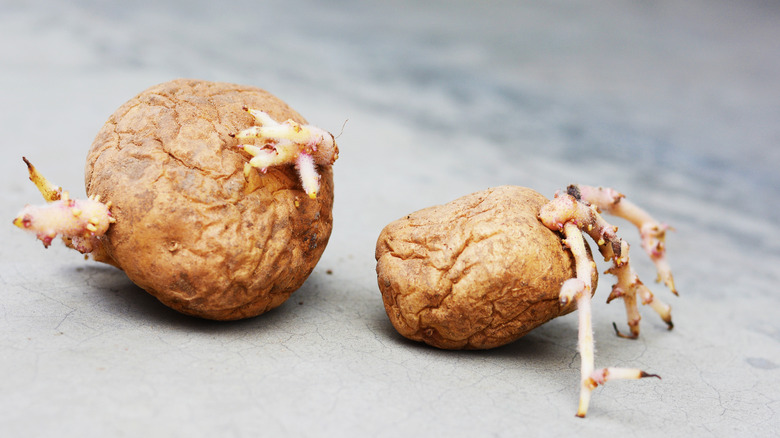
When deciding whether to trim or toss a lightly wrinkled potato, Dr. Tetyana Cheairs notes that firm potatoes with small sprouts or green spots can often be salvaged by removing the affected areas with a knife or peeler. She adds, "Most of the signs you should be able to see externally, without the need to cut the potatoes open." And since most glycoalkaloids are concentrated in and just under the skin, peeling wrinkled potatoes can significantly reduce exposure to these compounds, which are not easily broken down by cooking.
Dr. Cheairs also warns to look out for signs of high glycoalkaloid content, noting, "Intensely bitter, heavily sprouted, or severely greened potatoes should be thrown away." Decayed potatoes can also boast an acrid or scratchy taste. What's more, research carried out by Michigan State University showed that spoiled potatoes can even emit harmful gases (such as solanine gas) and leave people unconscious.
And in case you've consumed a considerable amount of heavily wrinkled potatoes, it's important to seek medical attention straight away. Symptoms of glycoalkaloid poisoning may include nausea, diarrhea, vomiting, stomach cramps, and, in severe cases, fever, headache, or confusion, typically appearing within the first 24 hours after ingestion.