

Why Restaurant Fish And Chips Always Taste Better Than Homemade
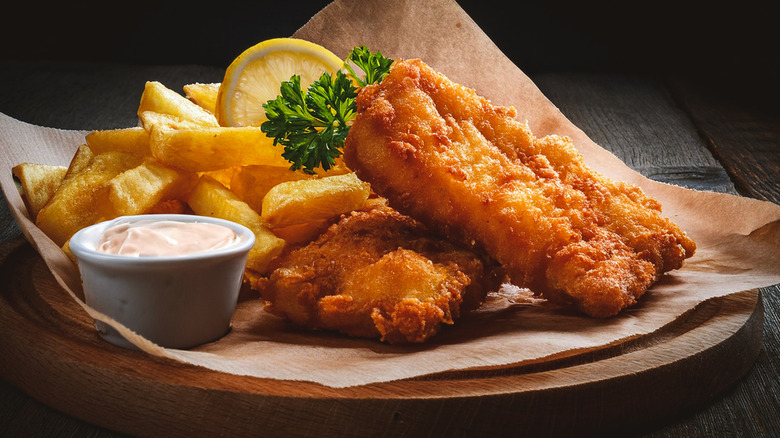
A classic fish and chips from a true British pub is hard to beat, even compared to the best American versions. It's usually made with flaky whitefish, such as cod or haddock, and a perfectly crispy battered coating that adds crunch to the exterior without drying out the fish itself. You can certainly make this dish at home, but why does it always taste better from a restaurant? The short answer: There are a few moving parts that give restaurants the edge over home kitchens.
"Restaurants have those heavy-duty fryers that stay locked in at the right temp the whole time," Henry Elmore, the president of franchise development at Fishbone Seafood, told Chowhound. "But at home, soon as you drop that fish in, your oil temperature crashes, and that's where the problem starts." The problem with the oil temperature dropping is that it can lead to more oil absorption and less crisp, altering the intended texture of the fish and making it soggy. "It's not magic; it's control," he said. While the crispy fish is the star of the show, don't sleep on how you prepare the chips. "This is where most people mess up — you gotta fry them twice," Elmore emphasized.
If you follow restaurant techniques, your fish and chips will taste better
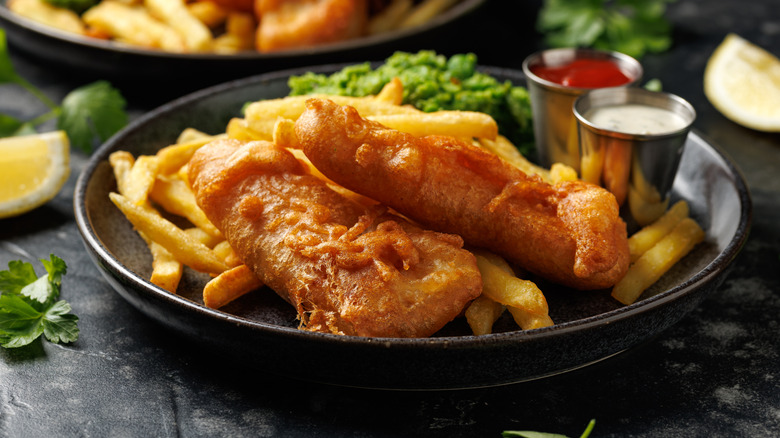
There are definitely ways to get that restaurant quality at home, but you have to be intentional with how you cook your fish and chips. Henry Elmore said the most important rule is to keep your frying oil between 350 and 375 degrees Fahrenheit. "This is everything ... no shortcuts," he noted. He also suggested patting the fish completely dry before cooking, frying the fish in small batches to avoid overloading and overcrowding the pot (this can quickly lower the oil temperature), and coating the fish in cold batter. "If your fish is oily and soft, you're breaking one of these rules," he said.
The fries are no different when it comes to following best practices. While double frying is the most important rule for getting them extra crispy, there are other techniques to build flavor and texture. Elmore emphasized that russet potatoes are the best for fish and chips, and soaking them in cold water is an important first step (it helps remove sugars and starches from the spuds' exteriors). "Dry them all the way," Elmore said. From there, he advised first frying them between 300 and 325 degrees Fahrenheit to cook through, then frying them again at 375 degrees Fahrenheit for that perfect crisp. "Salt them right away after they come out," Elmore said, then let us in on a secret: "Want that next-level texture? Freeze them between fries."