

The Absolute Best Type Of Red Wine To Use For Pot Roast
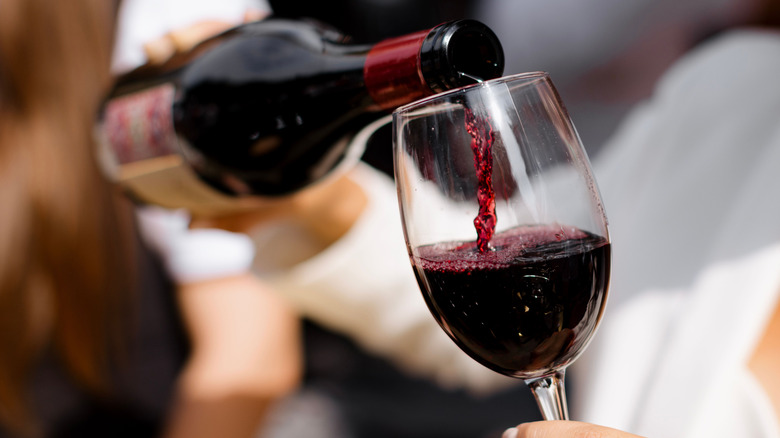
Using the right seasonings can make a great pot roast, but adding red wine takes it up a notch. Aside from being the perfect companion to Italian plates, it actually has a place in many savory dishes like this hearty classic. To learn more, Chowhound spoke with David Leite, a three-time James Beard Award-winning food writer, cookbook author, and founder of Leite's Culinaria.
"When you're making a classic pot roast, you want a wine that has enough brio to stand up to the long, slow braise and the richness of the beef," he said. Brio can be translated to 'life' or 'fire,' so in this context, you want a rich bottle. Leite recommends dry, medium-to-full-bodied reds such as cabernet sauvignon, merlot, syrah (or shiraz), or malbec.
Jennie Alley, chef and senior recipe developer for Budget Bytes, agreed, noting, "These wines have enough flavor and depth to hold up during a long braise without getting lost." A lighter option, like pinot noir, may not deliver the same results during a long cook, so it's best to reach for something bolder. But before you run to the grocery store to buy a bottle, how exactly does wine work in a pot roast?
How wine helps achieve a flavorful pot roast
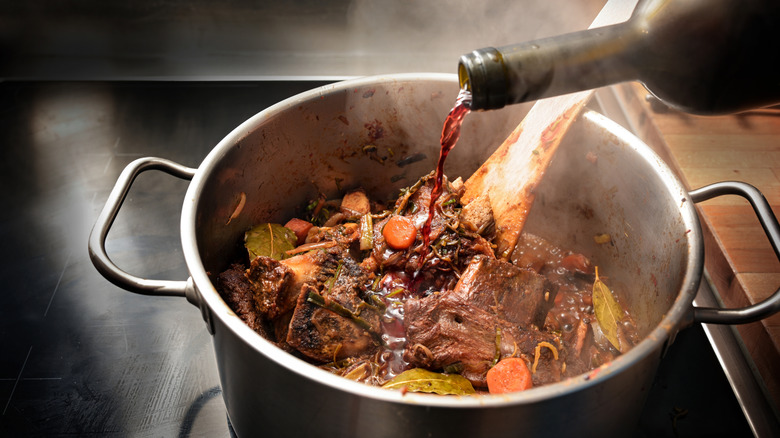
Pouring wine into your dish can be an effortless way to give your pot roast more flavor. "Red wine adds depth, acidity, and a subtle richness that broth alone cannot provide," Jennie Alley said. "As it cooks down, the alcohol evaporates and leaves a concentrated flavor that truly enhances the savory notes of the beef." Wine actually does more than add flavor. Its acidity helps tenderize the meat, giving your pot roast a melt-in-your-mouth finish.
Fortunately, home cooks don't need to splurge on a thousand-dollar bottle to get a restaurant-quality pot roast; you can even reach for the must-buy cheap wines and get the same results. "For the love of all that is good, please do NOT cough up 60 bucks for a bottle of wine, as I did when I was a young, broke writer," David Leite said, adding that the subtle nuances in more expensive bottles tend to get lost during long cooking. In some cases, Alley even suggests box wine or balsamic vinegar as practical alternatives, depending on what you have on hand. She also recommends opting for something you don't mind downing yourself. After all, if you don't like the taste when you drink it, chances are, you won't like what it adds to the dish.
No matter which wine you choose, the amount matters for keeping the flavors balanced. For a 3-pound roast, start with about ½ cup. Alternatively, you can add a smaller splash and adjust to taste as it cooks. With the right wine and the right amount, your pot roast will be richer, more tender, and full of depth.