

Is Dry-Aged Steak Actually Moldy? A Butcher Broke It Down For Us
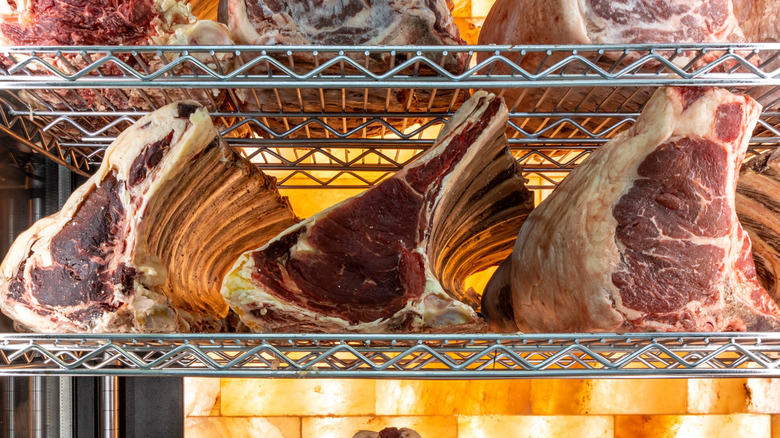
For those who aren't well-versed in food science, dry-aged steak can seem mystifying. After all, basic food safety rules tell us that steak (or most meat, for that matter) shouldn't be left in the refrigerator for more than a few days, and yet steaks that are dry-aged for weeks are somehow safe to eat. So, what's the deal with the potential mold or other microbes that might be cropping up as steak dry-ages?
According to Katie Flannery, COO of Flannery Beef, an online butcher shop specializing in dry-aged beef, there can be mold and microbes present in dry-aged meat, with the mold appearing as a sort of crust. However, as long as you get the right mold, this is a benefit, not a problem (after all, just look at blue cheese, which is safe to sell). "We live in a world that's absolutely covered in microbes," Flannery explained to Chowhound. "They're on our skin, in our gut, floating around in the air. The question isn't really whether microbes are there, it's which ones and what are they actually doing."
According to Flannery, some dry-aged meat producers actually prefer mold growth, while others avoid it, and she notes that neither is wrong; it depends on the flavor you're looking for in your dry-aged steak. The mold-free approach yields a punchier but more straightforward hit of beef flavor, because flavor is concentrated as it loses moisture. Meanwhile, those that use mold are aiming for something more out-of-the-box. "Mold-forward environments tend to develop that funky, complex, almost earthy character that serious dry-aging enthusiasts seek out," said Flannery.
So, how do dry-agers make sure it's a good mold?
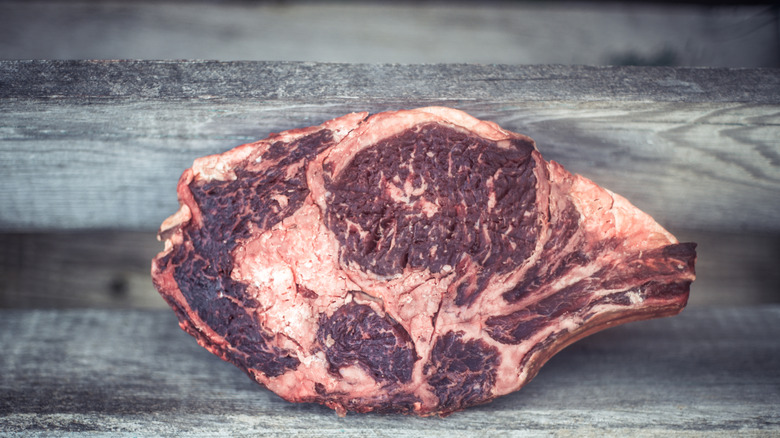
The mold and microbes that crop up in dry-aging work similarly to those you'd get in fermented products like kimchi or wine; Katie Flannery's preferred comparison is a sourdough starter that creates an environment that draws in the "right" microbes. "When you set up a dry-aging environment properly, the temperature, humidity, airflow, all of that naturally selects for certain types of molds over others," she said. "The good molds that thrive in those conditions are producing enzymes that break down proteins and fats in ways that make the meat more tender and flavorful." Meanwhile, those conditions also keep out any bad molds, Flannery noted.
That said, some rigor is required: Keeping dry-aging chambers below 44.6 degrees Fahrenheit is essential (above that, you risk getting dangerous molds). Companies like Flannery Beef also test their dry-aging rooms to verify the kinds of mold and microbes that are present. In short, you should have a well-controlled environment to dry-age safely and properly. For that reason, you may want to avoid dry-aging at home (unless you're willing to throw down big bucks for a legit dry-aging cabinet). While some argue that you can do it in a dedicated refrigerator, it's tough to manage the humidity and air circulation that are required to prevent nasty microbes from getting in. However, if you're getting dry-aged meat from a reliable and professional source, any question of mold should be nothing to worry about.