

The One Step To Never Skip When Baking With Natural Peanut Butter
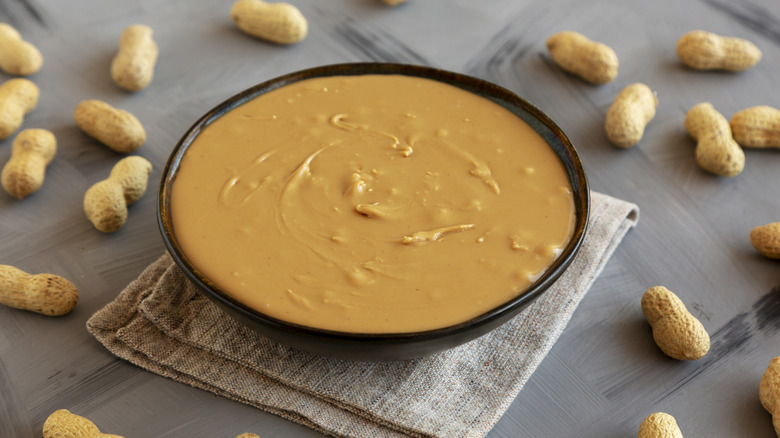
For several decades now, natural peanut butter has been almost as popular as its sweeter, partially hydrogenated cousin. Peanuts (and therefore peanut butter) are rich in protein, fiber, and vitamin E — not to mention peanut butter is delicious on a sandwich paired with its best friend jelly. However, many popular brands have additional ingredients like refined sugar and oils some people want to avoid, making natural peanut butter the logical alternative.
The downside to this is natural peanut butter is also free of emulsifiers that would prevent the oil from separating from the solid peanut paste inside the jar. That means, when baking with natural peanut butter it's important to remember to stir it thoroughly before measuring it. Stirring helps mix the oil back into the dense butter, creating the smooth, velvety texture you need when making old school Depression-era peanut butter bread or your mom's recipe for peanut butter cookies.
Skipping this step in your recipe could mean mixing peanut butter that either contains too much oil or not enough, resulting in baked goods that are either greasy or hard as a rock. Fortunately, a few minutes stirring with a butter knife is usually enough to bring things back into balance. You can also take steps to ensure your smooth, creamy homemade peanut butter stays mixed more thoroughly between uses to save time when baking, and to avoid that dry, hard block of peanut paste from forming at the bottom of the jar.
Mixing methods to easily emulsify your natural peanut butter
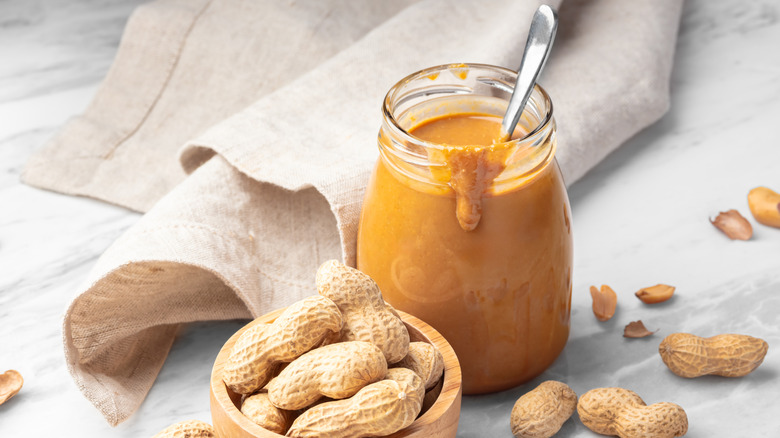
Stirring every time you open your jar is the most common way to fix separated natural peanut butter but it's not the most efficient or effective. Instead, try one or two hands-off methods for keeping things evenly mixed, such as storing your peanut butter jar upside down before opening it. This allows gravity to help push the oil slick back through the jar, and through the peanut butter, as well. While it's true it'll eventually separate again, you can flip the jar about every week or so to help prevent this from happening.
The second method may not seem hands-off, but it does produce creamy results that retain their texture for quite some time. Just scoop the entire contents of your jar into a mixing bowl and use the paddle attachment on a stand or hand mixer to blend the oil and paste together (almost) once and for all. You can also get it back into the jar easier by scooping it into a piping bag or freezer bag, snipping the corner, and squeezing it into its container.
Two other things to think about when using natural peanut butter in baking are the presence of salt and lack of sugar. If making a substitution, you may need to omit additional salt and increase sugar slightly to compensate for any difference in your recipe, or maybe just stick those that specifically call for natural peanut butter.