

The Parchment Paper Method That Makes Roasted Potatoes 10 Times More Flavorful
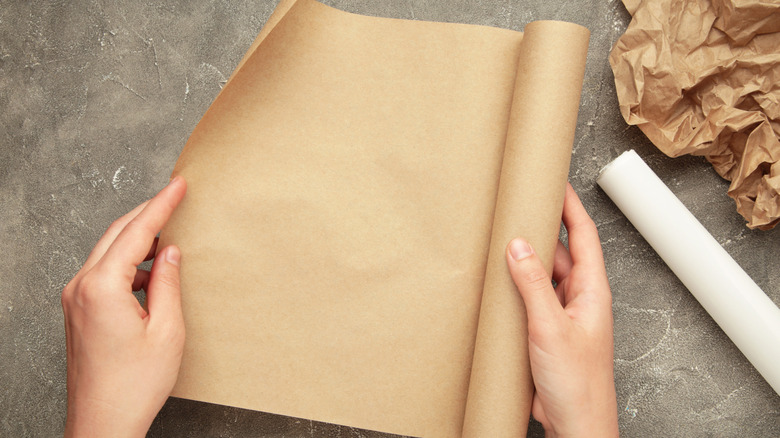
Some cooking techniques tend to scare off home cooks because they sound fussy and complicated. One of these oft-paralyzing phrases is "en papillote." Be turned off no longer; this stuffy-sounding French term simply means cooking in an envelope, typically made of parchment paper. All that stands between you and an easily disposable, yet super-efficient, cooking vessel for roasted potatoes is a few folds.
Parchment paper is a wonder tool in the kitchen. When tented and crimped — kind of like an elementary school art project — it readily imparts an otherwise hard-to-achieve depth of flavor into its waiting contents. The paper traps steam, and helps circulate aromatics evenly back into the food as it cooks through. It's a clever trick that packs a ton of flavor into a packet of potatoes, and is equally superb on fish and vegetables. Think of it like an easy button for infusing a range of herbal notes into the creaminess of basic spuds.
Cooking potatoes in parchment versus foil
While cooking en papillote doesn't produce as much caramelization on your potatoes as traditional roasting, what you do get are melting little gems brimming with herby goodness. Though aluminum foil can also be used for en papillote packets, it tends to produce firmer, more aggressively seared results. The potatoes may also stick to the foil as they roast, plus aluminum foil can react to the addition of salt or citrus (like a few slices of lemon), causing a change in color and a bit of a strange smell.
Parchment paper works beautifully in the oven, but aluminum foil does have the benefit of responding well to high heat. If you plan to cook your spuds directly over a flame (say, if you're grilling, or on a camping trip), then aluminum foil is the way to go. Otherwise, stick to parchment for its even, non-reactive cooking and punchy flavors. Still, both offer easy cleanup: simply tear the parchment or foil pouch open, enjoy the evenly cooked contents, and discard everything afterward.
A parchment packet of potatoes for the win
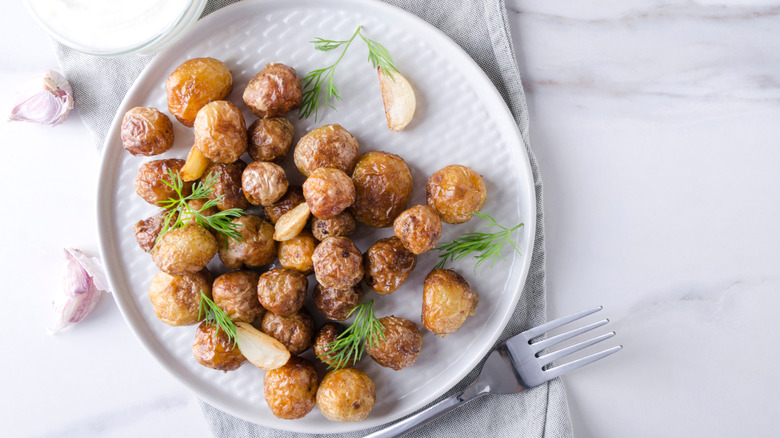
The parchment paper wrapping expedites cooking, and you can even serve the potatoes tableside in their envelope, letting the aromatics waft temptingly across the table. This method also lets you use less oil than you would when traditionally roasting while imparting an herbal wallop as the trapped aromatics are forced into the starchy flesh of the spuds.
Any herbs will do here, including rosemary, thyme, and parsley. Don't forget the garlic (you don't even have to peel those pesky cloves), and use plenty of salt and pepper before you fold up the parchment paper. Check your packets as they cook for perfectly tender, flavorful potatoes. To avoid setting parchment paper on fire, keep the oven temperature under 420 to 450 degrees Fahrenheit. If you'd like to lean further into the parchment paper envelope idea, try cooking a piece of salmon (or other fish) with this same technique to enjoy alongside your herby potatoes.