

Why US Grocery Stores Should Take Notes From South Korea's Brilliant Banana Strategy
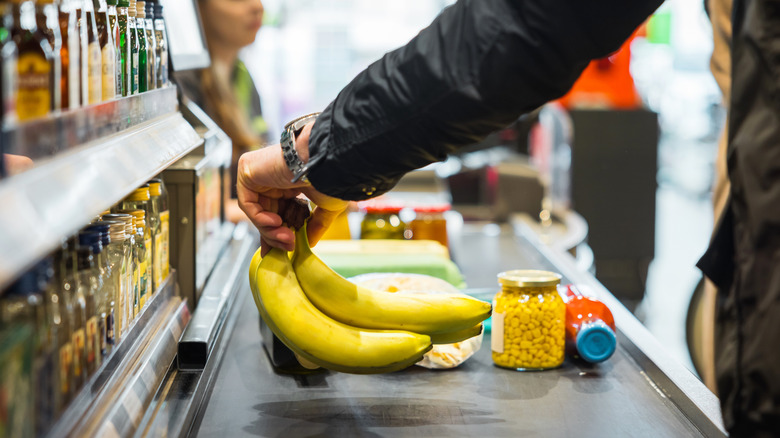
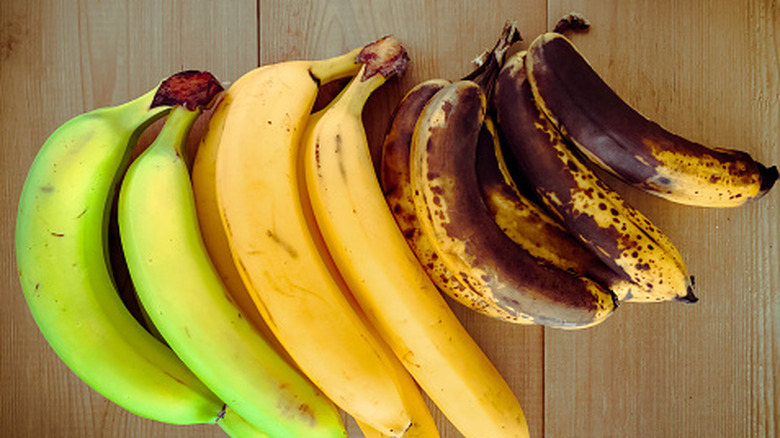
Why are bananas one of those grocery items that feel like you're rolling the dice every time? Just when you think you found the most perfect bunch in the store, in only a couple days each fruit from the lot has gone from firm to spotty and you're scrambling to find ways to use overripe bananas before they go to waste. And there really is only so much banana bread one can eat. It turns out, however, that South Korea has a solution to this problem. The grocery chain E-Mart sells "one a day" packs where the bananas are in various stages of ripeness, from very green to ready-to-eat. The idea is you eat the ripest banana first, then as you work your way through the bunch, the firmer ones have time to soften up. It's a brilliant idea as it recognises the simple fact that most people are not eating a whole bunch of bananas in one day.
That's essentially why we have this problem in the first place — after being picked, bananas continue to ripen, and when sold in bunches that were picked together, they're all going to peak and then decline at the same speed. And bananas are one of the fruits that spoils the fastest because ripening bananas release ethylene gas, which only furthers the process for the whole bunch (and any other fruit around them for that matter). So this solution not only allows you to enjoy each banana in its most perfectly ripe form, it also reduces food waste as you're much less likely to have to throw a few mushy stragglers in the compost bin at the end of the week.
How the U.S. could actually implement this
Of course, no system, even this genius banana one, is flawless. One of the biggest downsides overall is the packaging, as these one a day banana bunches come wrapped together in plastic. In terms of environment friendliness, a plastic-wrapped bunch of bananas (a fruit that comes in its own natural "packaging") is not the best. Some American grocery stores also wrap banana stems in plastic in an attempt to slow the release of ethylene gas and extend shelf life, but it does introduce unnecessary non-biodegradable materials into the produce section.
Packaging aside, the concept itself is undeniably brilliant and probably wouldn't take a lot for U.S. stores to replicate in some way. Rather than pre-packaging mixed bundles, grocers could display individually sold loose bananas in clearly labeled sections based on ripeness, for example: one section could be "ready today," one could be "two to three days," and one "later in the week," which would allow shoppers to build their own bunch without any packaging at all. Although there would be the question of labor, as sorting bananas by ripeness and maintaining those displays would likely require extra staff time, which could increase operational costs for stores. Another less labor-intensive way could be to group a few ripe bananas with a few green ones, all tied with paper bands or compostable ties which also solves the plastic problem and still incorporates the essence of the South Korean system.