

For The Crispiest Fried Eggs, Stop Using Nonstick Pans And Use This Instead
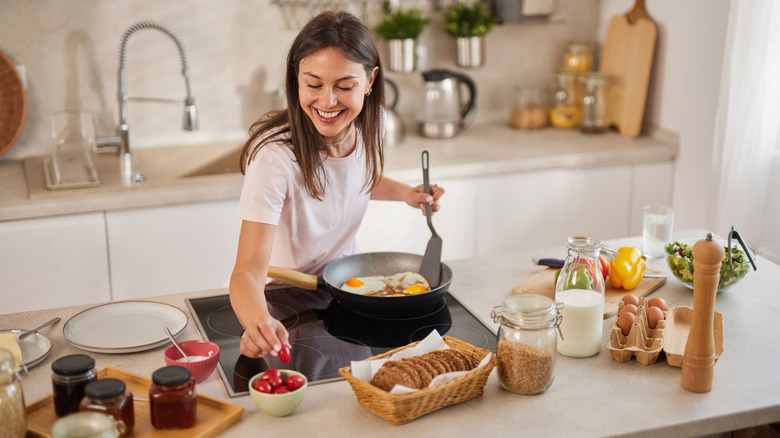
Nonstick pans may have you convinced that they're the only reasonable way to cook eggs — and it's not hard to see why. The coating keeps the eggs from sticking, they slide right off onto your plate, and cleanup is easy. But the tradeoff is that you can't really make crispy fried eggs in a nonstick pan. Non-stick pans don't retain heat as well as pans made from other materials, like stainless steel, and many people keep non-stick pans at relatively low temperatures due to concerns around the pans releasing fumes at higher temperatures. As a result, those lacy, golden-brown edges that make a fried egg so good are tough to achieve in a non-stick pan.
The better option is stainless steel, but maybe you avoid it because you've had a daunting experience of watching the egg glue itself to the pan. Breakfast is ruined and instead you get to spend 20 minutes scrubbing and scraping. That's a technique issue, not a pan issue. When you get it right, cooking with stainless steel isn't just as easy as non-stick, but it actually beats it for crispiness. And, unlike nonstick coatings that can wear down over time, stainless steel lasts essentially forever.
The key is heat and a little bit of physics. When a pan is hot enough, moisture forms a thin layer of vapor between the food and the metal (called the Leidenfrost effect). This cushion is what can prevent food from sticking and allow your egg to slide off cleanly. It's the same reason water droplets bead up and glide across a pan that's at the ideal temperature rather than instantly evaporating.
How to cook crispy fried eggs in a stainless steel pan
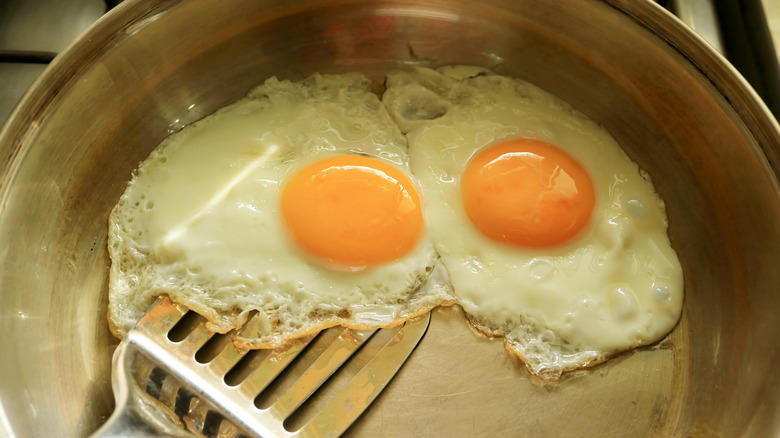
Start by cracking your eggs into a small bowl to reduce the risk of broken yolks or shells. Place a dry stainless steel pan over medium heat. Let it preheat for a couple of minutes, and don't rush the process. Uneven heat is one of the main reasons eggs stick, and heavier pans tend to hold heat more consistently, but you need to let it warm up.
To check if the pan is ready, flick a few drops of water onto the surface (now you know the science behind this trick). If they sizzle and disappear right away, keep heating. If they bead up and slide around, the pan is hot enough. At that point, lower the heat to medium-low and add a tablespoon of your desired lubricant, like butter or oil. For crispy eggs, be a little generous with the fat, and try sesame oil for good flavor. That extra oil helps the egg white make better contact with the hot surface, which is what you want for golden-brown edges.
Now, just leave it alone. Let the white set up and get crispy — usually, this takes about two to three minutes. If you try to move it too early, it will stick. When it's ready, it will release easily on its own with a crisp, golden bottom that non-stick pans can't deliver. Season it, eat it right away, and then reconsider whether you needed that nonstick pan in the first place.