

The Only Time You Can Get Away Without Adding Liquid To Your Slow Cooker
Slow cookers are one of the best kitchen appliances for those with busy schedules. You can prep a meal in the morning, turn on the appliance, and it's ready when you get home from work. One of the most common steps with slow-cooked foods is adding liquid, and skipping it could be a big slow cooker mistake. But is liquid always necessary? Surprisingly, no — it just depends on what you're cooking.
Slow cookers work by heating up the appliance's ceramic insert to a low (but food-safe) temperature, and the heat surrounds the food as it cooks over a long period of time. Often, water or liquid is added to the bottom of the slow cooker because the moisture builds the humidity, similarly to how a pot of water on the stove would. But many foods release their own moisture while they cook, so adding even more of it isn't necessary.
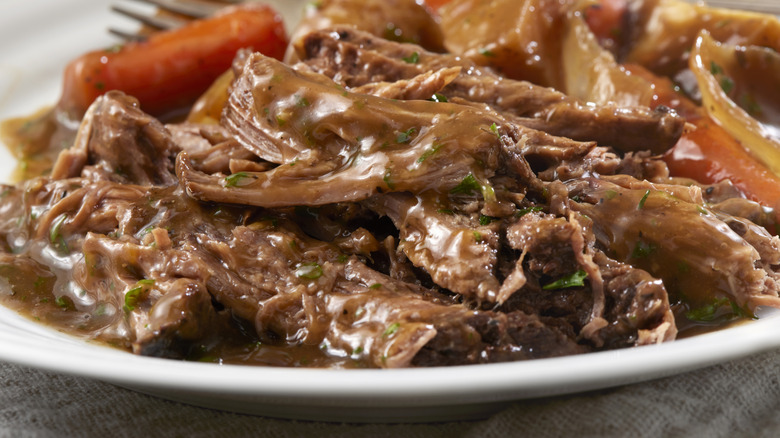
Some meat cuts that require low and slow cooking don't actually need extra liquid. Chuck roast is commonly used in an easy slow cooker pot roast dish, and while it isn't overly fatty, it is fattier than something like a brisket. The meat releases moisture as the fat cooks down, so you don't need added water if you're cooking a chuck roast. Extra liquid isn't necessary for bone-in chicken thighs or a pork shoulder, either. And many vegetables have high water content, so if you're cooking veggies like zucchini, tomatoes, bell peppers, or broccoli in the slow cooker, the extra liquid isn't necessary.
Some foods definitely need moisture
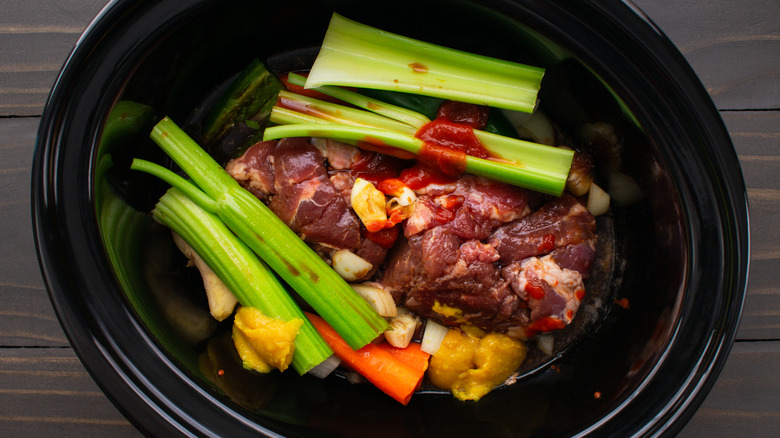
Fattier meats and water-filled vegetables only make up a portion of what we might prepare in a slow cooker. But to be clear, those are just a handful of exceptions when it comes to foregoing added liquids. Most foods do require liquid because they wouldn't properly cook otherwise; certain meats could end up too dry, and grains would end up too hard.
Grains and pasta definitely need liquid to cook. They soak up the moisture — removing the liquid would be like trying to cook pasta or rice in a pot on the stove with no water. Any lean meats with little fat, such as brisket, require liquid in the slow cooker, too. And produce that's not naturally soft — think potatoes and carrots — wouldn't cook properly without some liquid, either.
Keep in mind that the lid stays on during the cooking process (though there are a handful of exceptions when you could open the slow cooker lid), so the liquid won't evaporate; it's why you always see those drops of water on the slow cooker lid. With that said, a little liquid goes a long way. You should only need around a half-cup (and not more than 1 cup) of liquid for the food to properly cook.