

Here's The Best Way To Freeze Lasagna For Later
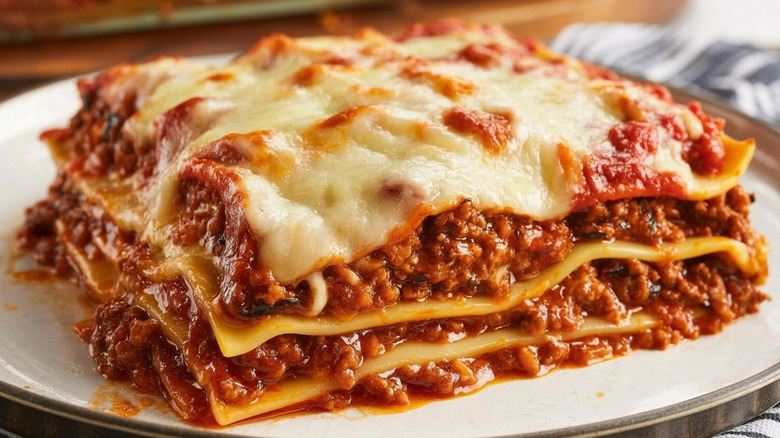
When creating a balanced meal-prep plan that you'll actually enjoy eating, it's important to start with the foods you eat regularly. Learning the best way to freeze lasagna, for example, means you'll always have a few slices of your favorite meal ready to go when a craving hits. Especially if you understand the best method for thawing frozen lasagna (the air fryer, of course), you'll be more motivated to keep your freezer stocked and make the most out of your weekly grocery budget.
Making frozen lasagna at home is also incredibly simple. You don't even have to boil the noodles or use no-boil pasta — ordinary lasagna noodles are just fine, as long as you line your dish with sauce. After that, you can decide whether to freeze your lasagna right after assembling it or to bake, cool, and freeze afterward. An unbaked, frozen lasagna takes up to two hours to bake, while a baked one takes about half that time, and may be more flavorful because the ingredients married in the first bake.
Either way, the basic method for freezing lasagna is the same. Wrap the lasagna (pan and all) in thick, freezer-safe plastic wrap, then in a layer of heavy-duty aluminum foil. Make sure both layers are as airtight as you can get them — some even take the extra step of sliding the whole thing into a freezer bag for added protection. Once it's secured and in the freezer, a frozen homemade lasagna will remain fresh for about three months.
Frozen lasagna pan choices, thawing methods, and individual servings
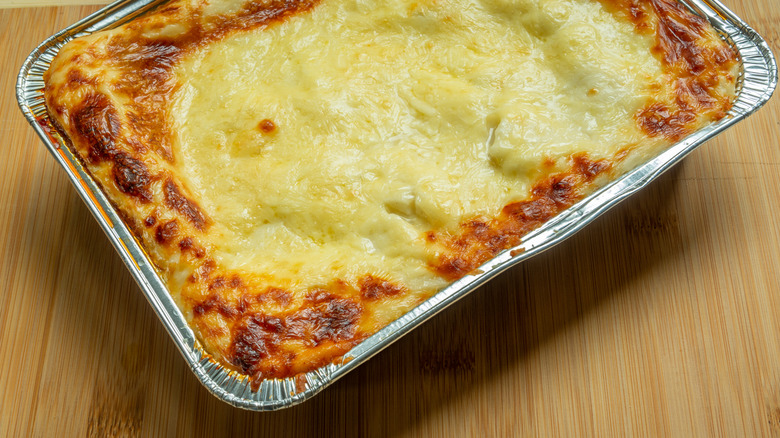
If you plan to freeze lasagna on a regular basis, it might be a good idea to invest in a collection of disposable aluminum foil roasting pans. Many ceramic and glass baking dishes aren't made to withstand rapid temperature changes, and can crack or shatter when transferred from the counter to your freezer, and vice versa. Foil pans are sturdy, reduce the amount of cleanup you have to do after cooking, and sometimes come with foil lids that seal around the edges of the pan, creating another layer of protection from freezer burn.
Silicone containers are also a good choice, especially if you prefer to freeze individual servings. These containers are often oven and freezer-safe, meaning you can transfer them right from the freezer to the oven. The only difference between using these vs a foil baking pan is that it's easier to build the individual servings inside the silicone wells rather than trying to cut a whole lasagna to precise servings. However, this option also allows you to thaw one serving at a time instead of the whole lasagna at once.
When it comes to reheating your lasagna, thawing it first makes for the fastest bake time (about 30 minutes), but as thawing in the refrigerator may take several days, baking it right from frozen is actually faster. This is especially true if you're reheating individual servings, which only take a few minutes to thaw and heat from frozen in the microwave.