

7 Common Pantry Items You Should Actually Be Storing In The Fridge
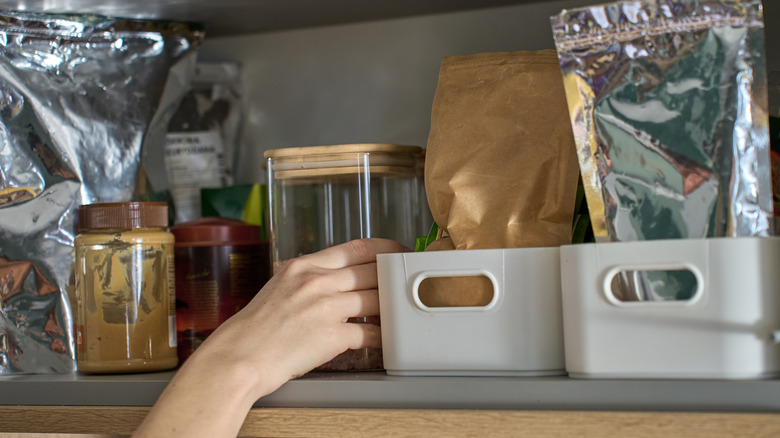
Deciding whether to store a food item in your pantry versus your refrigerator can seem a bit arbitrary at times. You may flip the container over and breeze through the ingredients in search of anything perishable (namely, dairy and eggs). Some foods are dead giveaways, especially when there is a very clear "Refrigerate after opening" listed on the back panel. However, this may also prompt you to ask yourself: "How sick can I really get if I don't refrigerate this?" and relegate it to a forgotten cabinet, regardless of what the label says.
The reality is that there are numerous reasons why you should refrigerate some pantry staples after (or even before) opening, most of which come down to either food safety or freshness. To get the inside scoop about which items you should always store in your fridge, we spoke to Joanne Gallagher, recipe developer for Inspired Taste. Not only did she offer food storage how-tos for these pantry favorites, but she also explained why you should be storing them in the fridge in the first place. Ultimately, the decision of "to refrigerate or not to refrigerate" is left in your hands, but hopefully, her picks will help inform your choice.
1. Nuts and nut flour
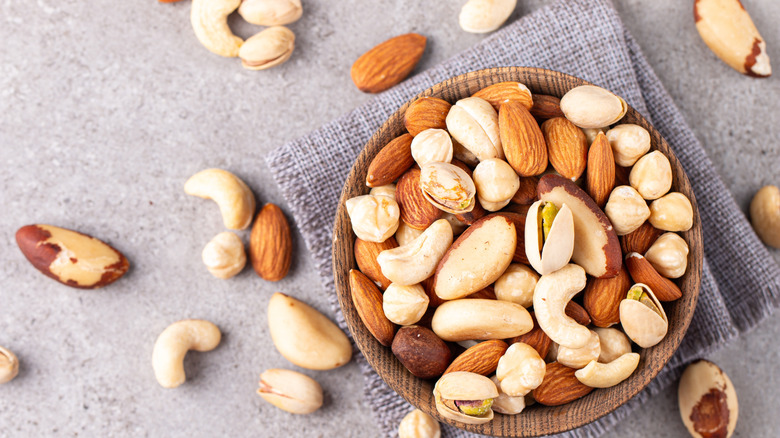
Have you ever had a grand plan to make a batch of walnut brownies or a pecan pie, only to reach into the bag of nuts and realize that they are no longer fresh? While eating small amounts of rancid nuts may not make you sick, their sour flavor and waxy, metallic coating — not unlike crayons — is less than pleasant and can ruin whatever you cook or prepare with them within minutes. "Since they're full of natural oils, they can go bad at room temperature over time," Joanne Gallagher says, noting that bitterness and a sharp or paint-like smell can be a clue that you have bad nuts on your hands.
If you don't eat nuts often or buy them in bulk, as Gallagher notes, you should be storing them in your fridge to stave off rancidity. However, this isn't the only nut-adjacent product that you should be keeping tucked away in your fridge. "This same rule applies to nut flours since they're even more exposed to air," Gallagher says. If you are worried about making it through that bag of almond flour before it goes bad, consider buying smaller-sized bags — perhaps from a bulk grocer.
2. Delicate cooking oils
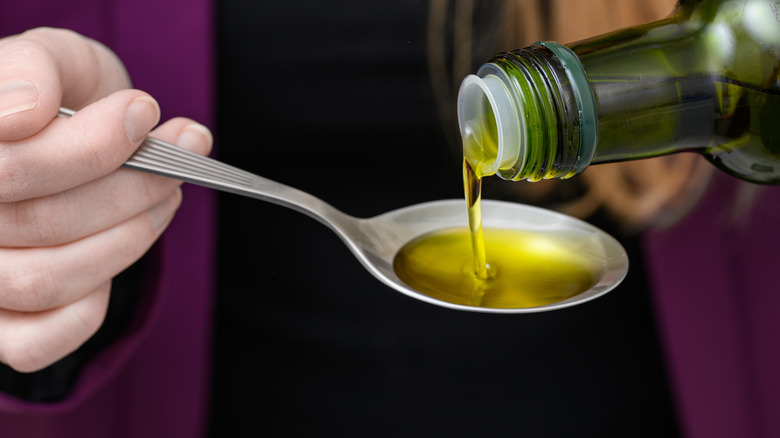
We don't mean to call some types of cooking oil "delicate" in a mean or patronizing way; it's just that there are certain types of oil that are more sensitive than others. While you might be able to leave the jug of corn oil you picked up from Costco in your pantry, the same can't be said about the artisan hazelnut or grapeseed oil you bought at the farmers market, which are better off kept in your fridge. Besides getting optimal flavor, no one wants to spend so much on a fancy finishing oil only to have to throw it away within a matter of months because it tastes rancid.
So, we have to ask: What makes some oils pantry-safe, while others are relegated to just the fridge? "They have more fragile compounds that break down easily under heat or light, but sturdier oils are fine in a cool pantry," says Joanne Gallagher, who calls out walnut, flaxseed, or anything unrefined as being candidates for refrigeration. Ideally, you'll want to keep these oils in dark bottles as well to limit their exposure to light and slow down the oxidation process. When stored in the fridge, most of these oils will last a year — though depending on the type, you may notice the quality diminishes between the three- and six-month mark.
3. Maple syrup
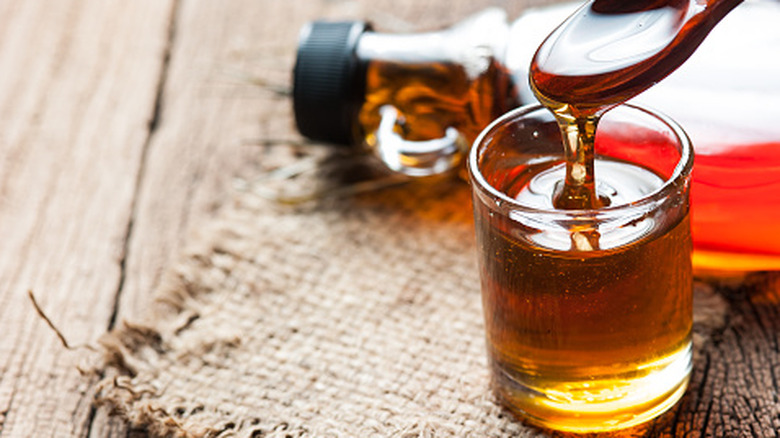
Maple syrup is an essential ingredient for topping pancakes and waffles, though it can be used in other unconventional ways as well, like in a steak marinade or as a cheap vanilla substitute. However, you can't use your maple syrup to its fullest potential if it's gone bad. Joanne Gallagher explains that because maple syrup doesn't contain any preservatives (unlike pancake syrup — which is not the same thing), and it tends to mold if kept at room temperature. This mold often looks like an unappetizing film rather than a greenish or moss-like growth. You may also notice an "off" smell like fermenting fruit, an exceptionally thick texture, or a cloudy appearance. Since it contains sugars, it will crystallize (especially around the lid where you pour it). Crystallization is fine and safe, but mold is not.
If you notice mold starting to grow, it's time to toss the entire thing in the trash — and store your next container in the fridge. "Keeping it cold slows that growth and keeps the flavor bright and clean," Gallagher says. If it's refrigerated, it can remain fresh for upwards of two years.
4. Natural nut butter
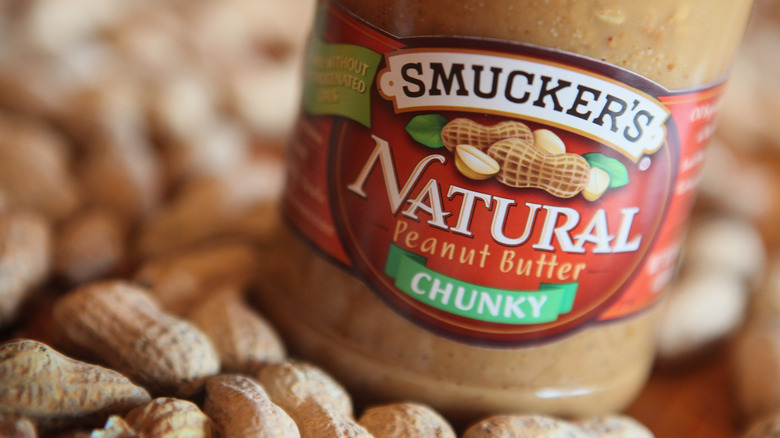
If you are a classic Skippy or Jif person, you may not need to heed this warning. But for folks who have their favorite brand of natural peanut butter sitting in the pantry, this might be something you want to pay attention to. "I think many people would be surprised to learn that natural peanut butter should go in the fridge. We're used to shelf-stable versions, so it's easy to assume all peanut butter belongs in the pantry," says Joanne Gallagher.
How can you tell whether a peanut butter is "natural" versus shelf-stable? Take a look at the ingredient list. Natural peanut butter usually contains only one or two ingredients: peanuts and salt. This is the type of peanut butter that separates when it's left in the pantry. In comparison, shelf-stable peanut butter (aka the Jifs and Skippys of the world) is made with stabilizers to prevent the oil from floating to the top and preservatives to stave off mold growth. As such, you need to refrigerate natural peanut butter, but not other varieties. "Give it a quick stir and a spot in the fridge to keep your flavors fresh and the texture stable," says Gallagher. Natural peanut butter should last three to four months after opening if kept in your fridge.
5. Tortillas
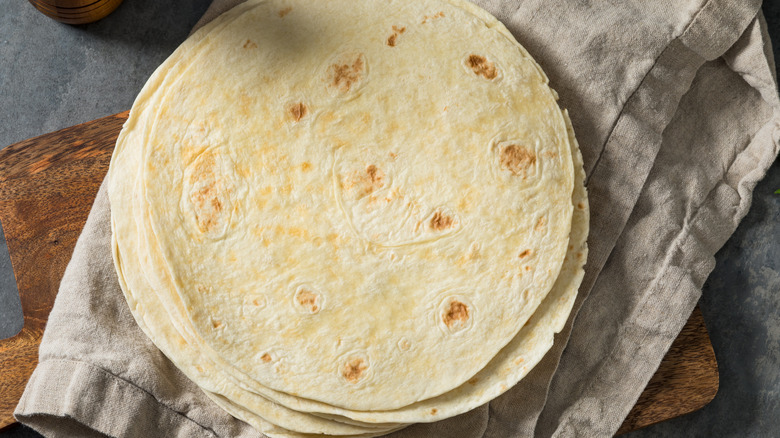
If you've ever made the mistake of accidentally leaving the bag of tortillas open, you'll probably understand why this taco night staple is on this list. Not only do tortillas tend to get stale and hard fast, but they can also be breeding grounds for mold spores. "Tortillas mold quickly, especially soft flour or corn tortillas without preservatives, so the fridge is the best place for them," Joanne Gallagher says. This cannot be said for other types of carbs, like bread, which should not be refrigerated, and other types baked goods, which can also decline in quality if they're stored in the fridge. "Unlike crusty breads, tortillas have more moisture and a thinner structure, so they're most likely to spoil. Bread goes stale faster in the fridge, so I store my loaves at room temperature or freeze them," Gallagher says.
Another key difference between bread and tortillas is that the latter bounces back better from being chilled. Gallagher recommends heating up your tortillas in a warm skillet, though you can also bring them up to temperature by covering them in a damp (not soaking wet) paper towel and gently reheating them in the microwave.
6. Whole wheat flour
If you're like us, you have a whole shelf dedicated to baking products — which includes a wide selection of flours. While plain white flour or bread flour may be able to be kept in a pantry, your whole wheat flour deserves a spot in your fridge.
"I like to keep whole wheat flour in the fridge, and this is especially true if you aren't reaching for it often," says Joanne Gallagher. "Whole wheat flour contains wheat germ, which has natural oils, so it can go bad over time." White flour, as she explains, doesn't contain the germ, which means its storage needs aren't as finicky as its whole-wheat cousin. You can usually tell that whole wheat flour (or other whole grains) needs to be tossed when they emit a rancid odor — like the aforementioned nuts or delicate cooking oils. "Keeping whole wheat flour in the cold preserves its freshness and signature nutty flavor," she says.
Some folks will go so far as to freeze their flour, though popping it in the fridge is the second-best option (and more ideal for folks with limited freezer real estate). If you use either of these methods, be sure to transfer your flour to an airtight container, rather than storing it in the bag it came in. This will lock out unsavory smells and keep your flour fresh for as long as possible — typically six months to a year, compared to three months in a cupboard.
7. Dairy-based or egg-based condiments
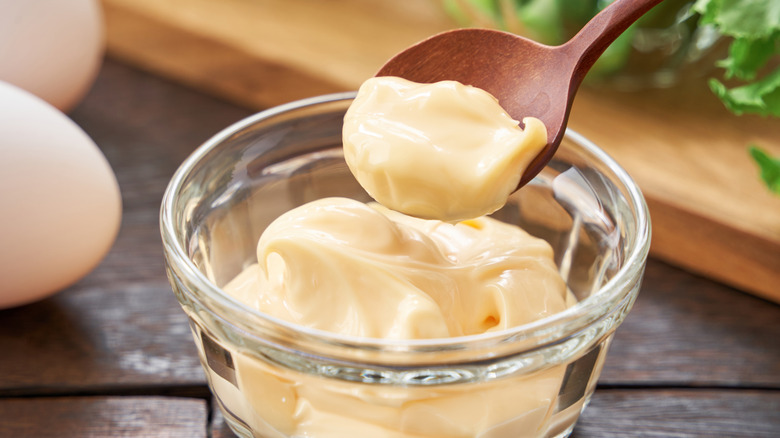
Deciding whether or not to refrigerate a condiment is usually like flipping a coin. However, looking on the back of the label is usually an easy tell. "Any condiment with a fresh ingredient like eggs or dairy should always go into the fridge after opening. Think mayonnaise, creamy dressings, pesto, and some hot sauces," says Joanne Gallagher.
Gallagher offers another worthwhile tip for deciding whether to refrigerate a condiment. "If the condiment tastes tangy instead of salty or sugary, the fridge is always the safer bet," she says. That being said, storing certain condiments in the fridge — like mustard or ketchup — will help extend their shelf life significantly, even if they can technically be kept at room temperature. However, the length of time the condiment is kept out and its turnover may also be worthy of consideration. A restaurant, for example, goes through tons and tons of ketchup bottles, so it might not make sense to refrigerate them. But if it takes you a year to make it through a bottle of ketchup, you may want to make some room in your fridge for it.