

If You Find A Le Creuset While Thrifting, Check For This Before You Buy It

If there's one cookware brand that's made its mark, it's Le Creuset. A French brand known for its high-quality, enamel-coated, cast-iron cookware, its Dutch ovens are especially coveted. Those lucky individuals who manage to thrift these vintage items always find a million ways to use them since they're sturdy enough to go from the oven to the table and back again without sustaining any damage. Of course, despite its many advantages, Le Creuset also has a few cons, the main one being its hefty price tag: the largest brand-new Dutch ovens can cost as much as $800. That's why they're so coveted in thrift stores — you can sometimes find them for right around $50.
Of course, despite thrift stores usually rejecting seriously damaged items, you should still inspect thrifted Le Creuset pieces for telltale signs of unrestorable damage. One of the most important things to look for is chips, cracks, or pits in the enamel coating, especially if the cast iron underneath is exposed. This could allow moisture under the enamel, and cause rusting that can't be remedied by refinishing the piece. Additionally, if you notice the piece is tilted or wobbly, that could mean the cast iron is twisted or warped, which means it isn't safe to use since it isn't stable. Severe staining may also be a deal-breaker since it can be extremely difficult to remove. So, before thrifting Le Creuset, consider how much work you're willing to put into restoration.
Acceptable levels of damage (and tips for cleaning your Le Creuset)
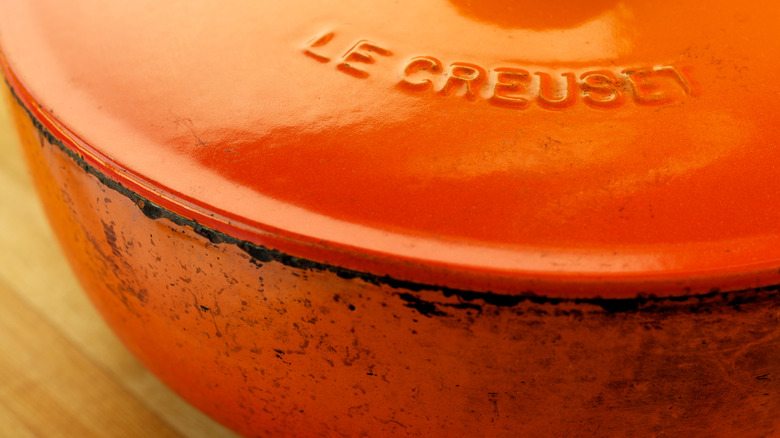
As with many used items, it's reasonable to expect anything you thrift will have some level of wear and tear. This is also true of cookware. Though you certainly want to avoid items with the warning signs previously mentioned, it's a mistake to leave Le Creuset in the store over superficial scuffs, scratches, or staining. Scratches in the surface of the enamel indicate normal wear due to regular use, and don't mean the piece is unsafe to cook with. As long as the scratches are fairly shallow and don't expose the metal underneath, you should be good to go.
The same goes for staining. Provided the stains aren't too thick, covering more extensive damage, or look like they're from something other than executing the perfect Dutch oven-roasted chicken, it should be safe to cook in once you've cleaned it up. In fact, cleaning your thrifted find may be the most important part of the whole process — it provides a final opportunity to closely inspect all surfaces for damage that indicates your Le Creuset should be for display only.
When it comes to cleaning an enamel-coated Dutch oven, it's crucial to avoid corrosive or especially abrasive products that could damage the finish. Instead, stick to soft scrubs made for enamel surfaces, or a mix of baking soda and water, along with scratch-free scrubbing pads and lint-free cloths to get your new piece squeaky clean without scratching it.