

The Person To Blame For Franklin D. Roosevelt's Flavorless White House Cuisine
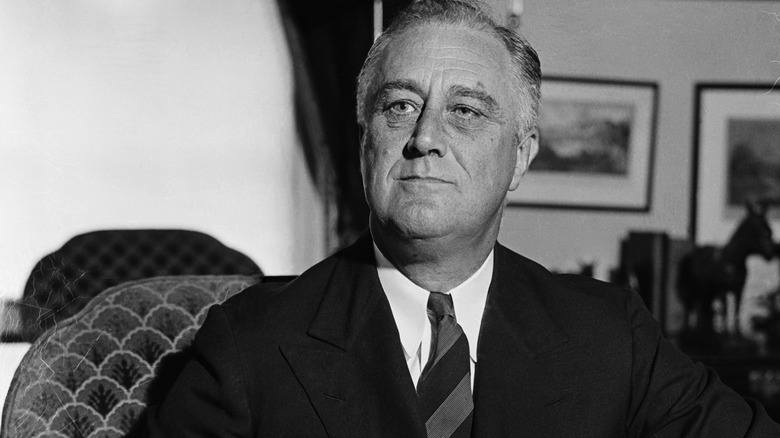
Franklin D. Roosevelt's time in the White House can be remembered as much for his presidency as for his eating habits. It's no secret FDR was one to champion a good martini and was also one of the U.S. presidents known for spending time in the kitchen, but one particular White House chef's cooking was notoriously off-putting for this president. Henrietta Nesbitt was responsible for some of the White House's blandest meals. In particular, Nesbitt's dishes were generally described as dull and tailored around simple meat-stretching dishes rather than mouthwatering flavors.
FDR was very vocal about not being a fan of Nesbitt's dishes. And it wasn't just the president who took issue with them; it became public knowledge the White House's food was lackluster. Some of the less exciting dishes included liver, salt cod, and string beans. In line with efforts to stretch meat, some of Nesbitt's dishes made use of cheap cuts like brains, and dishes were vegetable heavy, such as stuffed peppers, stews, and mushrooms with chicken scraps. One of her recipes – Gumbo Z'Herbes (listed as cheapest soup) – is full of vegetables like mustard greens, beets tops, spinach, green cabbage, and radishes, and notes the inclusion of some meat options, such as bacon, veal, brisket, or hambone.
Nesbitt became known as running the White House kitchen with a strict and basic menu. The stringent measures were mostly due to the need for rationing during WWII. During this period, there was an emphasis on stretching food, which affected households across the nation, including the White House.
Why did Franklin D. Roosevelt keep Henrietta Nesbitt in the White House kitchen despite the bland food?
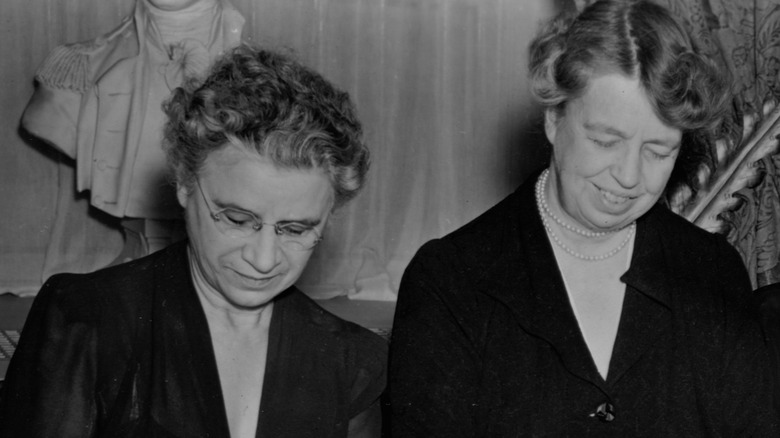
Given that Franklin D. Roosevelt would complain about Henrietta Nesbitt — and even famously promised to run for a fourth term just so he could fire her – it's puzzling the chef remained in the White House kitchen for the entire length of his presidency. There are several speculations about what would have kept Nesbitt in charge of the White House kitchen, and some historians point to the influence of Eleanor Roosevelt.
Nesbitt, who was previously a Hyde Park neighbor for the president and first lady, was not known or hired for her culinary skills. Eleanor Roosevelt saw her efficiency as fit to head up the meals during WWII and also leaned toward working with Nesbitt as somebody she felt comfortable around, according to historian Barbara Haber. Even James Roosevelt, eldest son of FDR and author of "Affectionately, FDR," noted that everyone disliked Nesbitt's food except his mother. Some speculate Eleanor kept Nesbitt close to spite her husband, following their notoriously rocky relationship years, or it could have been Eleanor's way of protecting his health. Since the president had chronic health issues, including suffering respiratory infections, severe hypertension, and congestive heart failure, maintaining optimal healthy habits was of utmost importance, which included his diet (even if he was the president known to enjoy something deep-fried and jam-filled for breakfast).