

This South American Country Holds The Crown For The World's Biggest Beef Producer
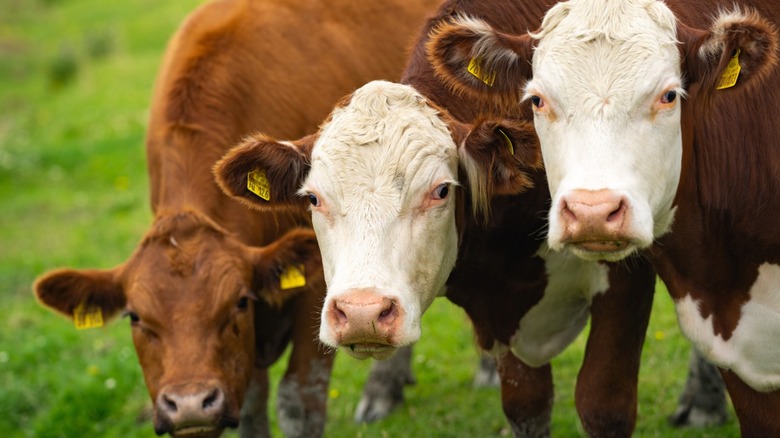
Long-time king of the beef realm has fallen — or at least been knocked down a peg. Despite being the world's largest beef producer (by volume) since at least 1960, the United States lost that status in 2025, thanks to a mix of drought issues and obstructive political policies straining cattle ranchers. Consequently, the new leader of the herd is Brazil, a long-time growing participant in the global industry that produced a whopping 12.35 million tons of beef in 2025 compared to U.S.'s 11.81 million tons, according to a global market analysis by the Foreign Agricultural Service of the USDA.
America's 2025 beef production declined nearly 4% from the previous year, per data released by the USDA in early 2026. This is even more significant considering it's a full 8% decrease from a record high of over 12.89 million tons produced back in 2022. As Reuters reported in January 2026, Brazil beef production grew 4% in 2025 and operates with 238 million cattle, compared to the 94 million cattle in the U.S. Though the USDA only lowered its domestic beef production forecast by 1% for 2026, what happens over the next several months will help determine if taking a backseat to Brazil is a lasting trend or a mere stumble from factors beyond the domestic industry's control. Regardless, Brazil's beef industry has grown substantially over the past decade; by the time its production surpassed the U.S., the South American country was already the world's largest beef exporter, fulfilling demand in over 150 countries across the globe.
Brazilian beef is different in a few key ways
What cattle eat and how they live have long been known to contribute to the meat's flavor and texture, with grass-fed steak considered leaner and more natural than cuts coming from grain-fed cattle. Brazil stands out because over 80% of its beef is grass fed, coming from cattle that spend their lives in pastures rather than feedlots. Additionally, while U.S. beef cattle consist of an array of Angus, Charolais, Hereford, Simmental, Limousin, Holstein, and other breeds with European origins, the bulk of Brazil's herds consist of Nelore, a cattle breed that originated in India.
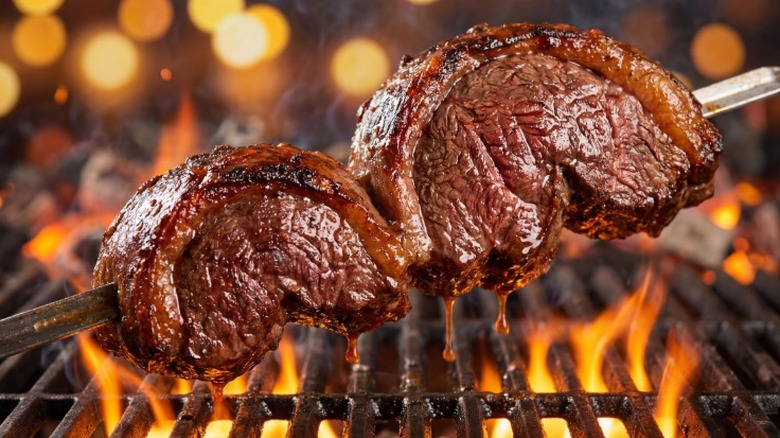
The types of beef cuts Brazil is known for are also different than the standards seen in American supermarkets from local stock. If you've been to a Brazilian steakhouse, you may have seen picanha, a tender beef cut from the cow's rump with a thick fat cap that's roasted to juicy perfection on a skewer. Other cuts include types of strip steak, flank, ribs, and filet mignon, but they may go by different names because the cuts are slightly different from Brazilian cattle and are traditionally slow cooked over open flames.
Brazil's beef industry has grown in controversy as well
Even with its success, Brazil's beef business is not without its issues. One of the biggest areas of scrutiny focuses on its role in deforestation of the Amazon rainforest, a region where the amount of cattle has exploded over the last few decades to become 40% of the nation's total in 2018, according to Amnesty International. Of course, this is also driven by the industry's expansion and increasing global demand, which calls for more pastures and space for processing facilities.
Other operational issues have landed Brazilian beef companies in hot water, and not just domestically. In December 2025, according to RTE 100, the European Commission recalled Brazilian beef imports due to concerns over illegal hormone use. This may not seem like a huge deal considering plenty of American businesses have faced its own individual low-quality beef controversies over the years, but the EU beef recall has sparked broader conversation over Brazil's potentially too-loose regulations for beef in general. The Brazilian industry's supply chains have also faced accusations of recruiting laborers under false pretenses, failing to pay them fair and legal wages. On top of all that, the owners of JBS, the world's largest meatpacking company, was found guilty of bribing local inspectors and making illegal political donations. Still, time will tell if any of this actually affects the industry's cow powerhouse status.