

Grow Healthier Rosemary By Mixing This Into Your Soil
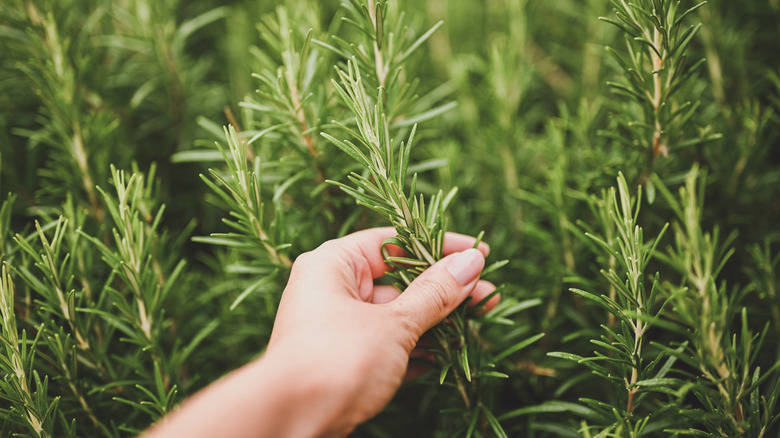
Rosemary is one rustic herb that you need to plant in your garden. This plant is not only robust and delicious, it is also among some of the easiest herbs to grow. Rosemary doesn't require much upkeep, though there are many ways to ensure that the plant has a higher likelihood of growing into a bountiful harvest. You'll just want to ensure proper drainage by incorporating gritty materials like gravel, expanded clay, and perlite (a mineral effective in gardening) into the soil.
Incorporating this step into your rosemary garden is very simple. Regardless of whether you plan to plant your rosemary directly into the ground or in a pot, adding these materials is ostensibly the same. You'll merely line the gritty material at the bottom of the bed or the planter, before placing the soil overtop. This will help with proper water drainage and ensure healthier herbs. Some methods suggest a two to three centimeter layer of the gritty material of your choice (this goes for in-ground or in-pot). You could also mulch your plant with white sand to assist with properly draining the water.
Proper drainage can be more difficult to maintain in a contained environment, but you can help promote water flow by using unglazed clay or terracotta pots. These material are porous, which will allow water to evaporate through the pots on the sides in addition to draining from the gravel layer at the bottom. While rosemary is a relatively unfussy herb, it tends to do best in full sunlight (between six and eight hours every day) and only needs occasional watering. Some suggest watering once every one to two weeks for optimum health and growth.
How to care for your rosemary
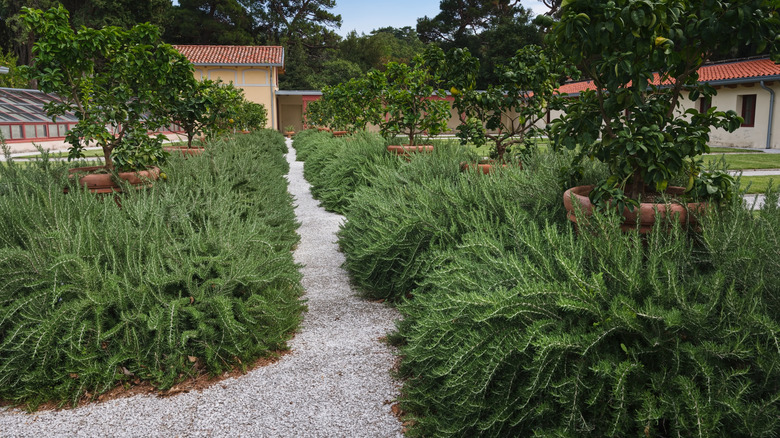
Rosemary tends to do well with limited watering, but you'll want to note that this can change depending on the plant's general age. Younger plants may need more attentiveness and additional hydration depending on the soil density and environment. You can ensure proper care by checking the soil. If the top one to inches of soil feels dry, go ahead and water your plant. Couple this step with effective drainage and you'll be sure to have a robust and healthy harvest.
Beyond mixing gritty materials into your soil, there are a few other ways you can ensure your rosemary stays strong. For one, it tends to do particularly well in hot and dry climates, but it can waver a bit in intense cold or sharp drops in temperature. That's why its important to bring your potted rosemary inside when you know there's going to be a drastic temperature change. But for in-ground plants that you can't move indoors easily, you'll want to cover them with breathable materials like biodegradable fleece or an old cloth.
The pruning process can also stimulate new growth and prevent bare stems. Just ensure you cut down low into the rosemary in order to encourage a fuller result throughout the plant. Additionally, you can encourage additional growth by planting your rosemary alongside complementary herbs like sage and thyme. And keep in mind that while there are all kinds of composting methods out there that supposedly aid with garden health, rosemary happens to be among the plants that do not want your coffee grounds anywhere near them. So save your used beans for something else.