

Turn This Fiber-Packed Canned Soup Into An Easy, Creamy Pasta Sauce
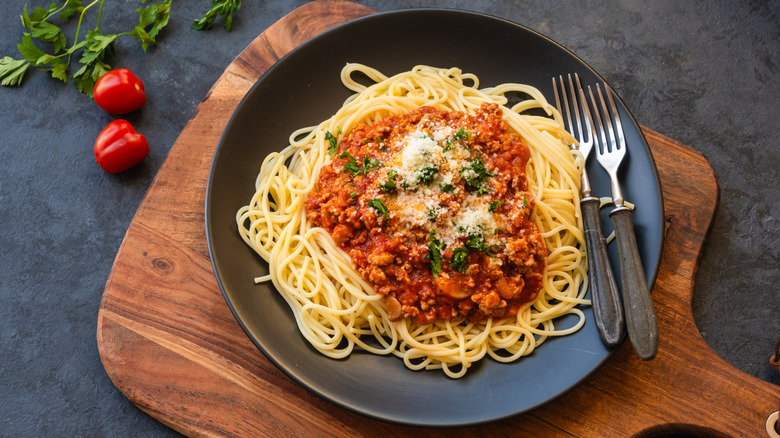
On a busy weekday evening, there's not much more satisfying than quickly throwing together a dinner from pantry staples that not only tastes delicious but is good for you too. That canned split pea soup in the back of your cupboard probably isn't screaming pasta night right now, but it's about to become the base of your new go-to pasta sauce. Nutritionally speaking, split pea soup is already a bit of a powerhouse, loaded with vitamins, fiber, and a nice hit of protein. For instance, a can of split pea soup has 20 grams of fiber and 18.6 grams of protein, per the USDA. Plus it's already thick and seasoned, it just needs a little love to turn into something you can toss pasta through. It could become one of the best canned soups you can grab at the store, especially if you're always looking to stock up on essentials that can serve more than one purpose.
Treat canned pea soup as a starting point for an incredible homemade pasta sauce by loosening it up with a bit of pasta water, coconut milk, or stock that you let simmer over a gentle heat. If after that the soup still feels too dense, then you could also blend it with the added liquid instead. Either way, it's essential that you bring the thickness down a notch. Then once the consistency feels right for a sauce, improve the flavor a touch by just adding in some acid like vinegar or lemon juice, and bring in an extra umami depth with things like parmesan, miso paste, nutritional yeast, or even sun-dried tomatoes.
Finishing the sauce properly
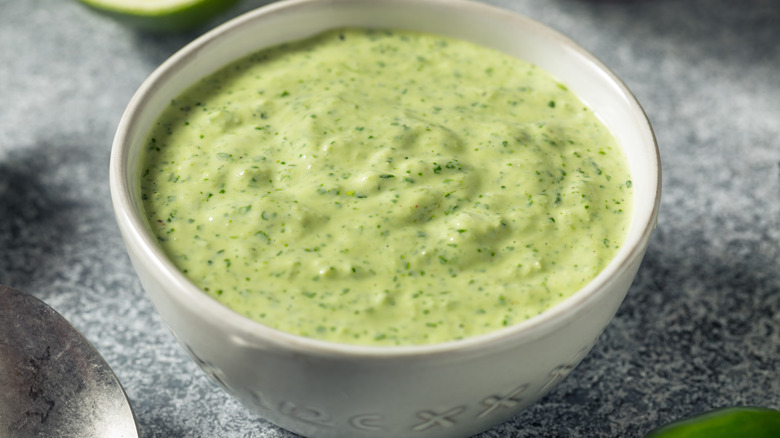
You want to get rid of the soup-y texture of the canned split pea soup, but it is all too easy to also accidentally over-thin the sauce which will just leave it struggling to cling to the pasta later. In order to get the right consistency, leave the heat low as you stir your added liquid through, and make sure you pour that in slowly so you can stay in control. And then there's the final toss — it is tempting when you're in a rush to just plate up the pasta and ladle the sauce on top, but you'd be much better off stirring the pasta through the sauce while it's still in the pan and throwing in a splash of pasta water with it. This will help bind it all together, giving your dish a more cohesive texture thanks to the starches in the pasta water. And finally, a proper stir through will allow you to taste the dish in its finished form and season if required before you plate up.
Then, any finishing touches will depend on how light or rich you want your dish to be: a hearty drizzle of olive oil will give it some gloss, while a little extra squeeze of lemon will keep it much lighter and brighter. It's already a good trick to add peas to any creamy pasta sauce to bring in an element of sweetness, but who is to say this vegetable can't be the star of the sauce itself? In order to make it work, it just needs a little balancing to take it from a canned soup to a genuinely comforting plate of pasta.