

Why Your Range Hood Is The Best Defense Against Kitchen Grease Buildup

Kitchen grease is enemy No. 1 when it comes to keeping your kitchen cabinets clean. But this sticky, oily residue is also an inevitable consequence of using your space to prepare food. The act of cooking releases heat and steam into the air along with little droplets of grease. As the greasy steam settles and cools on various surfaces of your kitchen — namely your upper kitchen cabinets — it leaves behind a layer of grease that can ruin your cabinets' finish over time. Though you can quickly and easily degrease your kitchen cabinets with Dawn dish soap, a much better long-term solution is prevention in the form a powerful, efficient range hood.
These large metal awnings suspended over most kitchen cooktops contain a system of ducts, fans, and filters that draw in heat and greasy steam and ventilate it outside your home. This not only keeps your kitchen cooler (especially during the summer), it also traps and eliminates oily residue before it can land on your kitchen cabinets.
Of course, to work as efficiently as possible, you should be cleaning your range hood regularly. Not only does this keep the air in your kitchen a lot cleaner, it helps increase your range hood's total lifespan, which is important since they can be expensive to replace. Regular cleanings also reduce the chance of grease fires occurring in your kitchen.
Tips for keeping your range hood clean
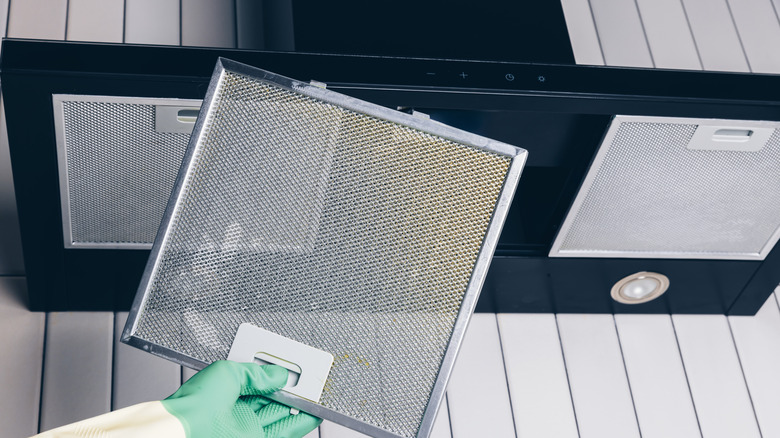
Experts recommend that you clean your range hood about four times a year, though you should clean it more often if you're partial to deep-frying or cooking big meals for large groups. Not only does this help keep your range hood working properly, it also makes cleaning it easier over time since more frequent cleanings mean less residue to remove each time.
In terms of how to clean your range hood, the filters are likely going to need the most attention because they do most of the heavy lifting when it comes to keeping your kitchen's air clean. If they look especially sticky, give them a soak while you lightly scour the rest of the hood, inside and out. Avoid abrasive or corrosive cleansers and scrubbing tools that may damage your range hood's finish, opting for dish soap and baking soda instead.
Of course, even the most carefully maintained range hood will eventually need to be replaced. If you notice grease building up on surfaces even after you've cleaned the hood, it may be time to call a professional to see if you need a new one.