

Not All Vintage Copper Cookware Is Valuable. Here's How To Tell If You've Found Treasure Or Trash
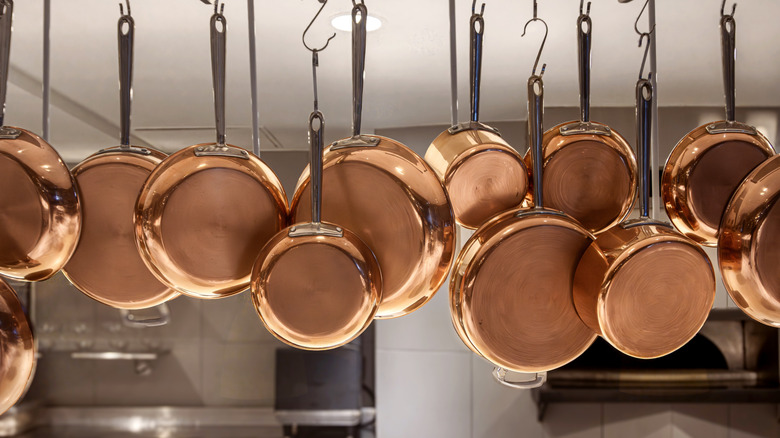
A vintage item automatically has a sense of prestige. It's unique, not to mention it has seen decades of wear and yet has survived. However, not everything that's vintage is valuable, like copper cookware. To know how to tell if you've found treasure or trash, especially if you're cooking with it, Chowhound spoke with Malak Bellajdel, an interior designer at CopperSmith. "Most traditional copper cookware is lined with tin because copper itself reacts with certain foods. Over time that lining wears down." she exclusively told us. "If you see a lot of copper peeking through the inside, or the lining looks patchy, dull, or scratched down to the base metal, it probably needs to be relined before using it for cooking." This makes copper cookware safe to cook with, because otherwise it could be dangerous since ingesting copious amounts of copper can be toxic.
Evidently, one that's in good condition is bound to cost more, but if you're willing to go through the hassle of relining it yourself to get a better deal, then by all means. And if you're on the hunt for copper cookware specifically to enhance the aesthetics of the place rather than to actually cook in it, then you don't have to be that picky. "A beautiful piece with a great patina [a layer of discolored corrosion that forms due to oxidization] can still be valuable, even if it's not kitchen-ready," Bellajdel mentioned. That said, it's also important to look for other signs to tell if vintage copper cookware is worth it or not to ensure you're getting the better end of the bargain.
How to tell if vintage copper cookware is worth your buck
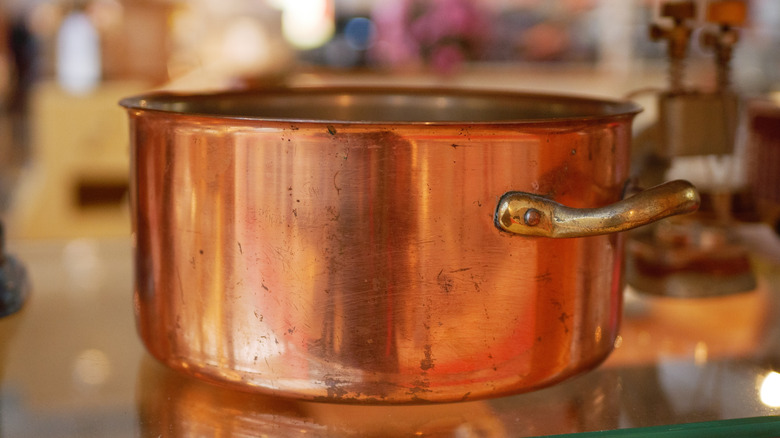
To be a discerning copper shopper, you have to know what a good vintage model looks like. It can be the best cooking pan you own if you know how to look at the finer details. After all, even Martha Stewart swears by this cookware. Those with a trained eye would tell you to look out for the handle. Three copper rivets on the base mean that it's French and of exceptional quality. Cast metal handles should also look sleek, pristine, and free of imperfections. "A well-maintained piece should have a fairly smooth, silvery interior. You'll also want to check that the pot isn't badly warped and that the handles are secure," Malak Bellajdel added.
Also, make sure to take note of the thickness of the cookware — two and a half to three millimeters is best if you're actually using it in the kitchen. Any thinner copper cookware, especially one that's less than two millimeters, is great purely for aesthetic purposes; it won't work as well functionality wise because it won't conduct heat evenly. Meanwhile, more than three millimeters isn't ideal either — it will take longer to heat and will only be unnecessarily heavy to handle. Take note of the material the lining is made out of, too. Tin is commonly found in legitimate vintage pieces, so stay away from the modern touch of stainless steel. Also be wary of silver and nickel because they're not as typical. A bit of flaw is okay, including hammer marks and slightly uneven bases, as they're signs of handmade craftsmanship that you can show off proudly.