

The Illegal Animal Part You'll Never See In Stores Or Restaurants In The US
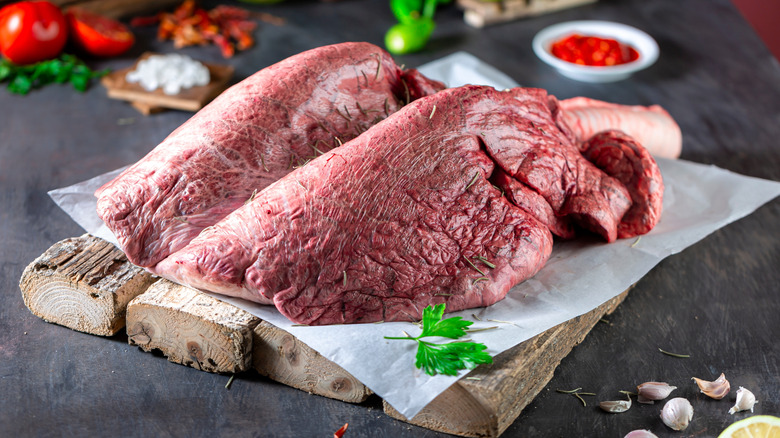
When it comes to meat, some parts of the animal are more popular than others: After all, while you can buy offal like liver or hearts, it's far less common than ubiquitous thigh meat or sirloin. In fact, liver is one of the most hated foods in the U.S. But there's one animal part you'll never find — and it's not because of unpopularity, but because it's banned in the United States: lungs. (Technically, selling lungs is banned, not consuming them, which leaves a loophole if you slaughter your own animal; they can also be used in pet food.)
There are a few reasons behind the ban. Before the ban was implemented in the '70s, the USDA closely inspected animal lungs and found foreign objects like pollen and fungal spores, as well as material from the stomach that can be pushed into the animal's lungs when it dies. (Based on some sources, the stomach fluids are the bigger issue, as humans frequently breathe in pollen and spores.) The USDA deemed lungs a contamination risk and banned them, with the rule applying broadly rather than to any specific animal.
The lung ban is fairly unique, as there don't appear to be any other organs or body parts subject to such a general ban (except perhaps the shark fin). However, there are a few animals people used to eat that are now illegal, such as horse meat, although there seem to be fewer safety concerns behind that ban.
How is lung eaten, and will it be possible in future?
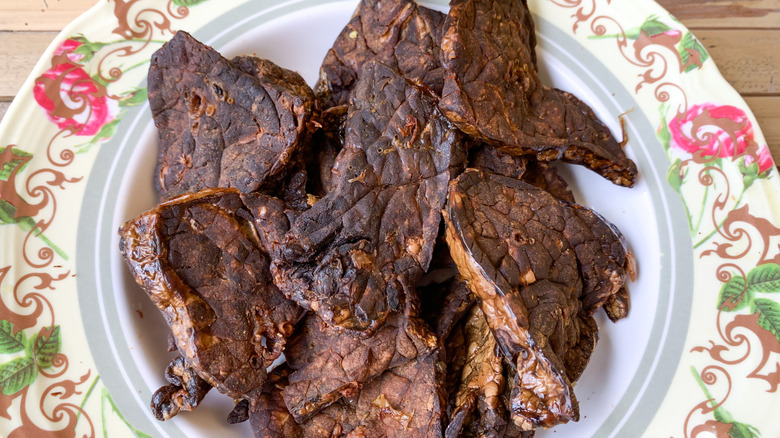
Organ meat is not particularly popular among Americans, so that may leave you wondering how lung meat is consumed elsewhere. You're probably familiar with at least one dish that uses it — Scottish haggis, which is sheep lung, heart, and liver, wrapped in the animal's stomach (other animals are also sometimes used for haggis). You'll also see it in the Philippines, where pork lung figures in a dish called bopis, where it's cooked with vinegar, chilies, and other aromatics. And in Indonesia, you can get paru goreng (pictured above), a deep-fried beef lung dish with plenty of spices.
As these recipes suggest, beef, pork, and sheep lungs are most commonly eaten. In terms of flavor, lung is generally considered somewhat mild (perhaps with a hint of iron taste). It also has a spongy texture and absorbs flavors well, which is perhaps why it appears in recipes with lots of seasoning. But if you do somehow end up cooking lung, be careful, it can be rubbery if overcooked.
Considering that nose-to-tail cooking has become more prominent in recent years, is it possible that the lung will find its way back onto American menus? Maybe: In recent years, some doctors and scientists have argued that the ban is excessive and the risks from eating lungs are no worse than other organs. That said, at the time of writing, there doesn't seem to be much of a coordinated push to lift the ban.