

Cut Through The Bitterness Of Collard Greens With One Splash Of This Liquid
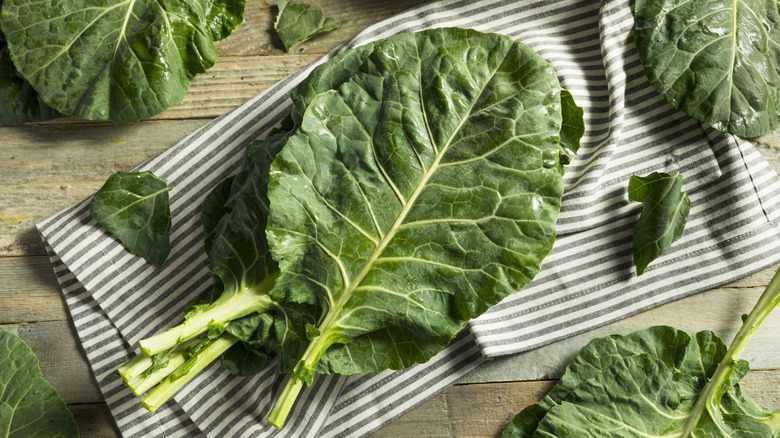
Collard greens are a popular dish in Southern cooking and for a really good reason. Actually, a couple of really good reasons. They have many health benefits (they're loaded with vitamins, minerals, and antioxidants), and they are also delicious, as long as you know the trick to cooking them so you don't get the sharp, bitter flavor they are known for. Collard greens are naturally bitter because of something called glucosinolates, a bitter compound found in many cruciferous veggies, which is mainly due to the maturity level of the greens (more mature leaves have a higher level of glucosinolates).
Acid has the power to mitigate the bitterness from glucosinolates, so a quick and easy fix (not to mention tasty) is orange juice. You don't need a lot, especially since a slight bitterness in collard greens is something that some people really enjoy, so start with a splash and taste as you go until you've reached a flavor that makes your taste buds happy.
Like a Southern-style fried cabbage that is melt-in-your-mouth good, a bowl of collard greens, sans bitterness, can be the cornerstone of a good meal. From a side dish to a substitute for spinach in pasta dishes, you can do so much with these versatile greens, so working with them effectively is an important skill to master.
Additional tricks for making amazing collard greens

When it comes to the citrus hack, the best way to incorporate orange juice is at the end of the cook. Finish off your collard greens with a quick sauté in some oil and garlic, then stir in some orange juice — start with one-third of a cup of OJ and experiment with different amounts or types of citruses to get a flavor that suits your palate. Sauté your greens for about 15 more seconds to give the acidic juice time to meld with the flavors and make sure it coats the surface of everything in the dish.
Thankfully, orange juice comes to the rescue of bitter greens, but there are a few other tricks to make collards less bitter and give them a boost of flavor. They're already less bitter than their leafy green cousin kale, so they are a great option if you want to add some fiber and nutrients to a fresh salad, sandwich, or wrap. But you've still got some bitterness to cope with.
The bitterness dissipates a bit when you cook them, creating a rich, earthy taste instead. However, you need at least two hours to have enough time to break down the glucosinolates. Another trick is adding bacon to the mix — the fat binds to the bitter compounds and helps balance out the flavors. Stirring in some hot sauce (thanks to an acidic base, hot sauce will have the same effect as a citrus juice like orange) will also add a deep flavor boost to your greens that can help mask the bitterness while adding a little heat.