

Should You Really Only Eat Oysters In Months That Contain The Letter 'R'?
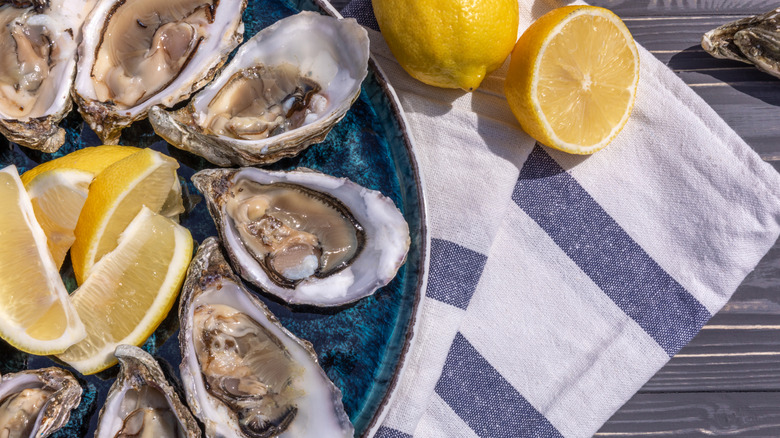
Picture this: It's a summer day, you're sitting at a restaurant by the water, and you see your waitperson with a dozen oysters and all of the best toppings on the way to your table. Sure, it feels like the perfect scene, but is it actually safe to eat those oysters during the summer months? In the past, it was suggested you should only eat them in months that contain the letter "R," for safety reasons (meaning September through April). However, this isn't technically true; adequate refrigeration methods have helped keep oysters safe even in the warmer months. But the longer answer is it's not entirely false, either.
To feed, oysters filter water through their bodies, but this can result in the shellfish building up a concentration of bacteria. Due to spawning, warming water temperatures, and an increased risk of red tide, people were once advised against eating oysters in warmer months because there was an increased risk of getting sick. These days, many oysters are farmed, which makes it easier to know how they are raised and better monitor the oysters in their growing conditions, ultimately making them safer than they used to be. With current methods of farming, breeding sterile oysters, and consistent refrigeration, you can safely buy oysters for your summer cookout.
Concerns about consuming oysters during summer months
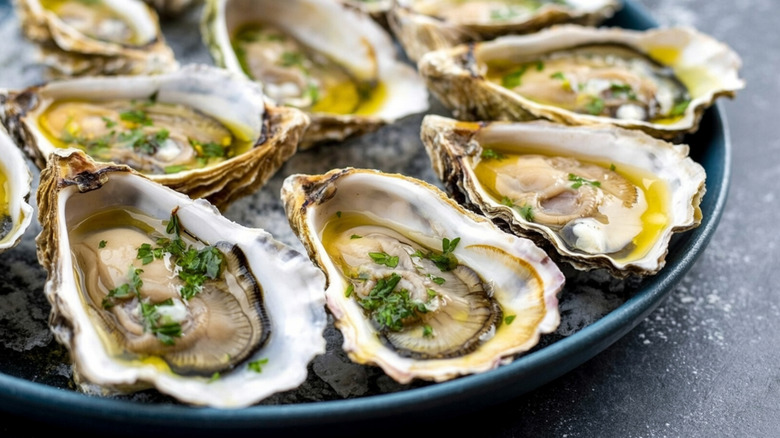
It's never absolutely safe to eat raw oysters, according to the Centers for Disease Control, no matter the month or their origin location. The CDC also makes clear there is a rise in bacterial infections (specifically, Vibrio bacteria) during warmer months — even in colder states with colder ocean temperatures.
Back in August 2025, the Massachusetts Department of Public Health sent out an alert cautioning people about an increase in Vibrio bacteria within ocean waters and cautioned to be careful when consuming oysters. Vibrio vulnificus, a specific type of Vibrio bacteria, can cause a flesh-eating infection that can lead to death. According to CBS News, two people in Louisiana died after consuming Vibrio-laden oysters during this time, with blame focused on rising ocean temperatures. That same month, multiple states reported various cases of Vibrio infections, though they weren't all from consuming raw or undercooked oysters (you can also get a Vibrio infection if you swim in contaminated water with an open wound).
There were 82 reported Vibrio vulnificus cases in the United States that summer, mostly in states with warmer ocean temperatures, and oyster consumption was directly noted as a way to get an infection. Ultimately, while oysters are generally safe, anyone with a compromised immune system would be wise to avoid them entirely. But with Vibrio cases on the rise, it might still be worth it for you to buy your favorite shellfish outside of the summer season.