

5 Cocktails You Should Be Making With Guinness
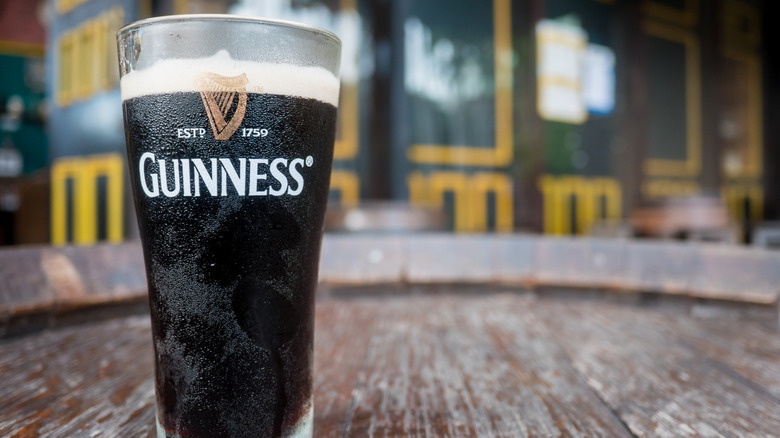
Anyone who's ever enjoyed a chocolate stout cupcake topped with Irish cream frosting knows just how deliciously versatile Guinness can be. Smooth and dark with a dense, creamy head and a malty bitterness that's not the least bit harsh, it's not only one of the most famous stouts in the world, but also a surprisingly excellent foundation for a wide range of beer cocktails. Recently, we had the pleasure of speaking to Guinness Brewery Ambassador Colm O'Connor about his recommendations and personal favorites when it comes to blending this iconic beer with other flavors.
"We had a brewery in London called Park Royal. And at the time there was a cocktail boom in the U.K. For a bit of fun, now, it was very much tongue-in-cheek, Guinness put out three pages of, it was called the Guinness Black List," O'Connor shared, "You'll have a good laugh when you see the Black List ... But again, it's kind of creating Guinness for particular spaces, particular occasions."
Though O'Connor explained that espresso stout martinis are among the most popular Guinness-based cocktails, the vintage Black List is a fun and interesting resource for expanding your palate. With quirky names and a few unexpected flavor combinations, there's a little something on there for everyone.
Espresso stout martini
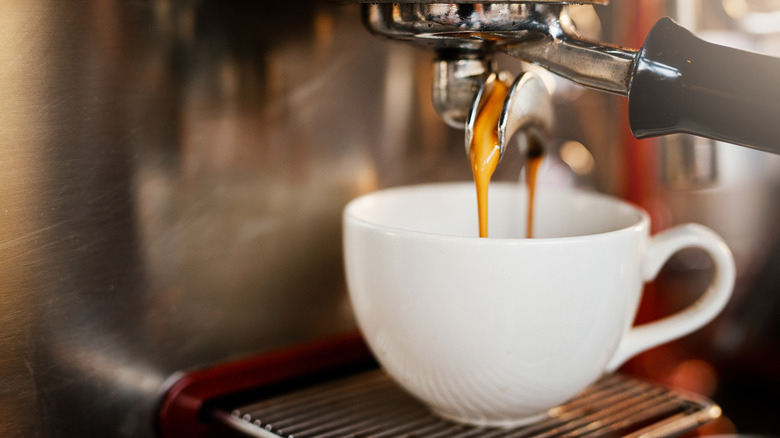
Fans of after-dinner drinks and spiked coffee find their bliss in the almighty espresso stout martini. In fact, many people already are. As O'Connor shares, "Espresso stout martinis definitely are an ever popular [Guinness cocktail]. And probably getting more popular." These elegant, jet-black martinis are not only visually striking, they combine the rich fullness of Guinness with the delicious, roasty nuttiness of espresso, the bite of ice-cold vodka, and a drizzle of simple syrup. All of these ingredients take the drink from an acquired taste to fan favorite. The resulting flavor is perfectly sweet, full-bodied, and creamy.
Usually served in a martini glass (as the name implies), this drink is classy enough to end the night at a black tie event, but accessible enough to make at home to serve at a dinner party or an al fresco brunch. Just be sure to prepare them shaken, not stirred, to ensure each serving has that signature ivory-colored head. Garnish with roasted coffee beans, or a sprinkle of high-quality cocoa powder.
Top hat
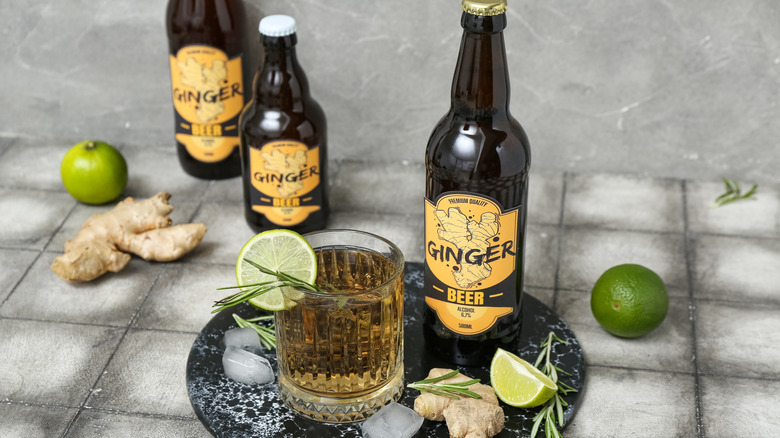
If you're a fan of spice and chocolate together, Colm O'Connor's Black List favorite may also be yours. "My favorite was the one with ginger beer," he explains, "and that was called top hat. So, it's a nod to Fred Astaire and Ginger Rogers." The creamy white foam and dark beer represent Astaire's signature coat and tails, while the ginger beer, of course, represents the red-headed Rogers. The drink's name comes from the title of one of the light-footed pair's best-known films, "Top Hat," which premiered in 1935.
Traditionally sweet with the tangy bite of both carbonation and gingery flavor, ginger beer may be either slightly alcoholic or non-alcoholic, depending on the style. This means adding a splash or two to your Guinness enhances the flavor, but not necessarily the ABV. Once mingled together, the two create a beautifully malty, zingy flavor with dark chocolate notes brought forward by the ginger's piquance.
Black velvet
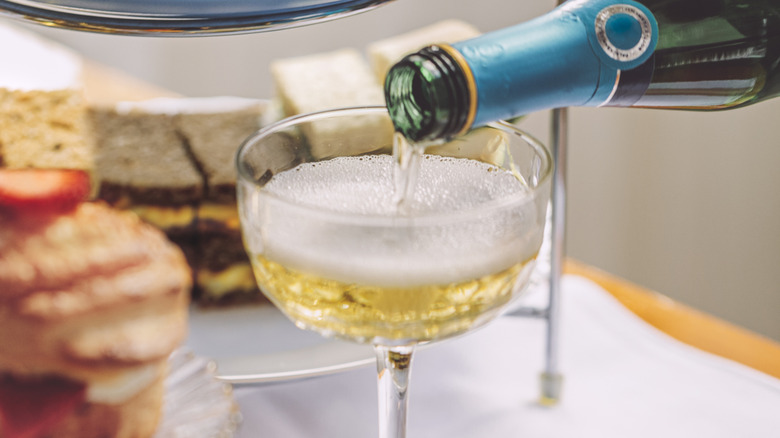
For a true taste of time-tested history that's both innovative and delicious, turn to a black velvet. According to Colm O'Connor, this 1:1 blend of Champagne and Guinness first became popular in the 1860s, possibly originating in response to the death of Queen Victoria's husband, Prince Albert. O'Connor states, "They say that the head bar steward in Brooks club in London said, 'Everything is in mourning, even the Champagne is in mourning.' And in one fell swoop doused the Champagne with Guinness. So, that's where the story comes from."
This legend of its bittersweet origins are surprisingly fitting, both in terms of the black velvet's appearance and taste. More translucent than Guinness alone, the drink truly does look like "Champagne in mourning" with a flavor O'Connor says is described best as a "spritzy Guinness." The Champagne gives the drink a light, airy mouthfeel, while both drinks' sweet earthiness mingle in almost perfect balance.
Of course, differences in densities present certain challenges when mixing: The airy composition in nitro-charged cans may cause a chemical reaction that overflows your glass. Instead, O'Connor suggests you "keep a little bit in the can and then maybe put it in ... I would say that's not an official Guinness initiative, but that's probably what people will do at home. But most people at home would do just the 50/50 [with the bottle]."
Trojan horse
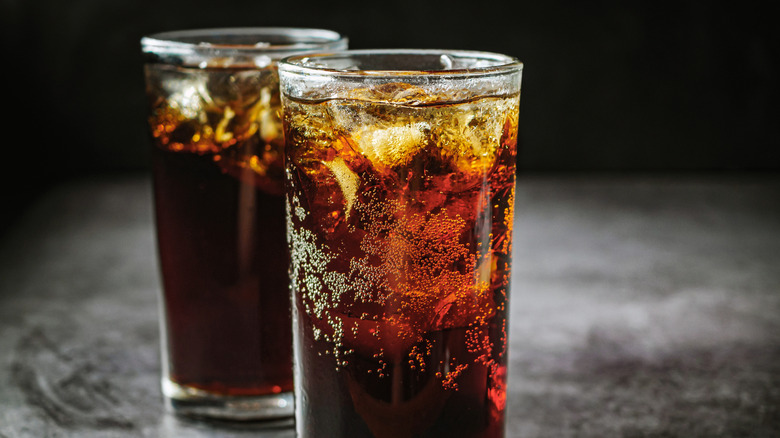
If you're used to sweeter, fruity cocktails or have a craving for stout but want something a little lighter and more refreshing, a Trojan horse may be the way to go. This cheeky name comes from the excerpt in "The Illiad" where Greek soldiers hide inside a wooden horse and set it outside Troy's gates, taunting the Trojans to steal it (spoiler alert: it worked). Colm O'Connor explains the cola in this drink is hidden in much the same way — it's the same color as Guinness, so you might not know it's there until you taste it. As with the black velvet cocktail, both components of this drink are carbonated, so you need to be careful when mixing them to avoid a sticky mess. Add the Guinness first, then use the tilt method to stream the cola along the inside of the glass in a slow, gentle pour.
Usually a 50/50 blend of cola and stout, it's especially popular during summer months when you want to relax without feeling weighed down. The stout curbs the sugary flavor of cola to make it less cloying, while the cola brings out the natural chocolate notes in Guinness. This wouldn't be out of place as a nightcap around a beach bonfire paired with TikTok's viral savory s'mores — or the classic version, if you have a real sweet tooth.
Black and black
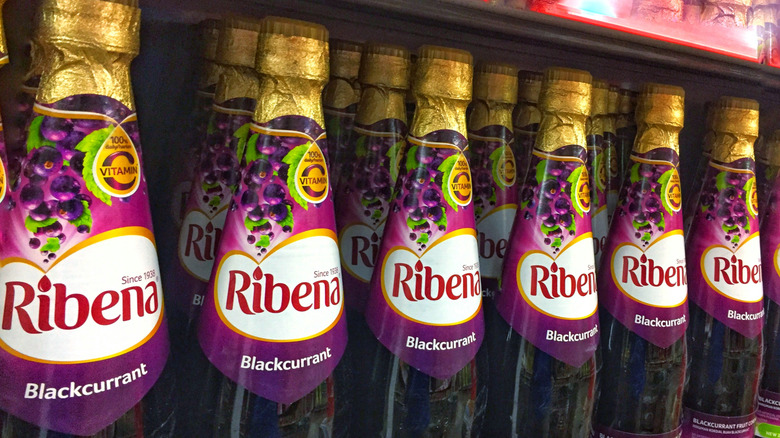
Quite popular throughout Ireland, the black and black cocktail combines the juicy sweetness of blackcurrant concentrate with the deep, silky malt of Guinness. Blackcurrant concentrates — such as Ribena, which is available throughout the U.K. — tame blackcurrants' mouthpuckering tartness with plenty of refined sugar, turning it into a jammy, tangy beverage that brightens Guinness' slightly bitter edges perfectly. Somehow, this combination brings out the bitter notes in both drinks without making them overwhelming. Instead, that increased harshness enhances the nuances of stout and blackcurrant concentrate alike to create a shockingly smooth balance that's just sweet enough without tipping over into being cloying.
The key to mixing this drink properly is to use a gentle hand when adding the blackcurrant concentrate because you don't want to overwhelm the stout. You want a pleasantly fruity, sippable beverage with a dark, velvety edge. If you can't get your hands on Ribena or another blackcurrant concentrate, you can also use a few small spoonfuls of blackcurrant jam in the bottom of your glass. Pour the Guinness over the jam, and agitate very lightly with a bar spoon to evenly distribute the flavors, being careful not to overmix so your beer doesn't go flat.