

Don't Toss That Egg Carton! Use It In Your Vegetable Garden For Easy Planting
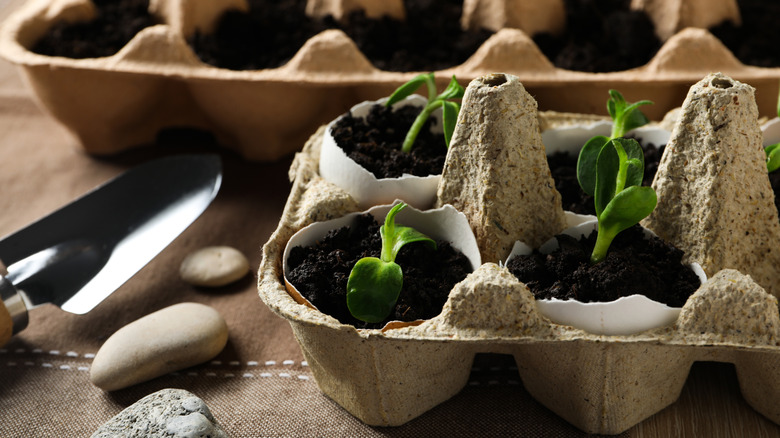
So, you've just bought some fresh eggs from your local store. But now that they're neatly placed in the built-in tray on your fridge door, you're wondering what to do with the carton they initially came in. First things first, egg cartons are surprisingly versatile and there are many creative ways to repurpose them. Whether your transform them into DIY fire starters, hang them on a tree as improvised bird feeders filled with seeds, or use them as a handy baking tray for perfect meatballs, the options are limitless. And if you enjoy gardening, you'll be happy to know that they can be repurposed into extremely practical onion planters.
In case you don't have any planting trays on hand, you can try and propagate your future vegetable garden directly in your kitchen with this egg carton trick. Not only does this unique approach cut waste, it can also save you from spending money on new trays. Because egg cartons (specifically the paper ones) are biodegradable, you can just plant the onion set into the soil along with the carton itself.
Now, if you're curious about how to get started, keep in mind that the process is very straightforward and only takes a few simple steps. That said, the first thing you need to do is prepare a garden bed. This means: choose a specific spot in your garden, remove the surrounding weeds, loosen the soil to enable better air circulation, and, last but not least, put the cartons onto the bed and add some compost to enrich the soil with extra nutrients.
Don't forget to plant the onion sets with the pointy tip up
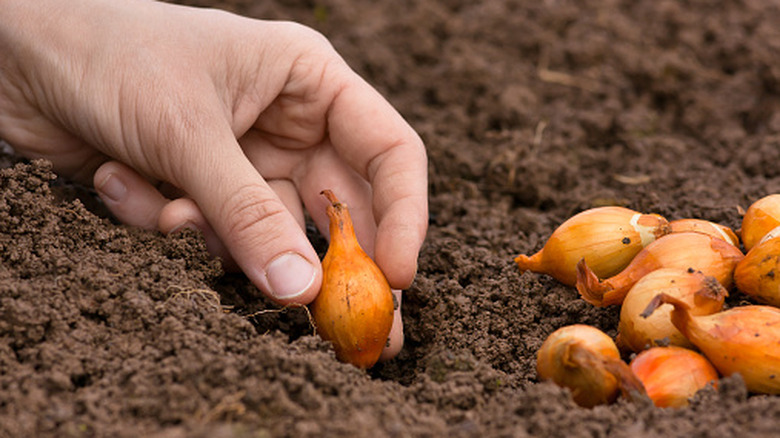
After preparing the garden bed and lightly wetting the carton so it stays in place, it's time to plant the onion sets. An important detail to remember is to always put one onion set in each cup with the pointed end facing upwards. This is because this position will support better growth. With that in mind, in case you're hoping for larger onion bulbs, remember to give them extra space by planting them in every other cup instead. This will create ideal spacing for the bulbs' development, as onions typically need roughly 6 inches between them in rows.
Once that's taken care of, cover the sets with about ½ inch to 1 inch of soil. Also avoid burying them too deeply. Otherwise the plant will spend a great deal of nutrients and energy to develop the leaves, instead of the bulb. Then simply water the area and let the onions grow. While onions don't require heavy watering, make sure to keep the soil moist.
The moment the tops or stems turn yellow and begin naturally falling over, it's time to collect them. This is the best way to know if your garden onions are ready for harvest. Once you pull them up, all that's left to do is to take them into the kitchen and cook them as you like. As for the egg carton, it will slowly break down in the soil on its own.