

The Pasta Golden Rule Olive Garden Constantly Breaks
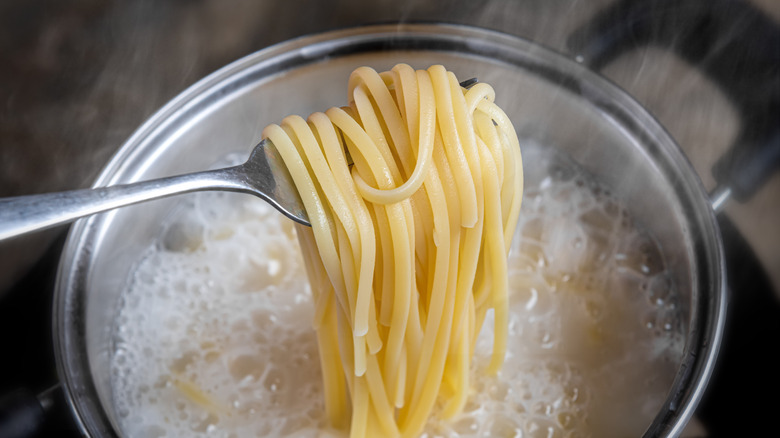
Anyone who knows the first thing about cooking pasta knows that step number one is always (always, always) salt the pasta water. The reason is simple — as it cooks, dry pasta absorbs water, so the saltiness soaks into the noodles. Forgetting to salt the water is usually considered one of the most common pasta mistakes you should never make by professional chefs and home cooks (as well as all of Italy). It's right up there with not cooking it "al dente."
So you may be surprised how Olive Garden, famous for its many pasta dishes, actually cooks them. Back in 2014, activist investment firm Starboard Value featured the restaurant in a presentation about its parent company, Darden Restaurants. The presentation claimed that Olive Garden had stopped salting pasta water due to concerns for the warranties on their pasta cookers, which the chain thought could corrode faster in salty water. Currently, there has been no public evidence to suggest that Olive Garden has changed this practice.
In commercial kitchens such as those at Olive Garden, pasta is not cooked in stockpots but rather in large, expensive pasta cookers. They function similarly to deep fryers, with baskets for cooking and draining the pasta, as well as timers to keep everything ticking along. In a busy restaurant, you can imagine these machines are in operation throughout service, and so keeping them healthy is a big concern. Regardless of the reasoning, this revelation was shocking at the time — if simply just because of how deeply ingrained salting pasta water is in cooking advice.
Why salting pasta water is considered so important
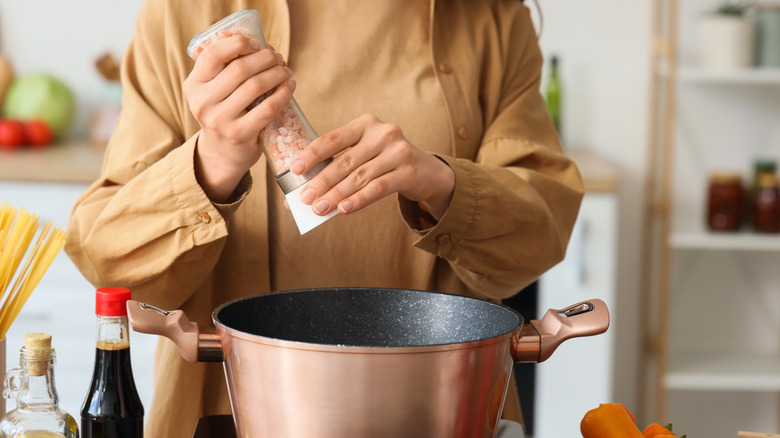
In Italian cooking, salting the water isn't just a good habit — it is a non-negotiable step in building the flavor. Pasta by itself is bland, and salting the water gives it a head start so that the sauce doesn't have to carry the entire meal. The amount of salt you put into pasta water is more subjective, but the general advice is that it should taste "like the sea." And chefs, food writers, and culinary educators all emphasize this technique for good reason. It helps prevent the pasta from sticking, and there's evidence to suggest that salting the water slightly raises the boiling point, which helps the pasta cook more evenly. While this effect of salt on boiling water is small, it's just another reason why the traditional method of cooking pasta is so valued.
However, the truth is that high-volume chains like Olive Garden prioritize consistency and speed over most anything else, to which their equipment plays a key role. While many of the best Olive Garden dishes are in fact pasta, the flavor benefits of salting the water are clearly not substantial enough to risk damage to the pasta cookers. It just goes to show that the minute food is scaled up and cooked on demand, many traditions quickly fall away in favor of efficiency.