

What To Know Before Putting Booze In The Freezer
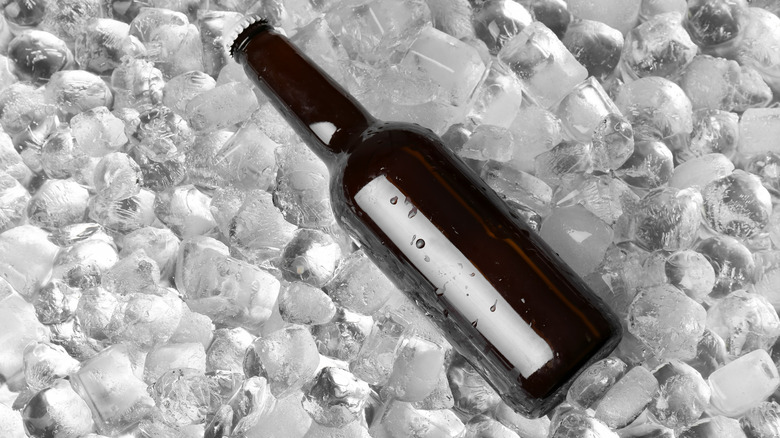
Everyone loves a cold drink every now and then. This preference isn't just a random trend — it's backed by science. For example, experts consider 38 to 42 degrees Fahrenheit the ideal temperature at which to drink Guinness. A chilled beer doesn't just feel more refreshing, it also tastes better (and stronger) when served at a lower temperature. And what's a better way to quickly chill booze than putting it in the freezer for a few minutes?
The freezer can be a lifesaver when guests show up at your doorstep unexpectedly and you need a quick fix for your alcohol, especially if you have a bottle of warm gin, brandy, rum, or one of those bottom-shelf vodkas that are actually worth the buy. But forgetting a bottle in the freezer is just as easy as placing it inside, which is why it's important to know that not every type of alcohol belongs there.
Temperature affects how water and ethanol molecules interact. Both liquids have different freezing points, with ethanol's being much lower. In essence, this means alcohol with a higher ethanol content requires colder environments to freeze. So, while spirits usually keep their texture and flavor after spending time in the freezer, drinks like beer and wine may not since they contain far more water than ethanol. They can also be affected by repeated freezing.
Beer can explode if left in the freezer too long
When it doubt, skip the freezer. Even high-proof spirits can loose some of their flavor. If you really have to do it, look at the alcohol by volume percentage on the bottle beforehand to be on the safe side. For example, high-proof spirits containing more than 40% ABV, such as tequila or whiskey, rarely freeze, so storing them in the freezer shouldn't affect their texture. Liquors with up to 32% ABV can also handle freezer storage.
Meanwhile, Irish cream, such as Baileys, the world's first and most popular brand, is a type of creamy alcohol you should never store in the freezer. It only has 17% ABV and could ultimately turn slushy and completely alter its consistency due to liquid separation. By comparison, wine, which typically has between 11% and 13% ABV, doesn't last more than a couple of hours in the freezer. While still safe to drink, it can become dull and, in certain cases, even develop a vinegar-like flavor.
Finally, beer, which usually has up to 5% ABV, should only be kept in the freezer briefly. Otherwise, you risk a potential explosion since water expands as it solidifies due to the formation of tiny ice crystals. This increase to its volume can eventually cause the can or bottle to crack or burst. Once the seal is compromised, the bubbles escape and the beer loses its fizz.