

Amp Up Your Side Dish Game With Sweet And Tangy Candied Red Cabbage. (It's Only 3 Ingredients!)
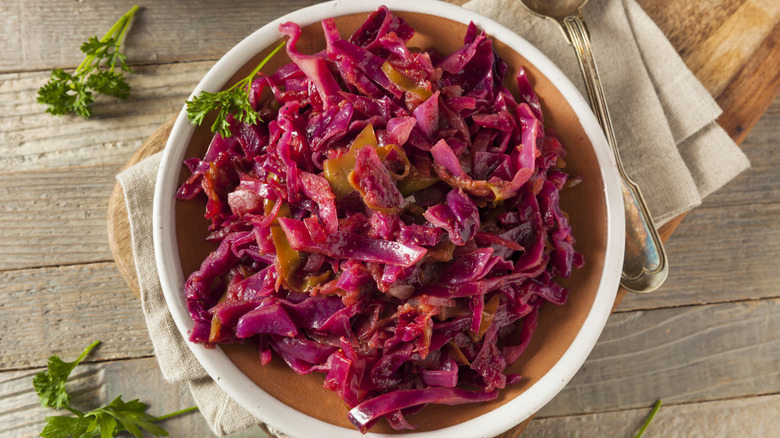
Cabbage is an unsung kitchen hero — a vegetable whose simplicity belies its incredible flavor, texture, and versatility. From time-honored French dishes like Jacques Pépin's traditional braised cabbage to classic Scandinavian recipes like Swedish stuffed cabbage rolls, it can be the foundation for a number of delicious meals. There are all sorts of different variations of cabbage, too — and one of the most delicious varieties of this humble vegetable is red cabbage. While slow cooked red cabbage is a staple at holiday dinner tables, there's a quick version of this dish that's sure to seriously upgrade your side-dish game at any dinner party, and it's made using only three ingredients: red cabbage, sugar, and vinegar (with salt and pepper to taste, of course).
The sugar encourages some light caramelization, adding an appealing sweetness that complements cabbage's natural vegetal notes, and gives them an addictive jammy texture once cooked. The vinegar, meanwhile, cuts through the sugar to deliver an acidic brightness and preserve the natural vibrancy of the cabbage's red color. It's cooked for a few minutes under a lid, until it's nice and tender, before the lid is removed to allow the cabbage to caramelize gently — how long you caramelize it for depends on how sweet you want it, but as little as five to ten minutes is all you need! Its sweet, tangy flavor makes it the perfect accompaniment for big, bold cuts of meat, as well as continental classics like sausages, schnitzel or even subtly spicy authentic Swedish meatballs.
How to tweak the recipe to get the very best results
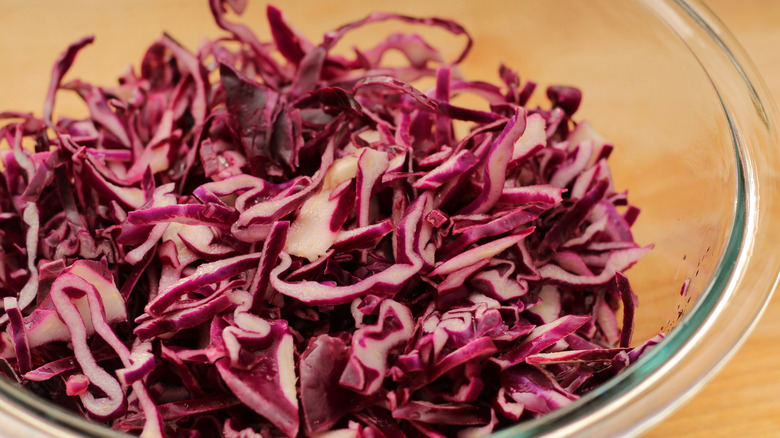
While this is incredibly simple dish which is very easy to make, it's important to get the techniques right when cooking it. Slice the cabbage thinly to allow it to rapidly wilt before caramelizing to turn into a sweet, jammy mess of tangy vegetable flavor. You don't want to slice them too thinly, though, as pieces that are too thick won't break down quickly enough. Aim for slices around ⅛ inch thick, which will allow the cabbage to quickly wilt so that the sugars can absorb into the vegetable quickly and evenly. Choose a wide pan with a heavy base, which will allow you to evenly and efficiently distribute heat among the cabbage, while their larger surface area will encourage rapid evaporation, cooking the cabbage quickly, and greater caramelization.
Start with a lower heat to allow the cabbage to sweat out its juices, which will give the sugar time to dissolve into the cooking liquid. If you want to achieve a glossy, caramel finish with a luscious, sticky mouthfeel, turn the heat up at the end of cooking to get some color on the cabbage. How much vinegar you add depends on your taste. Start with a generous splash and go from there! Red wine vinegar will bring some slightly tannic, fruity acidity to the final dish, while apple cider vinegar will bring a sweeter, rounder, almost autumnal flavor. White wine vinegar on the other hand will be lovely and bright. You could even use lemon juice for a citrusy twist!
Add a few extra ingredients to put a regional spin on this simple classic
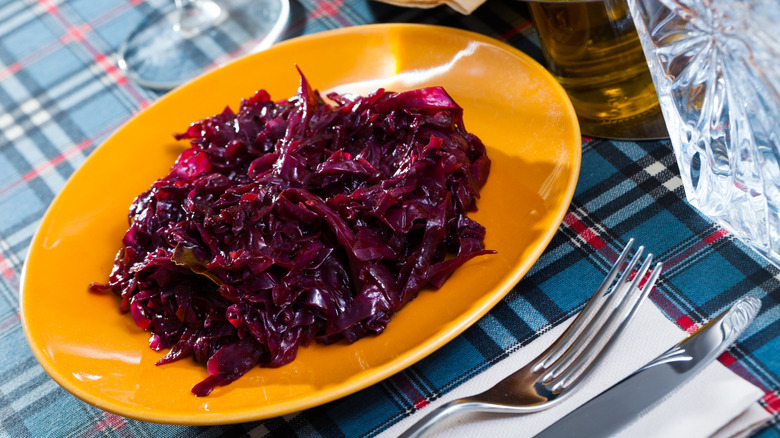
While this is a delicious side dish all on its own, a couple extra additions you can put an interesting spin on its simple flavor profile. There are numerous versions of sweet and sour braised cabbage found all over traditional European cooking — all of them feature some combination of cabbage, acid, and a sweetener. The Italian Cavolo Rosso, for example, is strewn with classic Mediterranean flavors like olives, anchovies, and garlic, giving it a deeply savory flavor profile that is a surefire winner when paired with big, hearty Tuscan flavors like braised veal or grilled Fiorentina steak.
For a more wintry take, add some warming spices like caraway seeds, cloves, or even cinnamon. You could also add other classic cabbage pairings like fruit, such as apples or dried berries, which will add a little extra zest and an easy autumnal vibe. For a luxurious finish, you could consider taking a cue from the French and whipping through a little cold butter at the end, which will pare back the acidity of the vinegar, adding richness while deepening the flavor profile and leaving you with a slick, glossy mouthfeel. With a little sage (or other fresh herbs like rosemary), this makes for a perfect pairing for rich, meaty dishes like pork chops and sausages — plus it's an easy make-ahead option for dinner parties and holiday meals, taking barely any time to throw together and even working well when served cold or at room temperature.