

Honey-Baked Ham Instructions: The Hands-Down Best Way To Heat Up Your Precooked Ham
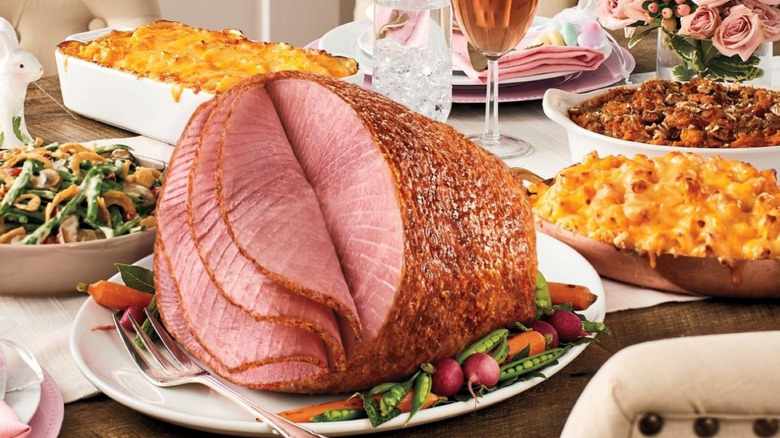
If you want ham at your next dinner party, you could cook an old-fashioned baked ham, but if you want a low-effort, time-saving ham dinner, then it may be worth getting a Honey Baked Ham. The Honey Baked Ham Co. is both a cafe (though there aren't too many locations left) and individual product. Its hams are available in various sizes and types, from boneless to large bone-in options. They're cured and cooked, then coated in a sweet, yet slightly crunchy, glaze that gives it the classic honey-baked flavor. For the best taste and texture, you should know whether to heat it and how to do it.
"We generally don't recommend heating our hams before serving," chef Tim Ziga, culinary expert at The Honey Baked Ham Company, told Chowhound. However, he suggests heating it at a low oven temperature if you want to serve your ham warm. Ziga recommends removing the Gold Foil that comes with your Honey Baked Ham and instead wrap it in aluminum foil. Then, heat it for 10 minutes per pound at 275 degrees Fahrenheit. He notes that you can also just wrap individual slices in foil if you don't want to heat the entire ham all at once.
If an oven isn't an option, you can also reheat slices of the ham in a skillet with butter, though this will change the texture and taste. "This is actually one of my favorite ways to prepare leftover ham," Ziga says. "It creates lightly crisped edges and deepens the flavor."
Tips for heating and serving a Honey Baked Ham
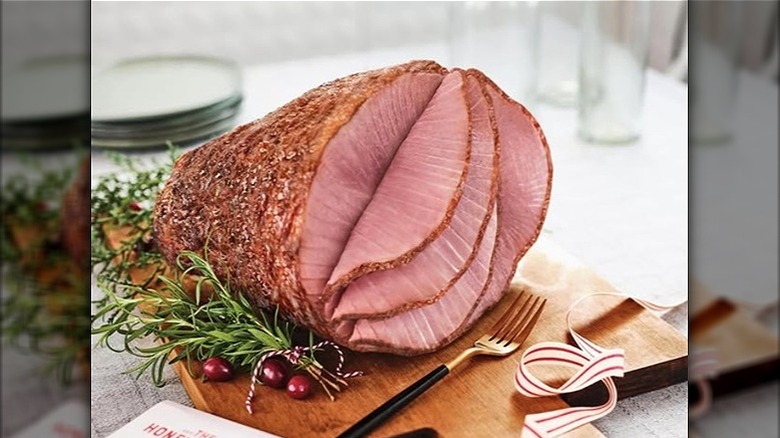
The best way to reheat your Honey Baked Ham ultimately depends on how you plan on serving it. If you want crispy ham with your eggs and toast, then browning individual slices in a skillet is a great idea. But if you just want to warm a few slices up for dinner, Tim Ziga recommends only cooking it on medium-low heat until it's just warmed throughout — take it off the heat before it browns. When heating the whole ham in the oven, Ziga suggests ensuring it's covered completely in foil with the oven set to low heat. "This helps preserve moisture and prevents the glaze from over-caramelizing or burning," he explains.
Finally, Ziga doesn't recommend adding anything else to your ham when heating it. "I generally advise against adding additional glazes or toppings," he says, since the glazing process the brand uses has been "perfected" over decades. "Adding extra glaze or sugary toppings can overpower the flavor balance and compromise the texture," says Ziga. If you do intend to serve toppings like pineapple, cherries, or any additional sauces, Ziga suggests serving them on the side once the ham is ready to eat.