

The Type Of Sugar You Use In Your Cookie Matters: How To Always Choose The Best One For Baking
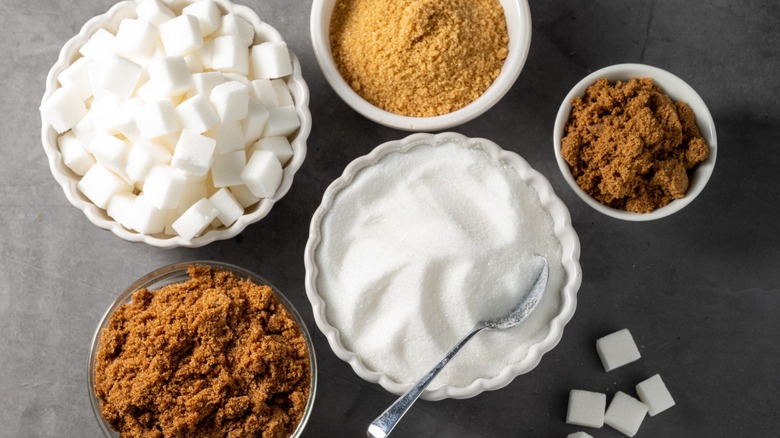
If you like to bake cookies, and you wonder how to make them turn out more crispy, chewy, or flaky, a lot has to do with sugar. The type of sugar you use affects taste and texture, and you will get more desirable results when you know the best sugar to use to make your favorite type of cookie. To better understand the fine points of sugar and how different types affect baking, we reached out to Katherine Sprung (@iamsprung on Instagram), pastry chef and founder of Squish Marshmallows.
Sprung says the "important thing to consider is the science, flavor, and what that specific type of sugar, or blend of sugars, is bringing to the flavor and structure of the cookie." Each type of sugar — white granulated, brown sugar, and powdered sugar being the most common — produces results you can predict, allowing you to create a cookie with your favorite characteristics. There are a number of easy cookie recipes for beginners you can experiment with, using different sugars to experience how each sugar affects taste and texture.
For crispy cookies, use white granulated sugar, which creates spread and crispiness, according to Sprung. If you like chewy cookies, she notes, "Brown sugar has more moisture and acidity because it contains molasses. Using just this sugar will give you a chewier cookie with more caramel notes." If you're making cookies such as shortbreads, you would choose confectioner's sugar, as it has cornstarch, as well as a finer grain with more surface area that doesn't create air pockets and holds the butter. "This is going to give you a more tender, almost flakey cookie," Sprung explains.
Blending sugar to customize your cookies

Finding the optimal sugar blend takes time, effort, and some experimentation. "If you want a nice balance of chew and crispness with a medium spread, a 50/50 split of white sugar and brown sugar might be what you want," pastry chef Katherine Sprung suggests. Knowing the difference between brown and white sugar, for example, will help you blend them to create the optimal taste and texture. If you add more brown sugar, your cookie will be heavier and more moist, while adding more white sugar will make it lighter in flavor and more spreadable. Make a few test batches to find your favorite texture.
You might ask, between granulated or powdered sugar, what kind of sugar is best for a sugar cookie, or any other variety, and how will adding each type affect the cookie? Swapping powdered sugar for granulated sugar will make a chocolate chip cookie less spreadable, and most cookies will be softer. For recipes that call specifically for powdered sugar to make cookies that traditionally have a soft, flakey consistency such as Mexican wedding cookies, Sprung says she "would not add something like brown sugar, since it won't contribute to the result you likely want in this variety."
Blending sugars can make interesting textures and flavors; however, using the best variety of sugar on its own in a classic, well-established recipe will most often do the trick. "I don't feel you need to try to or rely on using more sugars to think you'll get a better result," Sprung explains. She concluded, "A cookie is really the sum of [its] parts."