

Stop Blaming The Oven! Your Flat Cookie Started With This Baking Faux Pas
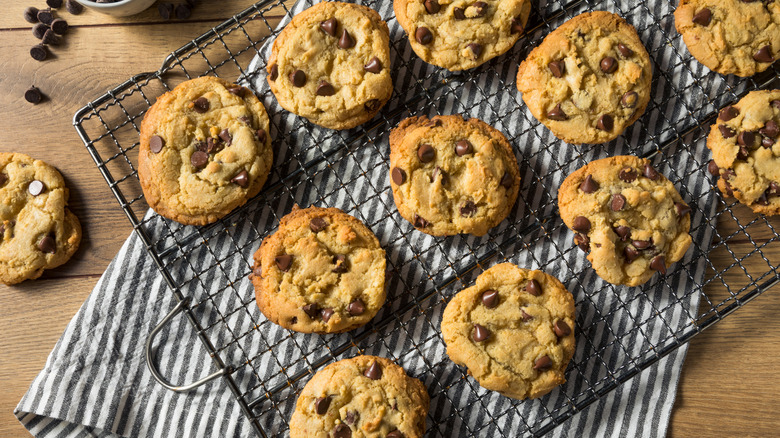
If you've ever waited patiently for the timer to ding while the house fills with the aroma of fresh cookies, then the disappointment is real if you pull out the pan only to find that they've turned out like flat discs instead of full, fluffy delights. But contrary to what you may believe, it isn't your oven's fault. It's more likely your fault, but it's happened to the best of us, so don't beat yourself up over it. Instead, take notes from a pro to learn what baking faux pas you are committing and how to fix it for future bakes.
Vivian Villa, product designer, chef, and founder of UnButter, a line of plant-based butters, shared some expert insight with Chowhound about why cookies fall flat. As with many baking errors, the fault lies in the flour, or more specifically, measuring it incorrectly. You don't want to lose track of measurements while baking, because under-measuring flour can mess with the structure of cookies, leaving them flat.
Measuring properly is also important to get the correct ratio of ingredients so your cookies have the ideal structure. "Sifting the flour then leveling with a knife (if measuring by volume) is essential for maintaining the correct ratio between flour and fat, which is a tedious yet important step," says Villa. Leveling that flour without packing it into the measuring cup is key here — a mistake that Villa notes is a common cause of incorrect measuring, which will throw off an ingredient ratio substantially. That simple step could mean the difference between thick, fluffy cookies that are melt-in-your-mouth good, and flat, lackluster discs that just aren't any fun to eat.
A little detective work and the proper tools will help save the day (and the cookies)
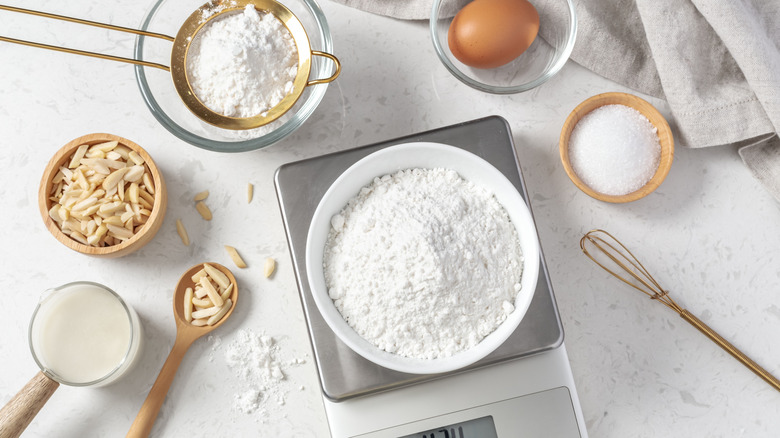
To avoid mismeasuring your flour, you can use a handy tool that's really a must-have for all baking projects. According to Vivian Villa, "A digital scale is a baker's best friend in every recipe as it ensures consistency every time." It will help you ensure accuracy for measuring both wet and dry ingredients. "Measuring by cups or volume is not as accurate, as humidity and incorrect handling of ingredients will result in incorrect ratios of the ingredients," says Villa. To select a good one, make sure it has a tare function, offers units in grams and ounces, has a large, easy-to-read display, is light in weight, and can be cleaned effortlessly; she suggests this Kuaivo scale.
But incorrectly measured flour may not be the only cause when it comes to flat cookies. There are a few other potential culprits, so Villa also shared some tips for playing kitchen detective to figure out what issues may be to blame — issues that still can't be blamed on the oven. For example, she points out that if your cookies come out flat and leave an oily stain, you've probably got too much fat in the dough — it all boils down to that perfect ratio of ingredients. It's also possible that the dough may not have been adequately chilled or frozen before the cookies were baked. Some recipes call for this important extra step prior to baking, so it's a big mistake to skip it. "Chilling cookie dough batter helps to solidify the dough as it bakes, reducing spreading," says Villa.