

How Marcella Hazan Used Salt For Tender, Flavorful Onions

We may receive a commission on purchases made from links.
Marcella Hazan was to Italian cooking what Julia Child was to French food — a true legend whose boundless knowledge helped to popularize a cuisine worldwide. One of her all-time great cookbooks, like "Essentials of Classic Italian Cooking," could keep even the busiest of home cooks occupied for years. One of the benefits of having years of experience is Hazan was full of useful tips and tricks for cooks, and one of them might just revolutionize how you cook onions. She suggested sweating your onions slowly, without browning them.
For such a simple kitchen task, there are plenty of methods out there when it comes to frying onions — lid on or lid off, to add water or not, high heat or low. Pretty much every technique has its advantages, but when you're sweating onions down, follow Hazan's advice and add some salt. Adding salt helps to break those onions down, drawing moisture out and effectively softening them so they melt effortlessly in your sauce.
The added moisture prevents the Maillard reaction from occurring, the chemical process responsible for browning onions. The salt also intensifies their flavor and imbues whatever dish you eventually make with them — be it a delicious ragu or French onion soup — with layers of sweet, salty depth.
When to add salt for better tasting onions
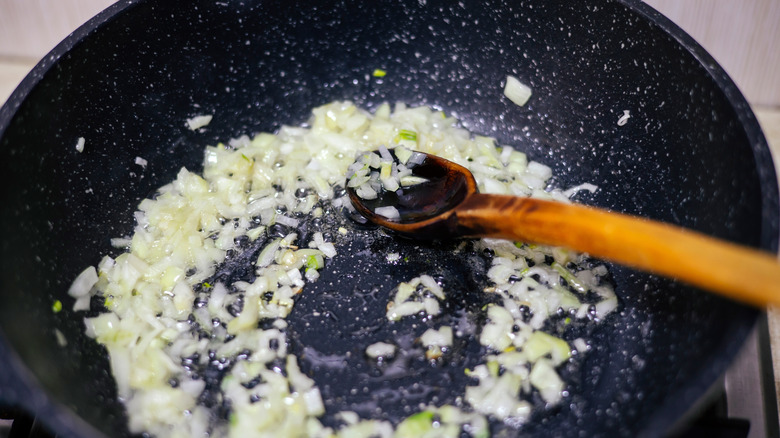
You might not think something as simple as adding salt to a pan of onions could have that much technique to it — but as with everything in cookery, it's all about balance and timing. You'll often hear chefs talk about seasoning in layers, adding a little at a time during each step of the cooking process, which is what helps lend complexity to dishes. That means seasoning your food at the very beginning of the cooking process. When you add your salt can have a significant effect on the onions' flavor and texture. And since salt intensifies food, adding it at the start is always going to result in a more complex, interesting flavor profile than adding a lick of finishing salt at the end.
To replicate Marcella Hazan's onion trick effectively, add salt as soon as your chopped onions go into the pan. This not only builds important layers of flavor but also begins drawing moisture out of the onions as soon as they start cooking, helping them soften in their own juices right off the bat. It also encourages them to wilt consistently, great for making Italian classics, like pasta sauces, risottos, or stews. For home cooks, this also helps you avoid getting too much color on your onions early on. If you burn them accidentally, you'll be left with an unpleasant, bitter sauce, but keeping the pan humid widens your margin of error.
Other tips for cooking onions like Marcella Hazan
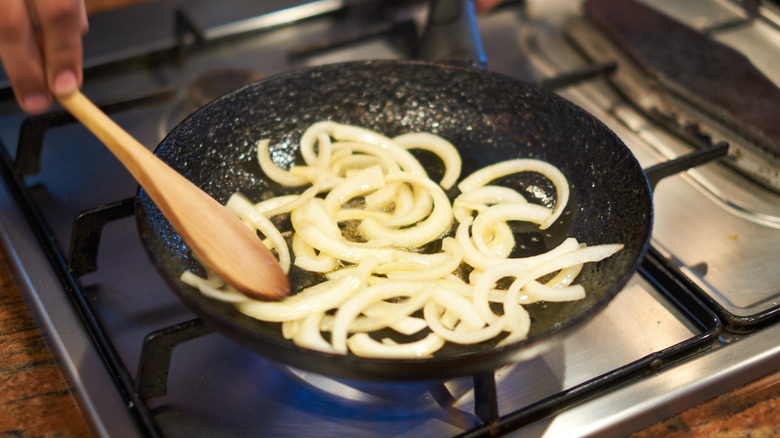
Adding salt to the mix wasn't Marcella Hazan's only useful tip for cooking onions. She had others which, when used in concert, can help you guarantee perfect onions every single time. To help prevent your onions from burning, Hazan suggested starting your onions off in a cold pan. This is a genius technique that allows the onions to very slowly come up to temperature as the pan heats. Along with the early application of salt, this gentler cooking process encourages the onions to yield their moisture more readily. It's the same approach Gordon Ramsay uses when cooking his duck breast, except instead of rendering fat, you're evaporating water.
If you want to make this technique even more foolproof, consider combining it with yet another classic technique of hers: adding a lid while the onions cook. As soon as you've added salt to your onions, give them a good stir through, put your heat on low, and set a lid on the pan (you can either cover it entirely or leave your lid cracked). Then, after 15 minutes or so (once they're cooked through), remove the lid. This helps keep the moisture that's being evaporated from the onions inside the pan, making sure they turn beautiful and translucent, while also helping the salt to concentrate their delicious, subtly sweet flavor.